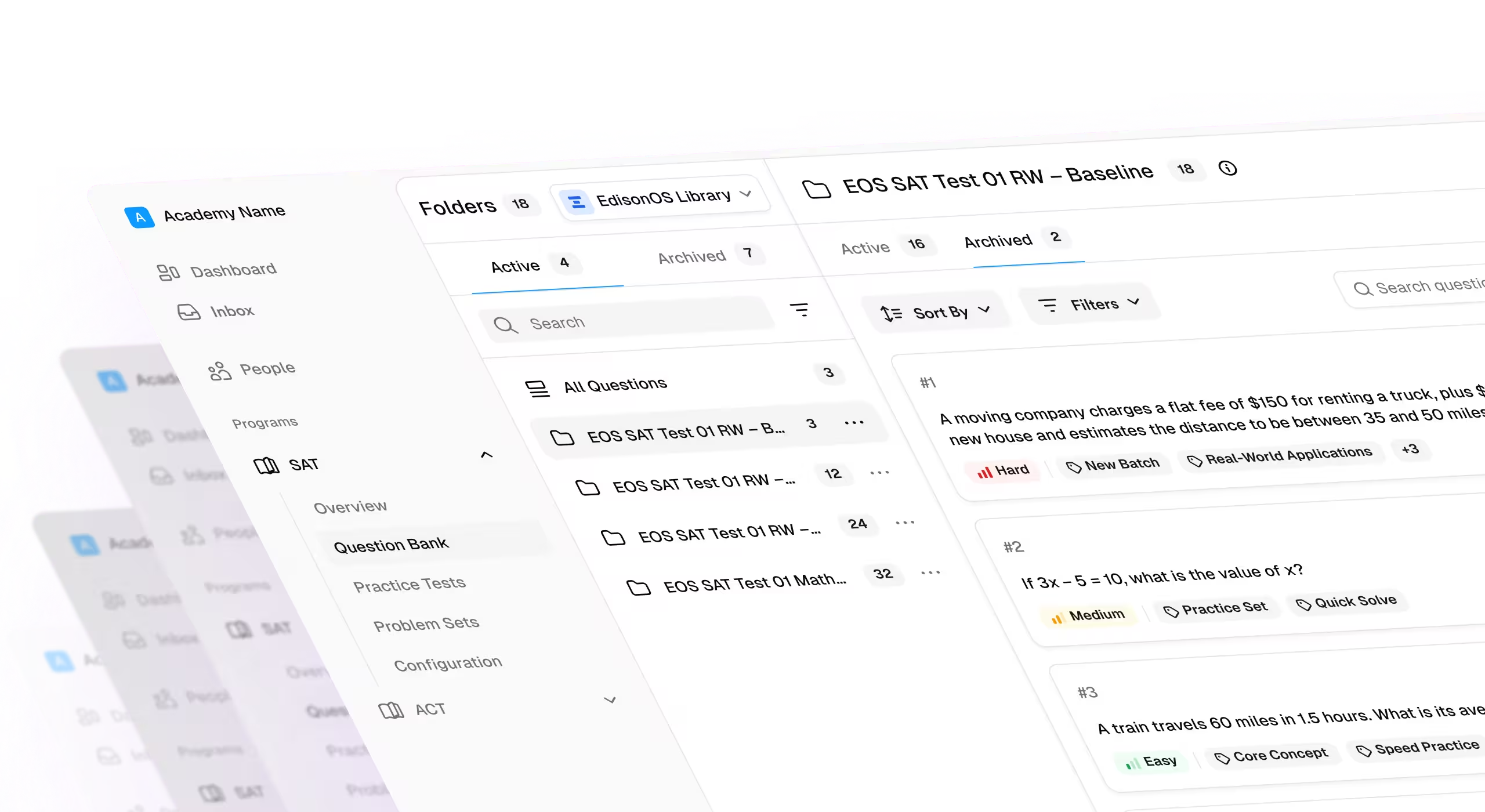
To prepare effectively for AP exams, start your focused preparation about two months before the exam. Begin by identifying weak areas, review your course material, practice with multiple-choice and free-response questions, and use mock exams to measure your progress.
Two-Month AP Exam Study Plan
- Weeks 1–2: Audit & Baseline: Start with a practice test to identify your weakest units and use the results to determine where to focus your preparation.
- Weeks 3–6: Content & Practice: Review the core units, combine multiple-choice questions with timed free-response practice, and keep track of mistakes to identify areas that need additional review.
- Weeks 7–8: Mock Exams & Final Review: Complete full-length practice exams under test conditions, review important formulas or dates, and use the final days to consolidate what you've learned.
Daily Study Habits
- Active Recall: Test yourself on what you've learned instead of only rereading your notes.
- Spaced Repetition: Revisit difficult topics regularly to strengthen retention.
- Consistent Practice: Break your preparation into focused study sessions rather than relying on last-minute cramming.
Preparing for AP exams is easier when you have a study plan that tells you what to study, when to practice, and where to focus your time. Instead of simply adding more study hours, a structured AP exam study plan helps you identify content gaps, set realistic goals, and track your progress.
A strong plan starts with a diagnostic test and follows the College Board's Course and Exam Description (CED). From there, students can combine content review, multiple-choice practice, free-response questions, error analysis, and full-length mock exams to steadily improve their performance.
Whether you're preparing for one AP exam or juggling multiple AP subjects, the right timeline can help you stay consistent without relying on last-minute cramming.
In this guide, you'll learn how to build an AP exam study plan, choose the right preparation timeline, prioritize weak areas, use active recall and spaced repetition, schedule mock exams, and track your progress through every stage of preparation.
What an Effective AP Study Plan Includes
A high-impact AP study plan is a smart, flexible roadmap built around your goals. To actually work, it needs a few key pieces:
- Start with a diagnostic and clear goal: Take a baseline test to see where you are starting. It helps spot content gaps and set a realistic score target, especially if you are aiming for college credit.
- Stick to the official units: Use the College Board’s Course and Exam Description (CED) to break the material into bite-sized weekly goals. That way, you are studying exactly what the test expects.
- Mix up the practice: Rotate between multiple-choice questions (MCQs) for quick recall and free-response questions (FRQs) to sharpen your analysis and writing.
- Review with purpose: Build in regular time to look over your mistakes. Do not just mark them wrong—figure out why you missed them and how to avoid doing it again.
- Take full-length mock exams: Space them out over your timeline and make sure each one is followed by serious review, not just a score check.
- Make space for rest: Plan breaks, rest days, and time away from screens. Your brain needs that recovery time to actually absorb what you are learning.
When to Start Your AP Study Plan
The optimal starting date for your AP study plan is determined by answering questions like, number of exams you are taking, how many AP classes you should take, and whether you are relying on classroom learning or self-studying the content.
Ideal Study Timelines
- 9 Months (Beginning of School Year): Ideal for students taking multiple AP exams (3 or more) or those attempting self-study APs. This long-term timeline allows for distributed practice and prevents the stressful consolidation of material toward the end of the year.
- 4 Months (Late January/February): Keep the timelines, but frame them as recommended preparation windows rather than fixed College Board timelines. The article's recommendation is useful as planning guidance.
Timeline Checkpoints and Phases
The preparation timeline can be logically segmented into three critical phases, typically focusing on the intense ramp-up between March and May.
How to Build Your AP Study Plan (Step by Step)
A personalized study plan should work backward from your AP exam date in May, making sure every task helps you hit your final goal.
Step 1: Conduct a High-Stakes Diagnostic Assessment
Do not begin by rereading notes. Instead, take a full-length, official AP practice test. This will show your starting score and exactly where you are struggling—by unit and skill. If you are using a learning platform, look for breakdowns like “missed 70% of questions in Unit 3: Land-Based Empires” or “weak on FRQ synthesis tasks.”
Step 2: Define Your Target Score and Required Raw Score
Decide what score you are aiming for based on your college plans (like a 4 or 5). Then figure out how many raw points you need to get there— Use your target AP score to set measurable goals for each practice test, while recognizing that score conversions vary by subject and exam. Use this to set small, trackable goals for each practice test.
Step 3: Align Your Plan to the Official CED Framework
The College Board’s Course and Exam Description (CED) outlines everything the exam covers. Instead of saying “study Chemistry,” be specific: “Week 4: Focus on Unit 4, Skill 3.B – Stoichiometry in Complex Reactions.” This way, you are practicing what the test actually cares about.
Step 4: Prioritize Weakness and Section Weighting
Spend moSpend more time where you are weakest and where it counts most. If one unit is your biggest gap and a particular section carries significant weight in your AP subject, prioritize practice that targets both the weak content area and the highest-impact section.re time where you are weakest and where it counts most. If Unit 5 is your biggest gap, and the FRQ section is 60% of your score, focus on practicing Unit 5 through FRQ-style questions. This ensures your time goes toward boosting your score.
Step 5: Implement the Review and Reflection Cycle
Set aside just as much time to review your work as you spend taking practice tests. Keep an Error Log with each missed question and include:
- Concept: What the question was about (e.g., “Semicolon use,” “Demand curve shift”)
- Why you missed it: Was it a content issue, careless error, or a timing problem?
- What to do next: A task to fix it (e.g., “Review all verb tense rules this week”)
Step 6: Schedule Full-Length Mock Exams Strategically
Taking too many full tests without reviewing them won’t help. Start with one every 3–4 weeks, and bump it up to weekly in the last month before the exam. Always block off 5–8 hours afterward to break down your results and update your Error Log. The goal is not just to “do more,” but to learn more from each one.
Sample 3-Month AP Study Plan (for one AP subject)
This sample plan suggests spending about 4 to 6 focused hours per week on one AP subject. The goal is to gradually shift from just learning the material to practicing under timed, test-like conditions.
How to Manage Multiple AP Subjects in Your Plan
Juggling 3–5 APs requires intentional interleaved practice to prevent mental fatigue and burnout.
- Switch Subjects Often: Do not get stuck in marathon sessions. Study each subject for 90–120 minutes max, then switch to a different one. This keeps your brain alert and helps you retain more by mixing up the material.
- Plan Around Test Dates and Difficulty: Focus more time on exams that come earlier in May or the ones you are struggling with. For subjects you are already strong in, just do shorter review sessions to keep the material fresh.
- Set Weekly Review Time: Spend an hour each week on each AP subject, going over old content using flashcards or quick quizzes. This routine review helps you remember more and avoids the need to cram later.
- Stay Organized Visually: Use a digital planner or calendar with color codes for each subject. A clear layout makes it easier to stick to your plan and cuts down on wasted time figuring out what to study.
High-Yield Study Techniques to Include in Your Plan
Moving from passive learning (reading and highlighting) to active learning (testing and retrieval) is the single greatest shift required to maximize an AP score.
- Use Active Recall and Self-Quizzing: Do not just re-read notes. Test yourself. Try writing out everything you remember about a topic from memory or explaining it out loud. This pushes your brain to work harder and strengthens long-term recall.
- Try Spaced Repetition: Review key concepts at spaced intervals—1 day, 3 days, 1 week, etc.—to lock them in. Tools like Anki or Quizlet can help automate this, so you do not have to track it all manually.
- Practice with Intention: Start each study session by drilling one weak area for 15–30 minutes. For example, focus just on multiple-choice questions about rhetorical devices. Once you are making fewer mistakes, move on to mixed-topic practice.
- Teach It to Learn It: Try explaining tough concepts to a friend or even to yourself. If you can teach it clearly, it means you really understand it. Teaching helps connect the dots and strengthen what you have learned.
Tools & Resources to Support Your AP Study Plan
A modern AP study plan relies on technology to automate tracking, provide feedback, and deliver resources.
- Start with Official College Board Tools:
These are your go-to resources for mastering the content and test format.
- AP Classroom remains an official College Board resource for AP preparation.
- Use the AP Question Bank for targeted practice with official AP questions assigned by teachers.
- Bluebook is used for the 2026 fully digital and hybrid digital AP Exams. Use it to become familiar with the digital testing experience and practice the tools used on exam day. It lets you practice under real digital test conditions.
- Use Tech to Track and Improve:
- Progress-Tracking Platforms (like learning management systems or test prep tools) help you monitor your scores, pinpoint weak areas, and stay accountable. They often include dashboards showing trends across sections like MCQ vs. FRQ or by individual units.
- Digital Planners and Study Apps keep your schedule clear and efficient. Use calendar apps to plan study blocks and breaks, and flashcard tools with Spaced Repetition to lock in key facts over time.
Common Mistakes to Avoid When Making Your AP Study Plan
Even the best-laid plans can fail if undermined by poor study habits. Students and tutors should actively guard against these pitfalls:
- Cramming Without Breaks: Marathon study sessions wear you down fast. They do not help you retain complex ideas and usually backfire. Schedule short breaks every couple of hours and full rest days to stay sharp.
- Over-Planning as a Distraction: Do not spend hours tweaking the “perfect” study calendar. That is just a clever form of procrastination. Start with a basic plan, take action, and make adjustments as you go.
- Passive Studying: Simply re-reading notes or watching videos won’t cut it. Unless you are testing your recall, you are not really learning. Make active recall and self-quizzing a core part of your prep.
- Avoiding Hard Topics: It is natural for you to review material you have already mastered—it feels good. But real progress comes from facing your weak spots head-on. That is where your study time counts most.
- Skipping Sleep: All-nighters may feel productive, but they hurt more than they help. Good sleep and a solid breakfast are key for sharp thinking and lower stress, especially as the test day nears.
How EdisonOS Helps You Execute & Monitor Your AP Study Plan
Successfully executing an AP study plan requires precision, adaptation, and consistent progress monitoring—a task best handled by analytical tools.
- Start With Smart Diagnostics: EdisonOS kicks things off with a baseline test to find your strengths and weaknesses. This gives you and your tutor a solid starting point to build a personalized plan that targets exactly where you need the most help.
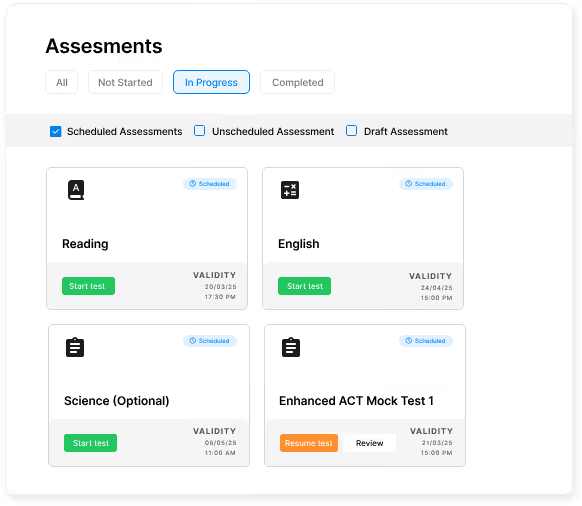
- Build a Strategy That Matches the Exam: Using your diagnostic results, the platform helps tutors create a customized roadmap that is directly tied to the College Board’s CED for your course. It balances time across content review and free-response practice based on the skills that matter most.
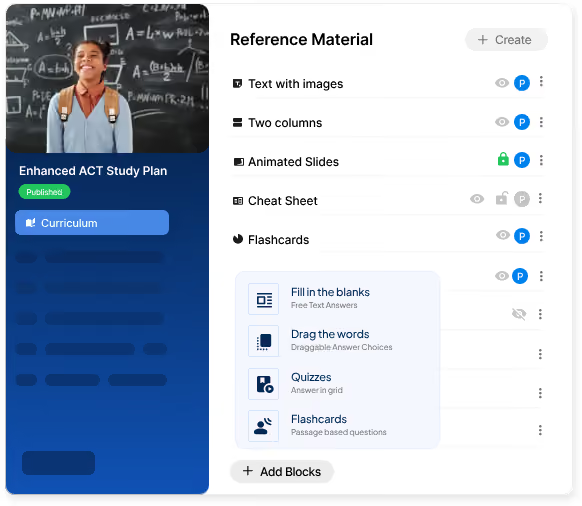
- Track Progress in Real Time: EdisonOS also gives you performance dashboards that track your improvement week by week. Tutors can see where things are working—and where they’re not—and make quick, data-backed changes to keep you moving forward. This level of tracking keeps everyone accountable and makes sure no effort is wasted.
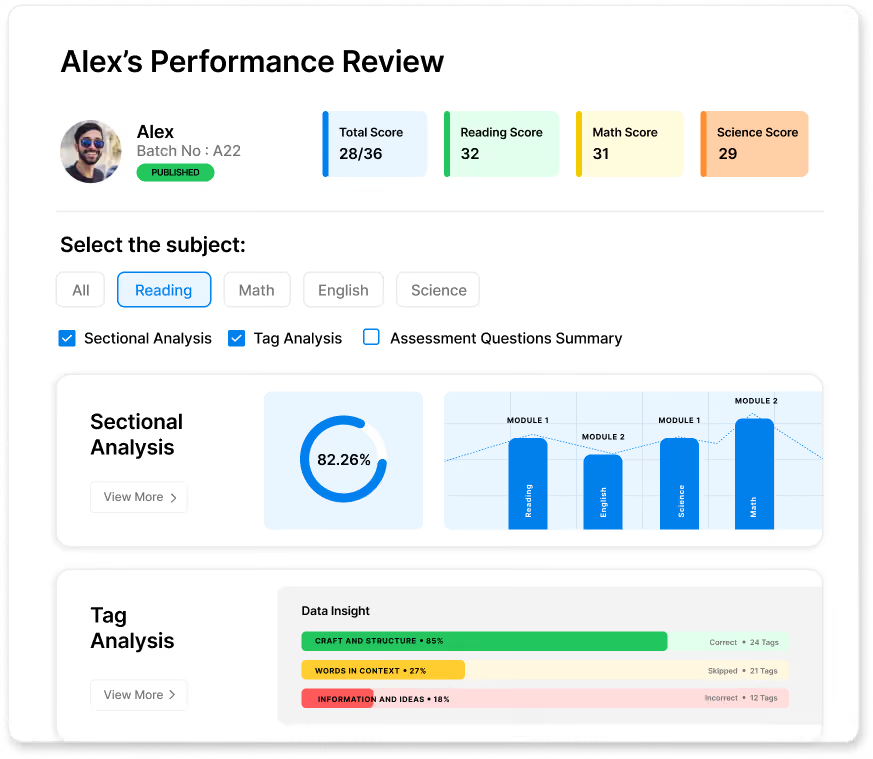
EdisonOS is designed to support both students and tutors throughout the preparation journey by turning performance data into clear, actionable study directives.
Explore our pricing plans to find the right solution for your AP tutoring needs.
Frequently Asked Questions
.svg)



.png)