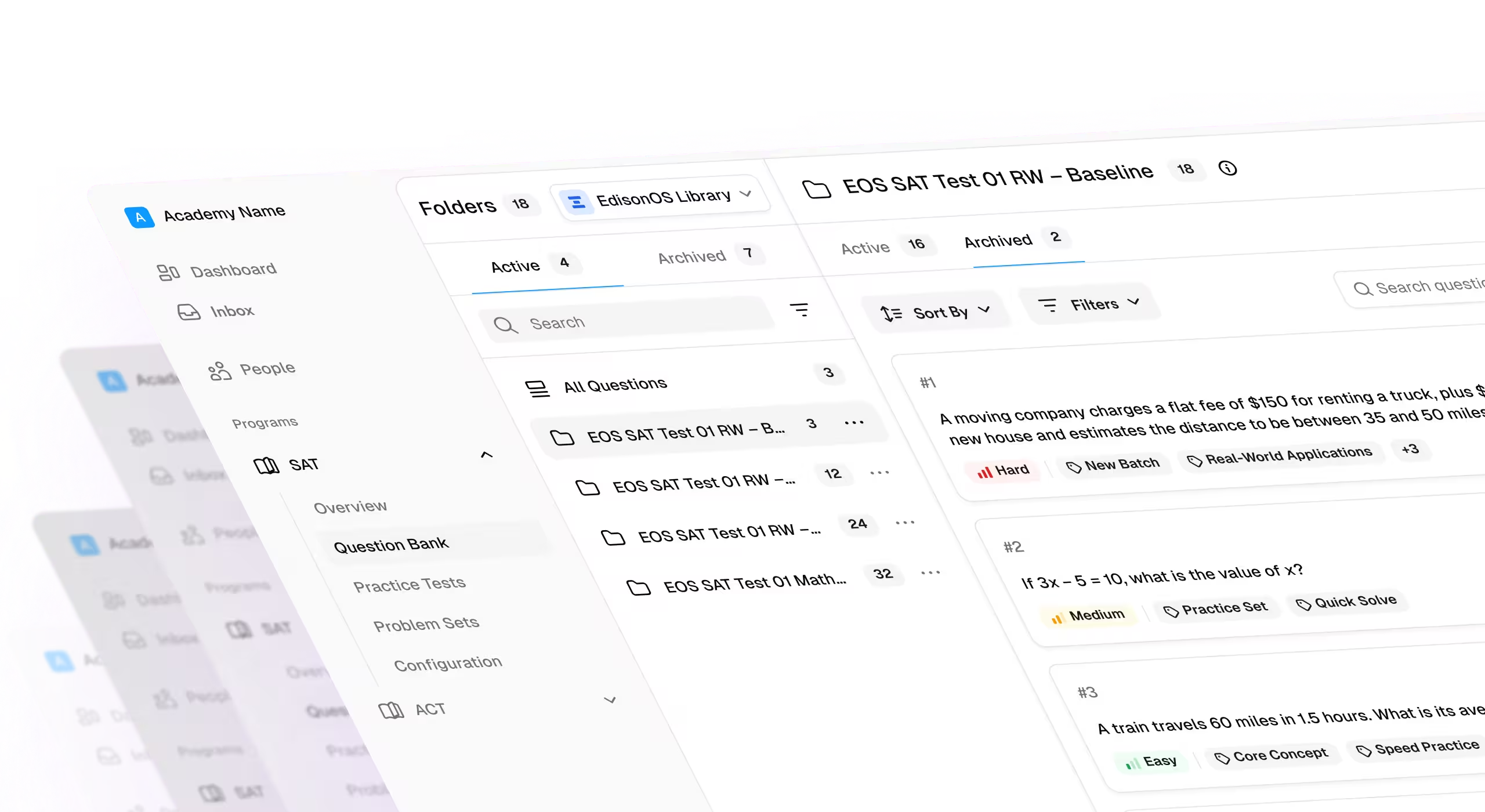
Becoming an AP teacher starts with holding a valid state teaching certificate and a high school teaching position, then completing the College Board's mandatory course authorization process to align your curriculum with national college-level standards.
- Step 1: Secure a teaching position — You need to be a certified high school educator, typically with a bachelor's degree in your content area, and express interest to your principal or department chair, who makes the final call.
- Step 2: Complete the AP Course Audit — Register as an educator on the College Board site, submit a Course Audit Form (often using pre-approved unit guides rather than a full original syllabus), and get your principal or AP coordinator's online approval.
- Step 3: Attend an AP Summer Institute — Not strictly mandatory for every subject, but strongly recommended. These multi-day workshops train you on curriculum frameworks, exam rubrics, and grading standards, and some districts offer funding to cover the cost.
- Step 4: Use AP Classroom resources — Once approved, you get access to unit guides, topic questions and progress checks, and a searchable question bank of official past AP exam questions for building custom quizzes.
Teaching an AP course is both a professional milestone and a meaningful challenge. It offers the chance to work with driven students tackling college-level content—but it also demands a higher level of preparation, pacing, and precision than standard high school teaching.
If you're aiming to become an AP instructor or support one, there's more to the process than just knowing your subject. From official approvals to instructional strategies and smart use of digital tools, several pieces must come together. In the sections ahead, we’ll walk through what it really takes to step into this role—and how to do it well.
What Qualifications & Credentials Are Needed to Teach AP Courses
The fundamental requirements for teaching an AP course begin not with the College Board, but with local jurisdiction: the state and the individual school district. A candidate must first secure the standard credentials required for teaching high school in the specific subject area.
The State Licensure Foundation
Before you can teach an AP course, you’ll need to meet your local and state teaching requirements. That means having the right subject-area license to teach high school, be it math, science, English, or another AP subject. Some districts might also ask for extra qualifications like a subject endorsement, honors experience, or approved training. Since the rules can vary a lot by state, it’s smart to check directly with your district or certification office to be sure.
The Certification Myth
Many educators ask if they need a special “AP certification.” The short answer: no. The College Board doesn’t certify individual teachers—it authorizes AP courses. This means the course itself must pass a review called the AP Course Audit, where teachers submit a syllabus and show that their plan matches College Board expectations. What matters most is that your course is approved, not that you hold a separate AP-specific credential. This setup also works well for subject experts or tutors who may not have years of classroom experience but can align their teaching with AP standards.
Experience and Education Recommendations
A master’s degree is not required to teach AP, but it can help deepen your subject knowledge. More importantly, the College Board recommends that teachers have at least three years of classroom experience before leading an AP course. These years help build the instructional and classroom management skills needed for fast-paced, college-level teaching. Some new teachers do take on AP courses successfully, but support, planning, and collaboration become especially important.
AP Course Audit & Authorization Process
To officially offer an AP course, schools must go through the College Board’s AP Course Audit. This process ensures the course meets required standards and qualifies for inclusion in the AP Course Ledger—the official list colleges use to verify AP classes on transcripts. Audit approval also gives teachers access to secure AP materials like official practice tests and the AP Question Bank.
Why Authorization is Essential
Without course authorization, a school can’t call the class “AP,” list it in the AP Course Ledger, or use key AP teaching resources. That’s why the Course Audit is a must—it confirms that what you’re teaching truly reflects the AP curriculum and helps students prepare for the exam the right way.
The Four-Step Authorization Procedure
The process requires coordinated effort between the teacher and the school administrator (typically the principal or AP coordinator).
Step 1: Initiation and Form Completion. The teacher kicks off the process by creating or logging into their AP Course Audit account, selecting the AP course they want to teach, and filling out the subject-specific audit form online.
Step 2: Administrator Approval. Next, a school administrator—usually the AP coordinator or principal—logs in to review and approve the form. This step confirms that the school supports offering the course.
Step 3: Syllabus Submission. The teacher needs to show they understand what the course covers. They have two options for this:
- Adoption (Fast Track): The teacher uses the official AP Unit Guides, a pre-approved sample syllabus, or another teacher’s previously approved syllabus. This option gives instant approval.
- Original Syllabus (Review Track): The teacher submits their own syllabus, which is reviewed by college faculty who teach similar courses. If it doesn’t get approved on the first try, the teacher gets up to two chances to revise and resubmit.
New AP teachers are usually encouraged to go with the Adoption (Fast Track) option. It saves time and gives immediate access to important AP teaching tools—especially helpful for getting started early in the school year.
Step 4: Annual Renewal. AP authorization is not permanent. Each year, the school administrator must renew it to confirm the course is still being taught and follows AP guidelines.
Professional Development & Skills for Effective AP Teaching
Teaching an AP course takes more than just knowing the content—it requires a shift in teaching style. Instead of just covering topics, teachers must guide students toward mastering college-level skills like analysis, critical thinking, and clear execution.
The Cornerstones of AP Training
The primary professional development experience for new AP educators is the AP Summer Institute (APSI). APSIs are intensive, subject-specific training sessions where attendees engage in approximately 30 hours of content-rich instruction designed to strengthen their understanding of the curriculum and exam structure. These institutes provide curriculum training, teaching strategies, and opportunities for peer collaboration.
Attendance is highly encouraged for new teachers, though registration fees typically range from $625 to $700, often covering instruction, course materials, and meals. Aspiring AP teachers should proactively seek out district or state funding early to cover the cost of this invaluable training.
Beyond APSI, the College Board offers other essential resources for continuous development :
- AP Workshops: Shorter sessions focusing on specific strategies and pedagogical tools.
- AP Teacher Support Sessions: Small, online group settings led by veteran AP teachers to discuss planning and assessment.
- AP Community: An online platform for networking with colleagues, sharing resources, and participating in discussions with subject experts.
Mastering the Advanced Pedagogy
Effective AP instructors must adapt their teaching skills to meet the rigor of college-level expectations. This transition requires:
- CED Fluency: The Course and Exam Description (CED) is the core document for any subject, outlining the curriculum, skills, and exam format. Mastery of the CED allows teachers to structure their course units precisely and align instruction to the topics and skills students will be tested on.
- Scaffolding and Differentiation: AP courses often attract students who are "almost ready" for college academics. The AP teacher’s role involves dedicated effort to scaffold complex material and differentiate instruction to bridge the gap between honors-level high school content and genuine college-level rigor.
- Instructional Pacing: The content scope is vast. Teachers must learn to assign substantial content acquisition (reading, videos, online assignments) as homework, acknowledging that not everything can be covered during class time. Class time must be reserved for deep discussion, application of skills, and laboratory work.
Steps to Get Started Teaching an AP Course
For a teacher who holds a state license and is ready to take on an AP assignment, the following sequential steps are critical for a successful launch:
- Gain Institutional Approval and Support: The initial step is consulting with the school principal and the designated AP coordinator. Their administrative approval is necessary for the Course Audit, and their institutional support is crucial for securing funding for professional development and potentially waiving student exam fees in high-needs districts.
- Master the Course and Exam Description (CED): The CED must serve as the primary planning document. Instead of relying solely on an existing textbook's table of contents, the teacher should follow the CED’s unit order and weighting to ensure adequate coverage of all required skills and topics.
- Complete the AP Course Audit: Immediately initiate the online audit process. For first-time teachers, it is highly recommended to adopt the AP Unit Guides or a sample syllabus provided on the platform to receive immediate authorization.
- Establish a Non-Negotiable Pacing Plan: Work backward from the mid-May exam date. Establish a rigid, disciplined pacing schedule, allocating time for content delivery, skill practice, and final review. This schedule must be clearly communicated to students and enforced throughout the year, cutting out non-essential activities like movies if the schedule falls behind.
- Leverage AP Classroom Resources: Once authorized, the teacher gains access to AP Classroom. This platform should be used to set up class sections, assign Personal Progress Checks (formative assessments), and utilize the expansive AP Question Bank to build tests that mimic the structure and rigor of the final exam.
Typical Salary Expectations & Career Opportunities for AP Teachers
AP teaching typically represents a vertical move in terms of complexity and professional expectation, and this is often reflected in compensation and advanced career paths.
Compensation and Stipends
An AP teacher’s main salary is based on the district’s standard pay scale, which depends on things like experience and education level. The extra income usually comes from stipends or bonuses. Some schools give teachers a set stipend just for teaching AP, with the amount varying by subject, course difficulty, or how many students are enrolled.
In some places, teachers can also earn bonuses based on student performance—like getting paid for each student who scores a 3 or higher on the AP exam. High-demand subjects, especially in STEM areas like AP Physics or AP Stats, may offer even more incentives to attract and keep qualified teachers.
Advanced Professional Tracks
Teaching AP courses provides a gateway to other high-level opportunities within the College Board ecosystem. These roles enhance the teacher's understanding of the assessment process and expand their professional network.
AP Teacher Professional Advancement Opportunities
Serving as an AP Reader is a great way for teachers to grow professionally. While the $30/hour pay (as reported by ETS) is a solid perk, the real value lies in the insight gained from scoring. Teachers get hands-on experience applying official rubrics, which sharpens their understanding of how AP exams are graded. Many say it improves how they teach and assess their own students—making it one of the most impactful forms of professional development for AP instructors.
3 Essential Things a New AP Teacher Should Know
Veteran AP teachers frequently share three pieces of advice critical for navigating the initial years of teaching a college-level course.
1. Pacing is the Primary Curriculum Constraint
AP courses move fast, and new teachers need to be ready for that pace. Finishing the full curriculum before the May exam is not optional—it’s essential. That means sticking to a clear pacing plan and acting quickly if the class falls behind. Instead of cramming during class, teachers can assign homework, flipped videos, or reading with quick quizzes to keep students on track. Being upfront about the outside workload helps students understand what’s expected and builds habits they'll need in college.
2. Scaffold, Don't Simply Cover
A strong AP program doesn’t just serve the top-performing students—it lifts up those who are smart but not yet fully prepared for college-level analysis. Teaching AP is not just about covering complex material. It’s about breaking that material down and helping students build the academic skills they’ll need to succeed, like forming arguments, analyzing data, or thinking historically. Great AP teachers know how to support students who are close to ready and help them cross that final gap.
3. Embrace Collaboration and Self-Compassion
Mastering the art of teaching an AP course doesn’t happen overnight—it takes time, trial, and plenty of support. New teachers shouldn’t expect perfection right away. Instead, the key is collaboration. Joining AP teacher communities, leaning on experienced colleagues, and using shared resources can make a huge difference. As the saying goes, “Beg, borrow, and steal”—because in AP teaching, collective wisdom is often the best tool in your kit.
How EdisonOS Supports AP Teachers & Enhances Your AP Course Delivery
Teaching AP comes with high standards and heavy demands—and the right digital platform can make all the difference. EdisonOS helps AP teachers streamline instruction, stay aligned with College Board standards, and make smarter, faster decisions using real-time data.
Ensuring Alignment and Rigor
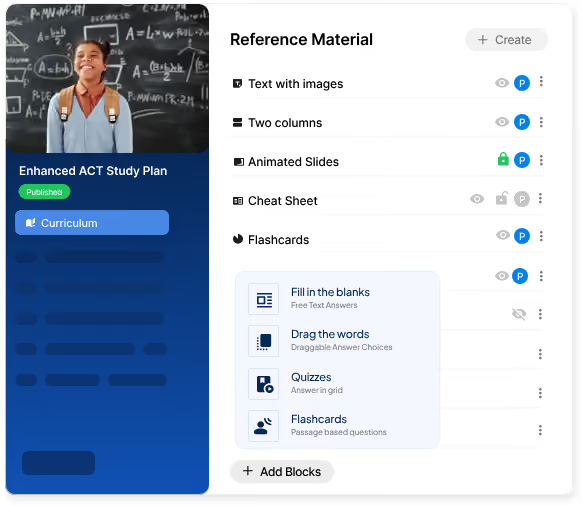
EdisonOS is built around the College Board’s Course and Exam Description (CED), so everything from unit structure to skill focus stays on target. For new teachers or academic leads, this eliminates the guesswork in planning and ensures your course meets AP expectations without compromise. It helps maintain consistency in rigor across topics while saving time on cross-checking and revisions.
Data-Driven Diagnostics and Monitoring
Where EdisonOS really shines is in its use of data. Teachers and admins get access to detailed reports that show student performance across units, topics, and even specific skills. This insight helps you spot where students are falling behind—be it a class-wide issue or an individual gap—and respond quickly.
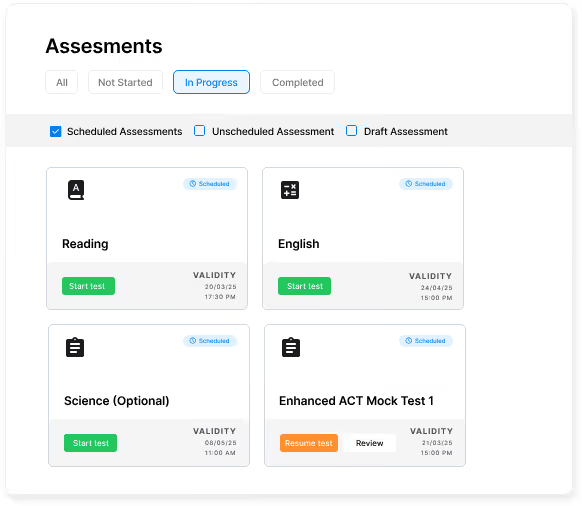
EdisonOS can even auto-generate targeted quizzes based on these weak spots, making the review faster and more focused. For AP teachers juggling heavy content and a tight schedule, this kind of efficiency is a major boost.
Common Mistakes & How to Avoid Them When Becoming an AP Teacher
Earning your credentials and completing training is just the beginning. To thrive in your first year of AP teaching, it’s critical to avoid a few common—but costly—missteps. These mistakes can derail your course, limit your access to resources, and leave students unprepared for the May exam.
Mistake 1: Neglecting Course Audit Renewal
Every AP course must be re-authorized each year by the school admin. If this step is skipped—even by accident—you could lose access to key resources like the AP Question Bank, secure practice tests, and student score reports.
How to Avoid It: Check your AP Course Audit dashboard each fall and remind your AP coordinator or principal to renew before the College Board’s deadline (usually February). Don’t wait until access is gone to take action.
Mistake 2: Underestimating the College Workload
Some first-time AP teachers underestimate how much work needs to happen outside class—and so do their students. Trying to fit everything into regular school hours just is not realistic. The result: rushed lessons, missed skills, and stressed-out students come spring.
How to Avoid It: From day one, clearly communicate the expectations: this is a college-level course that requires 3–5 hours of independent work each week. Build that culture early, set firm deadlines, and make students accountable for keeping pace.
Mistake 3: Imbalanced Pacing and Coverage
It’s easy to fall into the trap of spending too much time on favorite units or early content, then scrambling to finish the rest before the exam. Every topic needs its fair share of attention—no matter how engaging (or dry) it seems.
How to Avoid It: Use the CED’s pacing guide as your map. Stick to the recommended time per unit and use quick formative checks to track mastery. If your class is solid on a topic, move on. Smart pacing now saves panic later.
The bottom line
Becoming an AP teacher is about rising to a higher standard of teaching, guiding students through complex material, pushing them to think critically, and preparing them for real college-level work. While the process involves multiple steps—licensure, course authorization, training, and smart planning—it also calls for adaptability, strong classroom management, and a mindset of continuous learning.
For educators ready to take on this role, the payoff is big: professional growth, deeper student engagement, and the satisfaction of helping learners stretch beyond what they thought possible. With the right support systems, like detailed planning tools and platforms such as EdisonOS, you don’t have to figure it all out alone. Book a demo now.
Frequently Asked Questions
.svg)