- The ACT English section tests grammar, usage, mechanics, sentence structure, punctuation, and writing skills.
- The most useful grammar areas to practice include sentence formation, punctuation, modifiers, verb forms, pronouns, and agreement.
- Recognizing common errors quickly can help you spend more time on questions that require deeper reasoning.
- Short examples make grammar rules easier to recognize when they appear in an ACT question.
- The current enhanced ACT English section has 50 questions and 35 minutes, so efficient pacing matters.
- Practice with realistic questions and review your mistakes to turn grammar rules into faster test-day decisions.
Understanding ACT grammar rules is an important part of improving your performance on the ACT English section.
Success in this section relies on mastering grammar rules, recognizing common errors, and practicing under timed conditions. This guide explores the ACT English grammar format, strategies for improvement, and key resources like EdisonOS to enhance preparation.
ACT Grammar Format
The current enhanced ACT English section contains 50 questions that students complete in 35 minutes. That gives you roughly 42 seconds per question on average, so knowing the rules is only part of the challenge—you also need to recognize common errors quickly.
The enhanced ACT English section replaced the former 75-question, 45-minute format. The updated version continues to assess English language and writing skills while changing the number of questions, timing, question design, and reporting-category emphasis.
ACT English Reporting Categories
The current ACT English section is organized into three reporting categories:
Conventions of Standard English
This category covers grammar, usage, mechanics, sentence structure, and punctuation.
Production of Writing
This category focuses on rhetorical development, organization, and the effectiveness of ideas and information.
Knowledge of Language
This category focuses on precision, concision, style, tone, and effective language choices.
Practicing with online free ACT practice tests will help improve familiarity with test structure and timing.
ACT Grammar Rules Ranked by Frequency
The percentages below come from PrepScholar's analysis of more than 500 questions across seven official ACTs. This is a historical question-frequency analysis, not the current official ACT English blueprint. Use it to prioritize your study rather than expecting the same percentages on every ACT.
Study-Priority Takeaway
The first four categories in this historical analysis account for about 58% of the questions reviewed. That makes them useful starting points when planning your practice, but the distribution can vary from one ACT to another.
Strategies to Improve ACT Grammar Score
1. Master Key Grammar Rules
- Subject-Verb Agreement: Ensure singular and plural subjects match with appropriate verb forms. Watch out for tricky constructions such as intervening phrases between subjects and verbs.
- Pronoun Usage: Use clear, specific pronouns and avoid ambiguous references. Make sure pronouns agree in number and gender with their antecedents.
- Verb Tense Consistency: Maintain correct verb tense within sentences and paragraphs. Ensure that shifts in tense align with the passage’s overall timeline.
- Punctuation Mastery: Learn the proper placement of commas, semicolons, and dashes. Understand when commas are needed in compound and complex sentences.
- Parallel Structure: Ensure elements in a list or comparison follow the same grammatical pattern, avoiding unnecessary shifts in structure.
2. Recognize Common Grammar Errors
Understanding common grammar mistakes can help you avoid errors on the ACT English section. For more strategies, see our guide to common ACT mistakes to avoid
- Comma Splices and Run-On Sentences: Avoid using commas to connect independent clauses unless paired with coordinating conjunctions.
- Misplaced and Dangling Modifiers: Ensure modifying phrases are placed next to the words they describe to avoid confusion.
- Sentence Fragments: Identify incomplete sentences and revise them to include a subject and verb.
- Redundant Phrasing: Eliminate unnecessary words and phrases for concise and effective writing.
Worked Examples: Fixing Common ACT Grammar Errors
Seeing a grammar rule in action makes it easier to recognize the same type of error during the test. Here are a few common examples.
Comma Splice
Wrong:
I studied all week, I passed the test.
Fixed:
I studied all week, so I passed the test.
A comma alone cannot properly join two independent sentences. A coordinating conjunction such as “so” can connect the ideas correctly.
Dangling Modifier
Wrong:
Walking through the park, the flowers were beautiful.
Fixed:
Walking through the park, we noticed the flowers were beautiful.
The introductory modifier should logically describe the subject that follows it.
Subject-Verb Agreement
Wrong:
The collection of rare stamps and coins were donated to the museum.
Fixed:
The collection of rare stamps and coins was donated to the museum.
The subject is “collection,” not “stamps and coins.” The singular subject requires the singular verb “was.”
Pronoun Case
Wrong:
The award was given to Maria and I.
Fixed:
The award was given to Maria and me.
The pronoun follows the preposition “to,” so the objective form “me” is required.
3. Utilize Study Resources and Practice Tools
Use a combination of study resources and practice tools to strengthen your ACT English skills. Explore our guide to ACT test prep apps for additional tools and resources to support your preparation.
- EdisonOS: Provides personalized ACT grammar drills, real-time feedback, and error analysis to help pinpoint weak areas and track progress.
- Official ACT Practice Tests: Simulates real test conditions to improve accuracy and speed, helping students adjust to exam pacing.
- Grammar Websites: Platforms like Khan Academy and Purdue OWL offer comprehensive grammar lessons and interactive exercises for reinforcement.
- Sentence Correction Exercises: Engaging in regular sentence restructuring drills enhances grammatical accuracy and clarity in writing.
4. Develop Time Management Skills
- Answer Easy Questions First: Quickly solve straightforward grammar questions before tackling more complex ones to maximize efficiency.
- Skim Passages Efficiently: Develop the ability to identify errors within the context of the passage without reading every word in detail.
- Practice with Timed Tests: Consistently taking digital ACT practice tests under timed conditions helps build both speed and accuracy.
- Use the Process of Elimination: If unsure about a question, eliminate incorrect answer choices to improve the likelihood of selecting the correct one.
5. Avoid Common Pitfalls and Mistakes
- Overthinking Answer Choices: Trust fundamental grammar rules and avoid unnecessary second-guessing.
- Ignoring Context: Ensure that all grammar corrections fit the tone, purpose, and meaning of the passage.
- Not Reviewing Revisions: Always double-check revised answers to ensure logical flow and consistency throughout the text.
- Relying on Spoken English Rules: Written grammar rules differ from conversational English, so be mindful of formal writing standards.
6. Master Different Question Types
- Grammar-Based Questions: Focus on correcting subject-verb agreement, verb tense consistency, and pronoun clarity.
- Conciseness and Clarity Questions: Identify and eliminate unnecessary words or awkward phrasing to improve readability.
- Organization and Transition Questions: Ensure smooth logical transitions between sentences and paragraphs to maintain coherence.
- Rhetorical Strategy Questions: Evaluate author intent, sentence placement, and overall passage structure to strengthen logical argumentation.
7. Practice with Real Passages
- Use online ACT resources to become comfortable with passage-based grammar questions, mimicking actual exam conditions.
- Regularly review errors and analyze patterns to identify weak areas and focus study efforts on challenging topics.
- Leverage EdisonOS for customized grammar exercises, tailored feedback, and AI-driven insights based on performance trends.
8. Analyze Your Performance
- Maintain an Error Log: Track recurring mistakes and note areas that require additional attention.
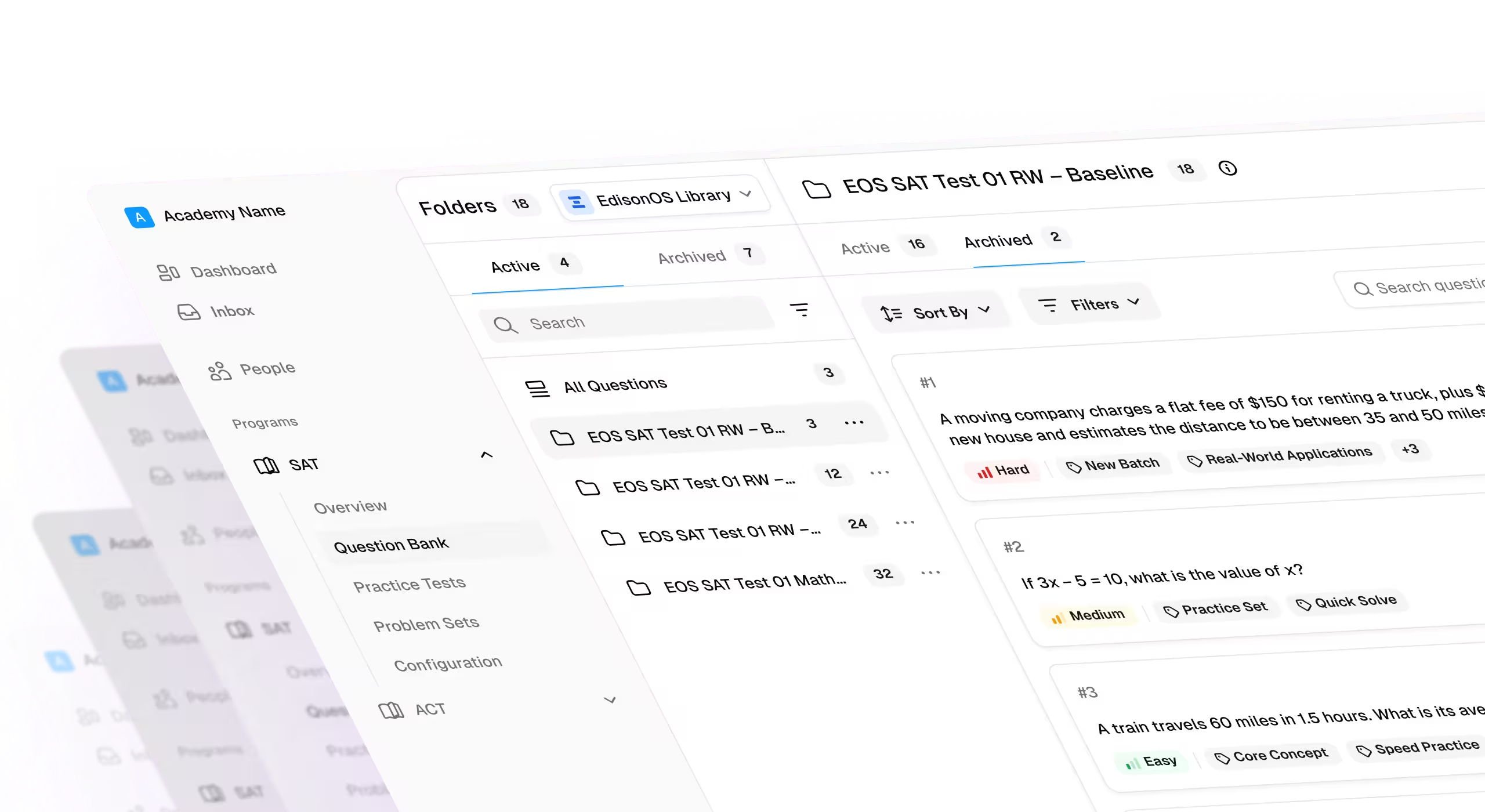
- Use Adaptive Learning Tools: Platforms like EdisonOS offer detailed feedback and structured practice plans for targeted improvement.
- Adjust Study Strategies: Focus on the grammar topics that are the most challenging and refine strategies based on personal performance insights.
Conclusion
Improving your ACT grammar score comes down to knowing the rules, recognizing them quickly, and practicing until the right choice becomes easier to spot.
Historical question-frequency research can help you decide which grammar areas deserve more practice, while the official ACT English reporting categories provide the current framework for what the section measures. Working through examples such as comma splices, modifier errors, subject-verb agreement, and pronoun case can make those rules easier to recognize in real questions.
The enhanced ACT English section also makes pacing important. With 50 questions in 35 minutes, students need both grammar knowledge and an efficient approach to each question.
Use targeted practice, review the mistakes you make, and keep building speed as your accuracy improves. A consistent approach can make the ACT English section feel much more manageable on test day.
Frequently Asked Questions