- ESA funds can pay for tutoring when the family's state program permits tutoring, and the service meets its eligibility rules.
- Online and in-person tutoring may qualify. Eligibility depends on the program, subject, provider, and delivery format.
- Payment methods vary. Families may pay through an approved marketplace, arrange direct payment to a vendor, or pay first and request reimbursement.
- Provider approval matters. A tutoring provider approved in one state may not be approved in another.
- Keep documentation. Invoices, service dates, receipts, attendance records, and other supporting documents may be required.
- Check before prepaying. Confirm whether packages, advance payments, and unused sessions are eligible under your specific program.
Education Savings Accounts (ESAs) allow eligible families to use allocated education funds for approved learning expenses, including tutoring in many state programs. Whether ESA funds pay for tutoring depends on the state's rules, the student's eligibility, the type of instruction, and whether the provider meets the program's requirements. Some programs support online tutoring, test preparation, and individual instruction, while others impose specific restrictions.
In 2026, ESA programs continue to operate under different state-level rules, payment systems, and funding limits. Families should verify their current program handbook and approved-provider directory before booking sessions or paying out of pocket. Understanding the payment process, documentation requirements, and eligible tutoring formats can help families use their education funds without avoidable delays or denied claims.
What an ESA Is and How It Pays for Tutoring
An Education Savings Account (ESA) is a state-administered education funding program that gives eligible families access to public funds for approved educational expenses. Unlike funding restricted to a single school, an ESA may allow families to pay for services such as tutoring, curriculum, educational materials, and certain specialized learning support. The eligible expenses, funding amounts, and family qualification requirements depend on the state and the specific program.
When tutoring is an eligible expense, families generally use one of three payment methods: direct payment to an approved provider, purchases through a state-approved marketplace, or reimbursement after paying upfront. Platforms such as ClassWallet and EMA help administer transactions in certain programs. Before enrolling, families should check whether their chosen tutor is approved, whether their account has sufficient funds, and what documentation the program requires.
Understanding ESA-Eligible Tutoring Services
Tutoring eligibility depends on more than whether a service provides academic support. The subject, instructional format, tutor qualifications, and state program rules can all affect whether an expense qualifies.
Families should verify each service against their current ESA handbook before committing funds.
1. One-on-One Tutoring
Individual tutoring provides focused instruction tailored to a student's learning needs. Depending on the program, eligible services may include reading, writing, mathematics, science, and other academic subjects.
For example, a family may choose one-on-one tutoring to help a student address specific skill gaps or prepare for an upcoming assessment. However, the tutor may need to meet state-specific credential or registration requirements.
2. Online Tutoring
Many ESA programs permit online tutoring when the service and provider meet program requirements. Online instruction can give families access to subject specialists outside their immediate area, but the fact that a service is online does not automatically make it eligible.
Before enrolling, check whether the provider is approved for your specific program and whether live lessons, virtual group classes, or self-paced online courses qualify under the same or different expense categories.
Families comparing providers can explore the best Digital SAT tutoring services and use the state's vendor directory to verify eligibility before making a purchase.
3. Group Tutoring
Group tutoring allows students to learn alongside peers while receiving instruction from a tutor. It can be useful for reinforcing classroom concepts, practising problem-solving, or preparing for standardized tests.
Some programs may allow group instruction, but eligibility can depend on how the service is structured and how the provider is approved. Families should confirm the rules before paying for group tutoring.
4. Test Preparation Tutoring
Test preparation may qualify when a state program permits academic tutoring or approved test-preparation services. Depending on the program, instruction may cover standardized assessments, college entrance exams, or subject-specific preparation.
For example, students preparing for the SAT may benefit from a free Digital SAT practice test to identify areas that need work before choosing a tutoring plan. A diagnostic test can also help establish a starting point and guide instruction.
However, families should distinguish between tutoring services and test registration fees or standalone practice materials, as these may fall under different eligibility rules.
5. Specialized Academic Support
Students who need support with reading difficulties, learning disabilities, or specific academic challenges may qualify for specialized services under some ESA programs. The rules may distinguish ordinary tutoring from educational therapy or specialized instruction.
For instance, families seeking SAT support for a student with a learning disability can review SAT prep for students with learning disabilities while checking whether the proposed service meets their program's requirements.
Important: Never assume that a service qualifies simply because it is educational. Check the current program rules, provider status, and documentation requirements first.
How to Pay for Tutoring with ESA Funds
The payment process depends on the state's fund administrator and the provider's approval status. Some families can pay directly through a marketplace, while others must submit an invoice or request reimbursement.
Step 1: Confirm Your Eligibility and Available Balance
Check your ESA account to confirm that your child is eligible, the account is active, and sufficient funds are available. Review any restrictions on tutoring expenses, annual funding limits, and deadlines for using the funds.
If your family is still deciding when to begin test preparation, a guide to when to start SAT prep can help with academic planning. Funding eligibility, however, must be verified separately.
Step 2: Find an Approved Tutoring Provider
Search your state's official provider directory or marketplace. Confirm that the tutor or company is approved for your specific ESA program and that the service you want to purchase is eligible.
Ask the provider whether they accept direct payments through your program, can submit invoices, or require families to pay first. You can also use a list of questions to ask a tutor to assess qualifications, teaching methods, progress reporting, and pricing.
Step 3: Choose the Correct Payment Method
ESA programs commonly use one of these methods:
- Direct vendor payment: The program pays the approved provider directly after the required order or invoice is approved.
- Marketplace payment: The family selects an eligible service through the program's designated purchasing platform.
- Reimbursement: The family pays upfront and submits a claim with the required invoice, receipt, and supporting documents.
The method available to you depends on the state program. Do not pay out of pocket on the assumption that reimbursement will be permitted.
Step 4: Submit the Required Documents
Depending on the program, the required documentation may include:
- An itemized invoice identifying the provider and student
- A description of the tutoring service
- Session dates or the period covered
- The total amount charged
- Proof of payment, if reimbursement applies
- Tutor credentials or other supporting records, if requested
Arizona's ESA program, for example, directs families seeking reimbursement to provide a detailed invoice, proof of payment, and valid credentials where required.
Step 5: Track the Transaction and Keep Records
Monitor your account for approval, payment, or requests for additional information. Keep copies of invoices, receipts, attendance records, and relevant communications until you have confirmed that the transaction has been processed and understand your program's record-retention requirements.
Common Challenges and How to Overcome Them
Even when tutoring is an eligible expense, families may encounter payment delays, unclear eligibility rules, or provider restrictions. Checking requirements before booking and keeping complete records can help prevent avoidable problems.
1. The Tutor Is Not an Approved Provider
A tutor may offer an eligible type of instruction but still be unable to receive ESA payments because they are not registered with the relevant program.
How to overcome it: Check the official vendor directory before scheduling. If your preferred tutor is missing, ask whether they can apply for approval and contact your program administrator to understand the process. Do not assume approval in another state is sufficient.
2. The Expense Is Rejected
A tutoring service, subject, payment method, or package may not meet the program's rules. An incomplete invoice can also delay review.
How to overcome it: Verify eligibility before purchase and submit the required documents in the correct format. If a claim is rejected, read the reason provided by the administrator and ask what correction or additional documentation is permitted.
3. Reimbursement Takes Longer Than Expected
Reimbursement depends on the program's review process, deadlines, and the completeness of the submission. There is no universal processing time across all ESA programs.
How to overcome it: Submit claims promptly, save confirmation numbers, and follow up through the official portal if a request remains pending. Whenever possible, consider direct payment if your program supports it and your provider is approved.
4. The Tutoring Package Requires Advance Payment
Some providers offer monthly plans or prepaid packages. These may not align with the program's payment rules or funding schedule.
How to overcome it: Ask whether the provider can invoice by approved service period or session. Before paying for a package, confirm how the program treats prepaid services, unused sessions, and expenses that cross into a new funding year.
5. It Is Difficult to Demonstrate Learning Progress
Some programs may request additional documentation or have ongoing participation requirements. Even where formal progress reports are not mandatory, families may want evidence that tutoring is meeting the student's needs.
How to overcome it: Agree on learning goals with the tutor and review progress regularly. A consistent process to track student progress can help families understand whether instruction is addressing the student's needs. Check the program handbook to determine whether progress reports are formally required.
State-by-State ESA Program Guide
ESA programs differ by state in their eligibility rules, approved services, provider requirements, and payment methods. The examples below illustrate how tutoring may be handled in selected programs; they are not a complete list of every state that allows tutoring.
How to Verify the Rules in Your State
Before enrolling in tutoring, follow these checks:
- Find the official program website. Start with your state education department or designated ESA administrator.
- Read the current expense guide. Look for tutoring, online instruction, test preparation, and any restrictions on prepaid services.
- Check the provider directory. Confirm the exact tutor or company is approved for your program.
- Confirm payment requirements. Find out whether direct payment, marketplace purchasing, or reimbursement is available.
- Save the relevant guidance. Keep a copy of the current handbook and any written confirmation from the administrator.
Program rules can change between school years. The state administrator's current guidance should take precedence over a general article or a provider's marketing claims.
Use ESA Funds With a Clear Tutoring Plan
ESA funds can make tutoring more accessible, but families need to verify that the service is eligible, the provider is approved, and the payment method follows program rules. Checking these details before booking can help prevent rejected claims and unexpected out-of-pocket costs.
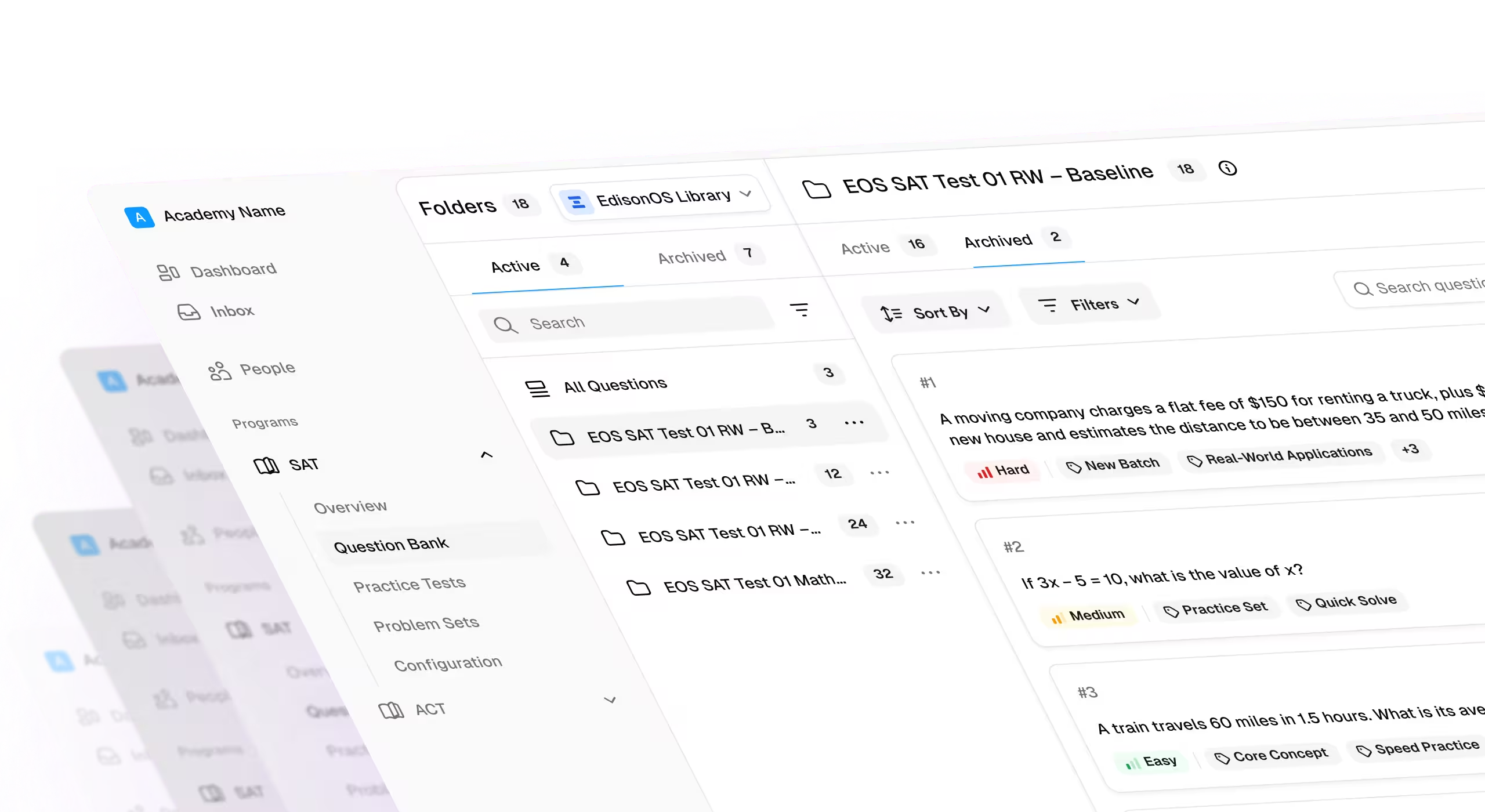
Once funding requirements are clear, focus on finding instruction that matches the student's needs, setting learning goals, and reviewing progress over time. For families and educators building a more structured tutoring operation, EdisonOS for tutoring businesses offers tools to manage tutoring workflows and support student learning.
Frequently Asked Questions
Can I use ESA funds for online tutoring?
In many ESA programs, yes. Online tutoring may qualify when the program allows it and the provider and service meet the relevant requirements. Texas, for example, states that approved providers can offer eligible services online or out of state. Check your own program's current rules before enrolling.
How many states allow ESA tutoring?
There is no single number that applies to every definition of an ESA or every type of tutoring. Program counts also change as states introduce or revise education-funding options. Current reporting describes ESA programs across multiple states, but families should verify tutoring eligibility at the individual program level rather than relying on a national count.
What's the difference between direct pay and reimbursement?
With direct pay, approved funds are sent to the tutoring provider through the program's payment process. With reimbursement, the family pays first and then submits a claim with the required supporting documents. Not every program or expense supports both methods.
Do I need to show progress reports to keep receiving ESA funds?
Not necessarily. Requirements depend on the state program and may include financial documentation, attendance records, academic assessments, or other records. Do not assume that progress reports are universally required—or that they are never required. Review your current handbook for ongoing reporting obligations.
How long does it take to get reimbursed for tutoring expenses?
There is no universal timeline. Processing can depend on the administrator's workload, the payment cycle, and whether your claim includes all required documents. Submit your request within the program's deadline and check its official portal for status updates.
Can ESA funds cover test preparation tutoring?
They may, if the program allows the service and the tutor meets the relevant requirements. Some programs list tutoring broadly, while others have specific expense categories or restrictions. Confirm whether your intended test-preparation service qualifies before booking. If your student is preparing for the ACT, you can review typical ACT tutoring prices as part of budgeting—but price alone does not determine ESA eligibility.
What if I prepay for a month of tutoring services?
Check the program's rules before making the payment. Some programs may require approval before a service is purchased, and prepaid packages can raise questions about the service period, unused sessions, or expenses that fall across funding years. Ask the ESA administrator whether the exact package and payment arrangement are eligible, and retain the invoice and service terms.