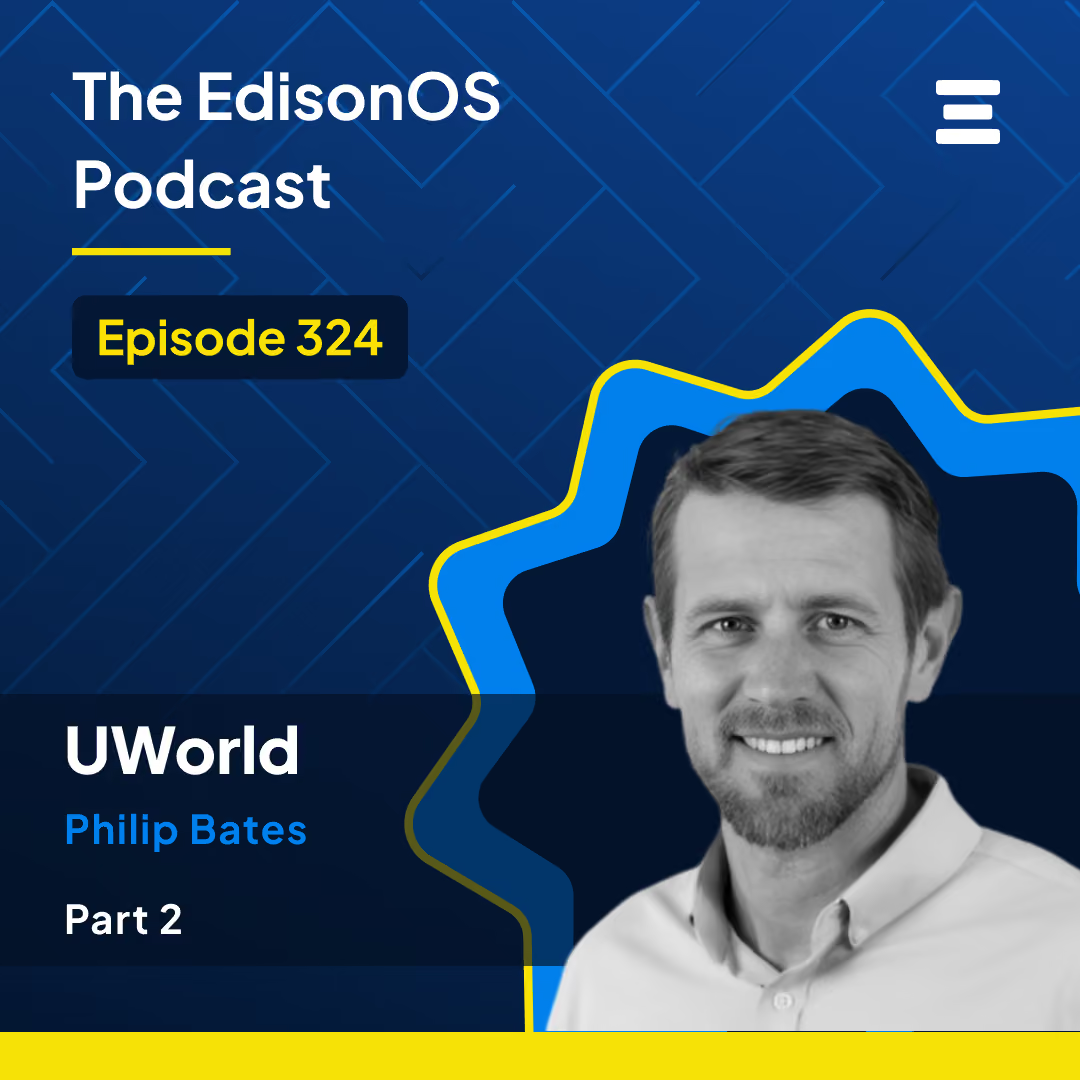
Episode 324 | Philip Bates | UWorld | Part 2 | The EdisonOS Podcast
Episode Description
Key Topics Covered
Why the PSAT and AP must keep adapting to stay relevant. How Philip sees the digital and adaptive nature of the PSAT as essential to its continued credibility, why the partial digitization of AP exams through the current hybrid FRQ format creates real uncertainty about where the exam is headed next, and why he believes elite colleges will continue to need these exams regardless of test-optional trends because there is no other way to fairly compare a student ranked 25th in a class of 1,700 against a student ranked 25th in a class of 50.
Treat the PSAT as preparation, not a dress rehearsal. Why Philip pushes back hard on the common belief that students should walk into the PSAT cold, how a student who takes the exam unprepared often loses confidence and becomes reluctant to even attempt the SAT, and why proper PSAT preparation does double duty by building both National Merit Scholarship eligibility and a genuine skill gap diagnosis for the SAT ahead.
The free response section is where AP scores actually fall apart. Why Philip identifies essay writing as the single biggest gap between strong AP coursework grades and weak AP exam performance, how teaching students to read and apply a scoring rubric is a skill distinct from teaching content, and why classrooms that dedicate real time to FRQ practice consistently outperform classrooms that only drill multiple choice questions.
More practice is not always better practice. Why Philip's data at UWorld shows that targeted, diagnostic-driven practice consistently beats sheer volume, how his own son prepared for the SAT in short 20-minute sessions of about eight gradually escalating questions over 180 days rather than marathon study sessions, and why efficiency, not effort alone, is what actually moves a score.
AI as a time-saving tool that still needs a skeptical eye. How Philip's 18 years inside K-12 public education shaped his understanding of why teachers are naturally cautious about new technology, why UWorld built a beta AI essay grader specifically to save teachers time rather than replace their judgment, and why some of the best results come when AI handles the repetitive grading work so teachers can spend more time on individualized instruction.
A practical playbook for rolling out test prep without losing teacher buy-in. Why Philip recommends bringing teacher leaders into a new platform the spring before a full rollout so they become genuine advocates rather than reluctant adopters, why August planning meetings, January data reviews, and spring interventions each demand a different focus from an AP coordinator, and why failing to explain why a new resource matters is the single most common reason schools see it go unused.
Conclusion
This conversation is a grounded, data-informed look at what nearly two decades inside public school classrooms and leadership taught Philip about turning standardized testing into a genuine growth opportunity rather than a source of dread. Listen to the full episode for the complete methodology and actionable strategies that could transform how any school, teacher, or family approaches PSAT and AP preparation, test-day confidence, and the systems that actually move student outcomes.
Not sure where to start? Let's figure it out together.