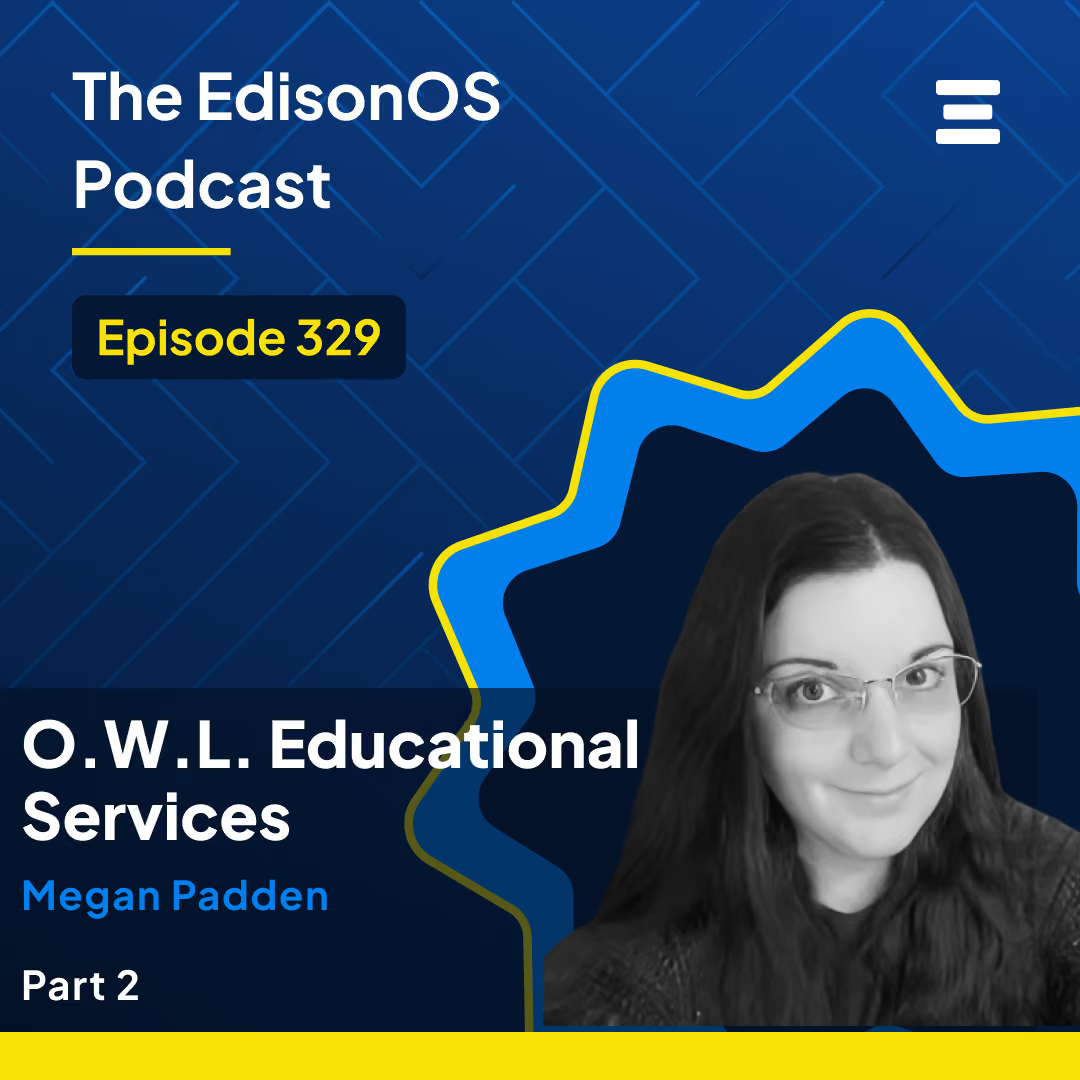
Episode 329 | Megan Padden | O.W.L. Educational Services | Part 2 | The EdisonOS Podcast
Learn More About Megan Padden
Explore Megan's expertise through the following links:
- LinkedIn: Connect with Megan's professional network and experience
- O.W.L. Educational Services: Discover Megan's tutoring and academic support company serving students from age three through adult in English, math, science, SAT, PSAT, AP prep, and more
- Facebook: Follow O.W.L. Educational Services for tutoring updates, SAT and ACT tips, and program announcements
Episode Description
Key Topics Covered
The PSAT is an insight tool, not a college application score. Megan explains that the PSAT is not counted toward college applications, but it is a great tool for determining how ready a student is for the actual SAT without any of that pressure, and that some schools also use PSAT scores to inform decisions about AP and dual enrollment course placement.
Going in blindly is not the best approach. Megan says she does not recommend students take the PSAT without any preparation at all, because there are a number of ways schools and scholarship programs can use those scores beyond National Merit, and preparing for the PSAT is a great stepping stone for preparing for the SAT.
The first question Megan always asks is what math class are you in. Because the math covered in each grade level is so inconsistent, Megan says she has had eighth grade students in algebra two or pre-calculus and others just getting into algebra one, and that gap is enormous when designing a study plan for any standardized test.
Each student comes in with a unique set of skills. Megan describes how some students finish tests with time to spare but lack accuracy, while others read quickly but are missing math concepts like fractions or order of operations, which is why her approach to skills development is always individualized rather than one-size-fits-all.
Standardized tests require students to unlearn certain classroom habits. Megan talks about how elementary reading programs like Dibels train students to read every single word accurately, and how that ingrained habit slows students down on timed tests where strategies like skipping over long unfamiliar names or using shortcut rules like the three-four-five triangle can save significant time.
A great tutor calls students out when they are right, not just when they are wrong. Megan says one of the biggest challenges in education is that students only get asked to explain their answers when they are wrong, and that the panic of being called on when you are actually right is something she addresses directly by consistently asking students to explain correct answers, which also opens up discovery of patterns in what they are missing.
COVID-era learning gaps are still showing up in test prep. Megan describes seeing students who do not know how to use apostrophes, cannot identify parts of speech, and have gaps in fractions, decimals, and long division, noting that she can often identify what grade a student was in during COVID based on which specific foundational concepts are missing.
Testing anxiety in strong academic students usually comes down to unfamiliarity with the format. Megan says she is notorious for having testing anxiety herself and that the best way to reduce it is consistent practice in manageable chunks, building familiarity little by little, because there is nothing more terrifying than going into a standardized test with zero concept of what to expect.
Conclusion
This conversation is a practical and experience-grounded return visit from one of the podcast's most detailed and student-centered voices. Listen to the full episode for the complete methodology and actionable strategies that could transform how any student or family approaches PSAT preparation, AP courses, and the testing anxiety that gets in the way of showing what a student truly knows.
Not sure where to start? Let's figure it out together.