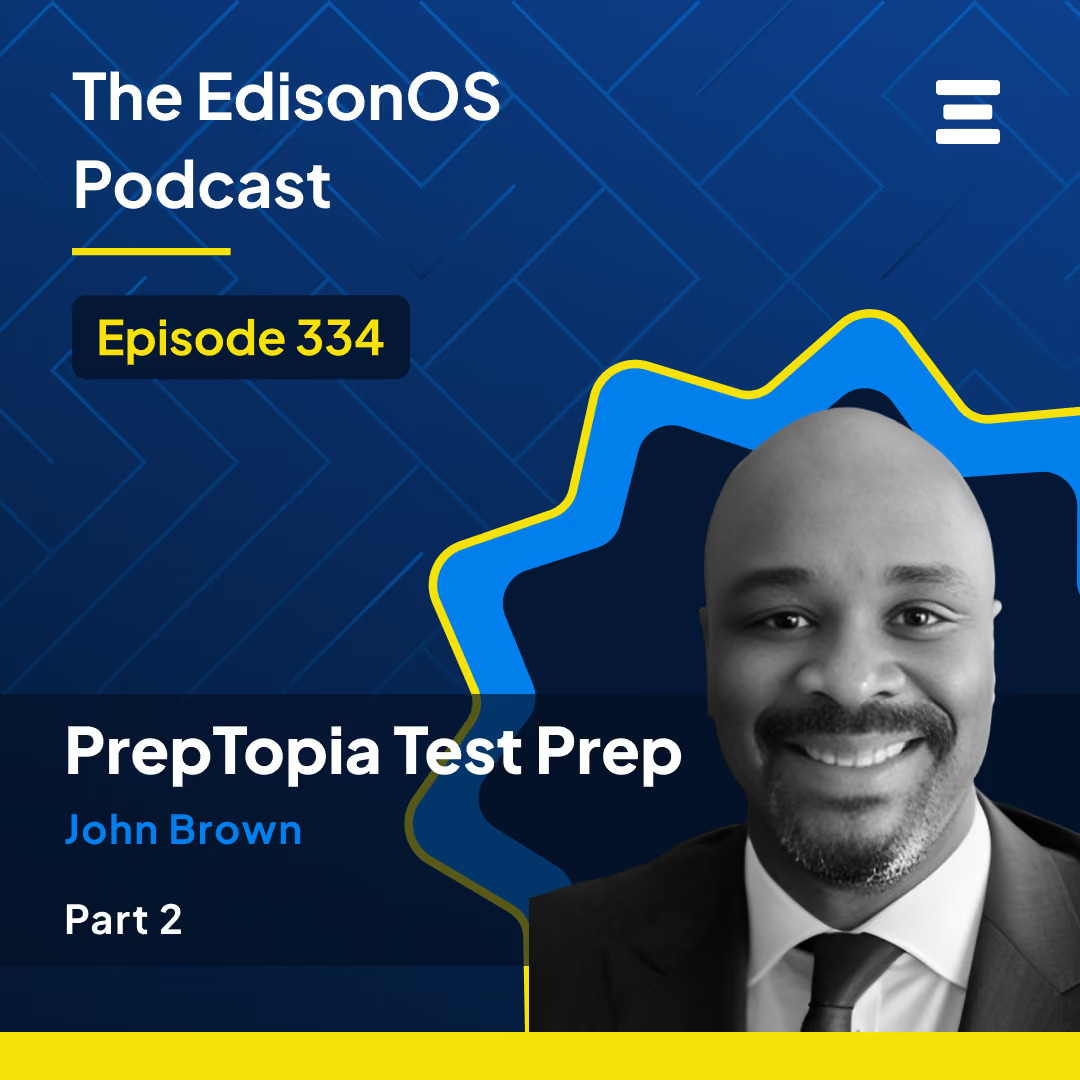
Episode 334 | John Brown | PrepTopia Test Prep | Part 2 | The EdisonOS Podcast
Learn More About John Brown
Explore John's expertise through the following links:
- LinkedIn: Connect with John's professional network and experience
- PrepTopia Test Prep: Discover John's Frankfort, Illinois-based ACT and SAT tutoring company where higher scores open doors, serving students from Chicago to New York to Seattle and the UK
- Facebook: Follow PrepTopia for test prep tips, student success stories, and ACT and SAT updates
Episode Description
Key Topics Covered
The two biggest changes families are still catching up on. John says the enhanced ACT's separation of the science score from the composite is what most families are still wrestling with, and that the ACT being acquired by ETS, which runs the GRE, is something test prep professionals are speculating about heavily in terms of how it will change the landscape for both families and independent tutors.
Every student is different and the diagnostic test is still the starting point. John says he does not see a clear tilt toward one test and that he recently took both the ACT and SAT in June to keep his hands-on perspective current, and that some students are better suited for the rapid fire pace of the ACT while others are not thrown off by the challenging nature of the SAT, and that he would always steer a student toward the test where there is more growth potential even if their raw score is currently higher on the other one.
Test optional is not test blind. John says the most important thing for students to understand is that if there is a discrepancy in acceptance rates that favors students who submit scores, and a student's score falls within the middle fifty percent of accepted students, they should submit, and that he holds on to the idea that students can still rebound until they have truly exhausted all their options.
The diagnose, target, drill, and retest loop. John explains that he meets students where they are, targets the areas where improvement comes fastest first, sets ambitious goals but gives incremental targets, and runs the loop through practice tests the same way every time, treating each practice test not as a score report but as a way of finding the holes in a bag so that by test day the bag is airtight.
Reading and writing is the most strategy heavy section on the digital SAT. John says students who try to read every word of a passage on a one-question page will run out of time, and that his biggest strategy is to find the claim, find the hypothesis, eliminate wrong answers based on the prompt before reading further, skip the harder middle questions, answer the standard English conventions questions from question fifteen forward, and then loop back to the harder ones with the time saved.
Math strategy on the digital SAT means three tools and knowing which one is fastest. John says he wants students to have scratch paper, a regular calculator, and Desmos in front of them at all times, and that reps are the only way to know which of the three is fastest for any given question, and that students trained to show all their work in school need to be retrained to rule out wrong answers with every step rather than doing all the math before looking at the choices.
ACT English is the fastest moving section with the right instruction. John says the vast majority of ACT English questions ask which answer is grammatically acceptable, and that once he shows students what grammatically acceptable means in as many situations as possible, especially around punctuation and subject verb agreement, the conversion is quick, and that Grammar Chops by Mike McGibbon is one of the resources he recommends most often.
Science is data literacy, not content knowledge. John says he applies about seventy-five percent of his reading strategies directly to science, that students come in with built-up negative feelings about seeing valence electrons or dominant and recessive traits, and that once he shows them the section is about interpreting what the questions want them to do with the data rather than knowing the content, their timing and accuracy both improve significantly, and that he gives students thirty to forty-five seconds max to scan the tables and figures before diving into the questions.
Two to three retakes is the sweet spot and plateau means done. John says he always advises retakes unless a student has already hit a 35, and that the second sitting is where most students who do not reach their goal in the first sitting end up hitting it, and that once improvement stops coming in increments of thirty to fifty points, the conversation about being done needs to happen.
Conclusion
This conversation is a hands-on and experience-rich return visit from one of the most practically detailed voices in the SAT and ACT space. Listen to the full episode for the complete methodology and actionable strategies that could transform how any student approaches test selection, section strategy, time management, and the reps-based preparation that turns test day from a surprise into a solved problem.
Not sure where to start? Let's figure it out together.