.avif)
Retaking the ACT is a great way to improve scores, since familiar question patterns and pacing strategies reward repeated attempts, with 8 expert tips to maximize the next sitting.
- Identify weaknesses from the score report — Treat the first test as data collection, reviewing exactly which sections and question types dragged the score down to fix root causes rather than guessing.
- Take targeted action, not repetitive tests — Build focused drills around the specific question types missed most often until they become second nature.
- Build stamina with timed practice — Simulate real conditions with a full-length practice test in one sitting to build mental endurance.
- Master the digital tools — Get comfortable with the built-in Desmos calculator, answer eliminator, and flag-for-review feature ahead of test day.
- Perfect pacing — Easy and hard questions are worth the same, so tackle known questions first and cap any single question at 90 seconds.
- Never leave blanks — No penalty for wrong answers, so use process of elimination and, if forced to guess blindly at the end, pick the same letter for all remaining questions.
- Plan for a mental reset — A full week of 8-hour sleep before the test, plus staying calm and not letting one hard question derail the rest of the exam.
- Use superscoring — Check whether target colleges combine the highest individual section scores across multiple test dates, which can meaningfully boost the final composite.
As a tutor, you’ve likely seen it: a student finishes the ACT, checks their score, and says, “I can do better.” And they’re often right.
More students are choosing to retake the ACT, not because they failed, but because they’re aiming higher. A higher score can help them secure merit-based scholarships, tip the scales in competitive college admissions, and even boost their superscore by targeting just one or two weaker sections.
With the ACT's 2025 updates, including the Enhanced ACT format and changes to Composite and Superscore calculations, students have new ways to approach retesting strategically.
The Enhanced ACT was introduced in 2025, but students still take the full ACT when they retest. The current Superscore uses a student's best English, Math, and Reading scores across valid ACT attempts, so a retake can be useful even when only one section is the main focus of preparation.
Why Students Retake the ACT
If it feels like everyone’s giving the ACT a second shot in 2025, you’re not imagining it. More students are lining up for ACT retakes than ever before, and it’s not just about chasing perfection. It’s about strategy, access, and real rewards.
States like Tennessee, Kentucky, and Oklahoma now offer school-day testing and free retake programs. Students no longer need to wrestle with weekend test centers, and they’re getting multiple shots right at school. For example, on Tennessee’s Senior Retake Day, 76% of students took the ACT more than once, and their superscores rose by an average of 2.4 points. That’s not a small bump — that’s the difference between a good scholarship and a great one.
Additionally, the ACT itself has changed, too.
The Enhanced ACT changed how retakes can contribute to a student's overall score, not how the test is retaken. Students still take the full ACT at each attempt, but the current Superscore combines their highest English, Math, and Reading scores across attempts.
That means a student can make one section the main focus of preparation while still taking the complete ACT on test day. If that section improves, the new score can potentially become part of the student's Superscore, depending on the policies of the colleges they are applying to.
How Many Times Can You Retake the ACT? Official Rules
There is no limit to how many times a student can take the ACT. Students can register for another National ACT test whenever they are ready for another attempt.
However, a few rules are important to understand before planning a retake:
How Superscoring Changed ACT Retake Strategies
The Enhanced ACT changed the way the Superscore Composite is calculated. It now uses a student's highest English, Math, and Reading scores across valid ACT attempts. Science is no longer included in the Superscore Composite, although it remains available separately and is used with Math to calculate the STEM score.
What’s the impact:
For students, this means preparation can be highly focused even though the retake itself is a full ACT attempt. A student can concentrate study time on the section where improvement is most needed, take the full ACT again, and potentially raise the Superscore if that section becomes their highest score.
The student does not need to retake only that section.
For tutors: Superscores shifts the retake conversation from “should we do it again?” to “which part should we do again?” Reviewing score reports becomes a section-by-section mission. If English and Reading are strong, zero in on Math or Science.
Note II: Not all colleges accept superscores. Many top schools like Columbia, Dartmouth, and MIT do, but some (like Yale) still want to see all scores from every test date. So tutors should always check which colleges superscore ACT.
How to Decide If a Retake Is Right
Not every student needs to retake the ACT. Since retakes should now be treated as a part of the testing strategy, make the decision when the payoff can be real.
Here’s how you can help your students weigh the option:
- Score improvement potential: About 57% of repeat testers improve, but 21% do not. If the student’s initial score was in the 13–29 range, the typical boost is about +1 point. Compare their actual score to their practice tests, and a retake is likely worth it if practice scores trend higher.
- College and scholarship targets: If the current score falls below a college’s mid-50% range or a merit aid threshold, a retake makes sense. But if it already meets the goals, chasing more points may not justify the time and energy.
- Superscore advantage: Did one section drag the composite down? If target colleges accept superscores, retaking just that section could lift the overall composite. Tutors can help identify which sections to prioritize.
- Test-day disruptions: Illness, nerves, or simple misreads can sabotage a test. If the student feels their score didn’t reflect their true ability, a retake could offer a fair shot with the right prep.
- Time before deadlines: Retakes require runway. Ideally, plan for 2–3 months of prep before the next ACT and ensure score reports will arrive before college application deadlines.
- Effort vs. return: Retaking the ACT takes time and discipline. If a student is already stretched thin or unlikely to gain much, tutors can help them shift focus to essays, recommendations, or GPA instead.
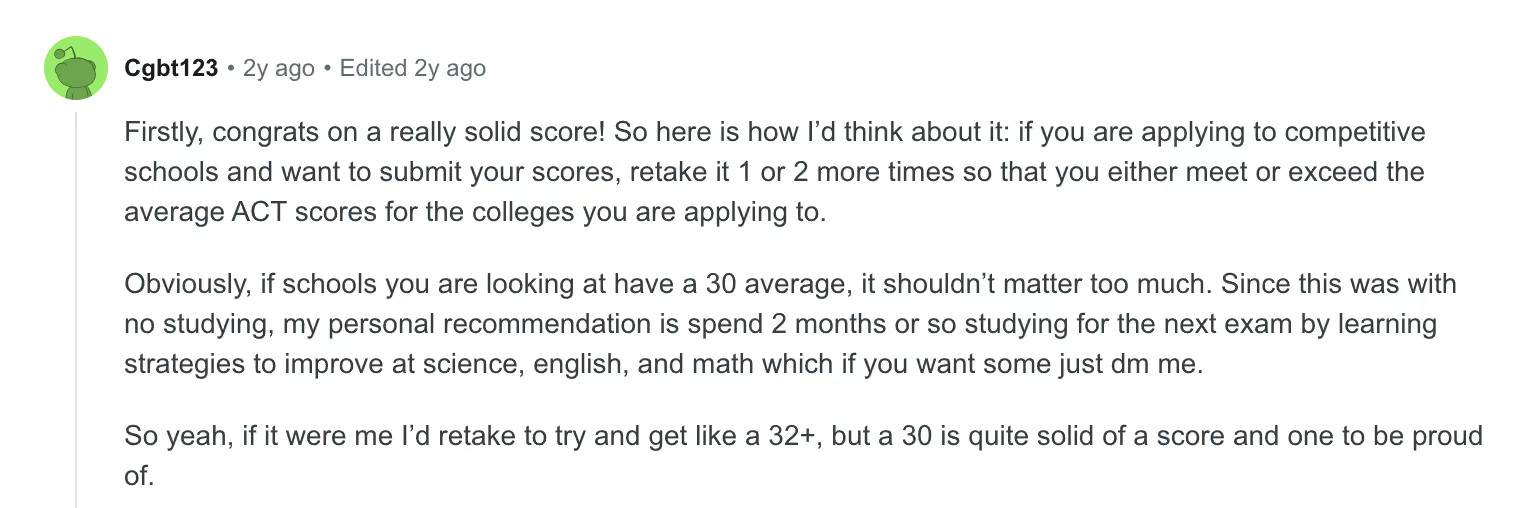
Here’s what a Reddit user had to say about retaking the ACT for a student who scored 30 without studying and felt like he could do better on certain sections:
Tutor Tip: A retake is worth it when there’s a clear goal, a section to target, and time to do it right. Use score reports, target school data, and realistic prep timelines to help your students make confident decisions.
8 Tips for Retaking the ACT
ACT My Answer Key
ACT My Answer Key gives eligible test takers a detailed look at their test performance. It includes a digital copy of the scored multiple-choice questions, the student's answers, the answer key, and the conversion table used to determine ACT scores.
For students preparing for another attempt, this can make score review much more concrete. Instead of simply seeing which section needs improvement, they can go back through the questions they missed and identify the content areas or question types that need more preparation.
The current cost is $36 when ordered before the test and $44 when ordered after the test. Students can order it during registration or within six months after the test date once scores are available.
ACT My Answer Key is currently offered for selected National ACT test dates. For the 2026–27 testing year, eligible dates include October 2026, December 2026, April 2027, and June 2027.
Review Score Report in Depth
Every successful retake starts with understanding what went wrong.
ACT’s score report gives valuable insight into which sections underperformed, and even more importantly, which question types caused trouble. From misread science passages to slow math calculations, you can pinpoint what exactly your student needs to focus on in the retake.
If available, use ACT’s My Answer Key (formerly known as Test Information Release) to see the actual questions missed. This allows tutors to identify patterns, such as repeated errors in punctuation, graph interpretation, or word problems. Targeting those patterns makes your prep focused, not frantic.
Set Section‑Specific and Realistic Score Goals
“Improve my score” is too vague. Instead, aim for goals like:
- “Raise Math from 23 to 26”
- “Get three more questions right in Reading.”
Set a composite score target, yes — but use the ACT scoring chart, break it down section by section.
With the superscoring system, this becomes extremely important. Tutors should help students identify where even a 1- or 2-point bump in a section could shift their entire application profile.
A section-specific goal is a preparation target, not a separate ACT registration. Since students currently retake the full ACT, use the previous score report to decide which section deserves the most attention during preparation.
Build a Structured, Targeted Study Plan
Start with the results from the student's previous ACT attempt. Identify the section and question types that offer the clearest opportunities for improvement, then build study sessions around those areas while maintaining enough practice across the other sections to keep existing strengths sharp.
A study plan that lives in a student’s head rarely comes to fruition. Tutors should help build a clear schedule, which should include:
- Which days to study
- What topics to cover
- When to take full-length practice tests
- How to measure progress.
Pro tip: Prioritize weak sections, but mix in full reviews to keep strong areas sharp. Weekly checkpoints keep students motivated and accountable. Get more digital ACT tips.
Focus on Weak Areas Without Ignoring Strengths
We all want to fix what’s broken, but it’s risky to ignore what’s working.
Yes, you should focus tutoring sessions on the biggest gaps. However, always include a light review of strong sections to prevent backsliding.
Think of it as maintaining your high-scoring “assets” while upgrading the liabilities.
Use the weakest section to guide the bulk of your preparation, but keep the stronger sections in the routine. Because an ACT retake is a full-test attempt, students still need to be ready for every section they plan to take on test day.
Take Full-Length Practice Tests Under Real Conditions
This one’s non-negotiable.
Practice tests should mimic test day—timed, with breaks and no interruptions. ACT has gone digital, so ensure students are prepping in the same online format they’ll use on test day.
Tutors can walk students through mock exams afterward and assess pacing, confidence, and fatigue. Use what you see to adjust strategy and boost test-day readiness.
Full-length practice matters because an ACT retake is another complete test attempt. Practice under realistic timing and testing conditions so the student can work on pacing, stamina, and transitions between sections—not just individual question types.
With EdisonOS, tutors can take the guesswork out of ACT prep
Our free digital practice test gives students a full-length, realistic ACT experience — and gives you powerful data to guide your retake strategy. Here’s what to expect:
- Mimic the real ACT: From screen layout to timing tools, our interface mirrors the official test.
- Instant scoring + breakdown: Get scaled scores by section, plus insights into timing and accuracy.
- Identify strengths and weaknesses: See where students lose points — and where they’re ready to gain them.
- Start building smarter plans: Use test results to create custom BYOTs and prep plans for each student.
EdisonOS makes it easy to assess, analyze, and act, all in one platform. Ready to see where your students stand?
🔗 Take the Free ACT Practice Test on EdisonOS
Improve Test-Taking Strategy and Pacing
It’s not just what you know, it’s also how you use your time. The ACT is fast-paced, so mastering timing is crucial. Teach students essential pacing techniques like:
- Smart skipping: Move on when stuck, circle back later
- Answer elimination: Narrow choices down before guessing
- Flag and revisit: Don’t waste time wrestling with a single hard question
These small tactical changes often yield big score gains.
Incorporate Mental and Physical Preparation
Test success isn’t just cognitive, it’s also physical and emotional. Help students prep for the human side of the test by encouraging to:
- Get enough sleep
- Eat a brain-friendly breakfast
- Practice stress-management (deep breathing, visualizing success)
- Take breaks during prep to avoid burnout
Mental clarity often makes the difference between second-guessing and scoring higher.
Select the Optimal Retake Date
Timing can make or break a retake. Give your student at least 8–12 weeks to prep effectively, and ensure the test date works with college application timelines.
Because ACT retakes are full-test attempts, choose a date that gives you enough time to prepare for the section you most want to improve while still maintaining your performance across the rest of the test.
If your target colleges superscore the ACT, a meaningful improvement in one section can still raise your Superscore. Before registering, check each college's current testing policy and work backward from your application and scholarship deadlines.
2026–27 ACT Test Dates and Registration Deadlines
Planning a retake starts with choosing a test date that leaves enough time for focused preparation. Here are the current 2026–27 National ACT dates:
Deadlines are listed in Central Time. Late registration fees apply after the regular registration deadline.
Current ACT Retake Cost
The cost of an ACT retake depends on which sections a student chooses to take. The current base ACT includes English, Math, and Reading, while Science and Writing are optional add-ons.
Additional fees may apply for late registration, standby testing, test-date changes, or other services.
How EdisonOS Helps Here
EdisonOS, built for tutors, offers a flexible, data-driven platform that helps you pivot quickly when a student’s score falls flat.
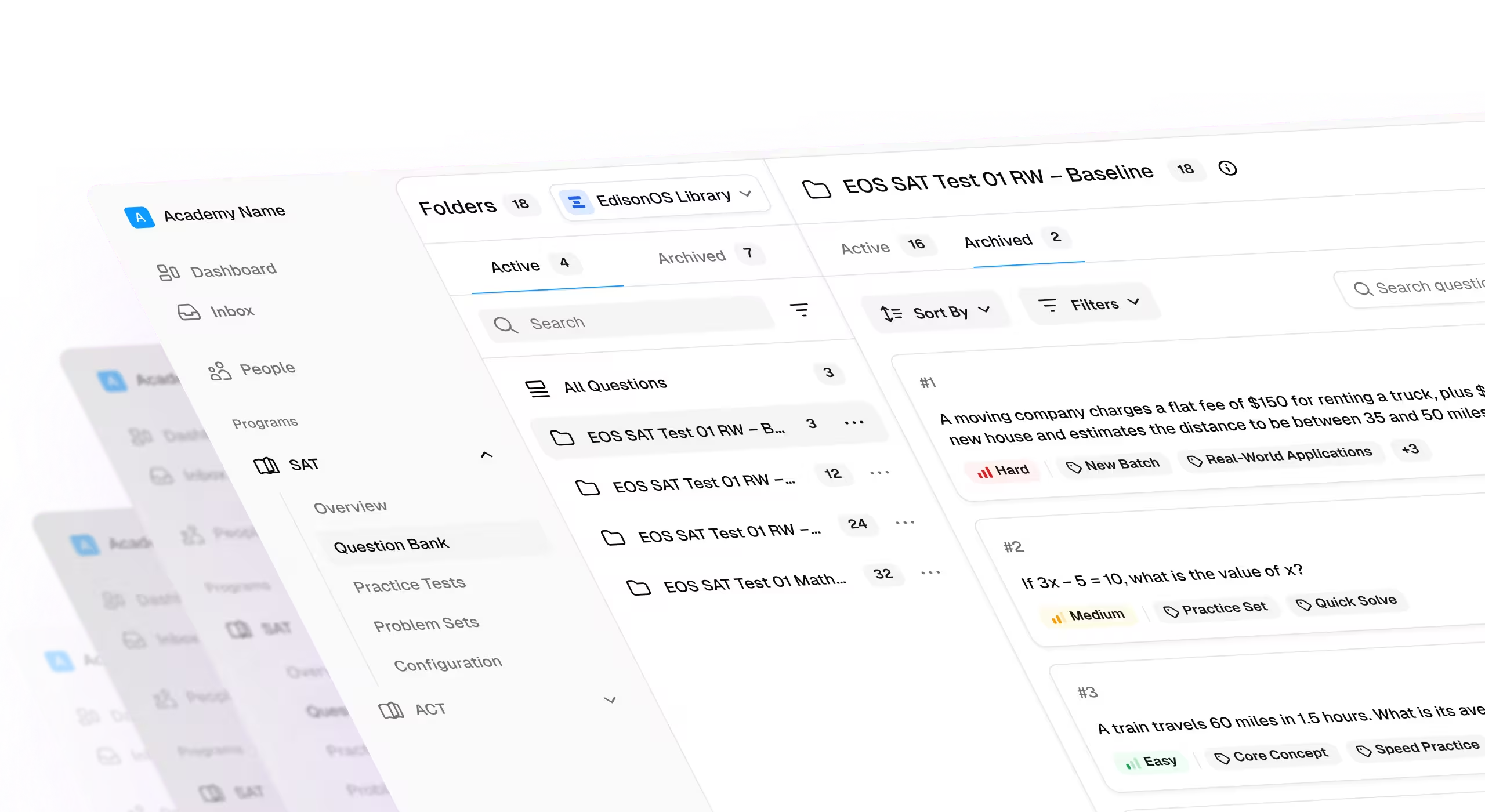
Instead of digging through spreadsheets or generic test banks, tutors can use EdisonOS’s Build Your Own Test (BYOT) feature to create hyper-focused mock exams in minutes. Whether you're pulling questions from a 5,000+ question library or uploading your own, the result is the same: targeted practice that mirrors exactly what the student needs to work on.
And you’re not left guessing what those needs are.
With EdisonOS’s detailed reporting, you’re not just seeing the final score, you’re also seeing patterns like:
- A drop in accuracy on vocabulary-in-context questions
- Repeated errors in punctuation or sentence structure
- Slower pacing or fatigue in multi-step math problems
- Consistent mistakes in interpreting graphs or data visuals
With this insight, tutors can make more than educated guesses and build smarter sessions that actually move the needle. Here’s what makes EdisonOS for ACT so effective for retakes:
- Real-time tutor mode: Students get immediate feedback on the right answer, the rationale, and a chance to reflect while it’s still fresh.
- Simulated ACT environment: From timers to tools like highlighters and calculators, EdisonOS mimics the official test experience to build familiarity and confidence.
- Section-by-section targeting: Focus prep on underperforming sections by designing customized BYOT assessments.
- Progress tracking + reporting: Weekly analytics show how each student is trending, which areas are improving, and what still needs work — and you can send updates to parents automatically.
EdisonOS gives tutors what they need to support smarter retake prep: fast customization, deep diagnostics, and a test experience that actually feels like test day.
Conclusion
A well-timed, well-prepared ACT retake can help a student strengthen a scholarship application, meet an admissions target, or simply demonstrate more of what they know.
The important thing is to use the previous ACT results to decide where preparation should be focused. Students currently retake the full ACT rather than individual sections, so the goal is to improve the target area without losing ground in the others.
The current Superscore can then combine a student's highest English, Math, and Reading scores across attempts, where accepted by the college. Before scheduling another test, review the student's score report, set a realistic target, choose a date that allows enough preparation time, and check the testing policies of the colleges on the list.
And you don’t have to do it manually. Ready to see how EdisonOS can power your ACT prep? Book a free demo today.
Frequently Asked Questions
.svg)