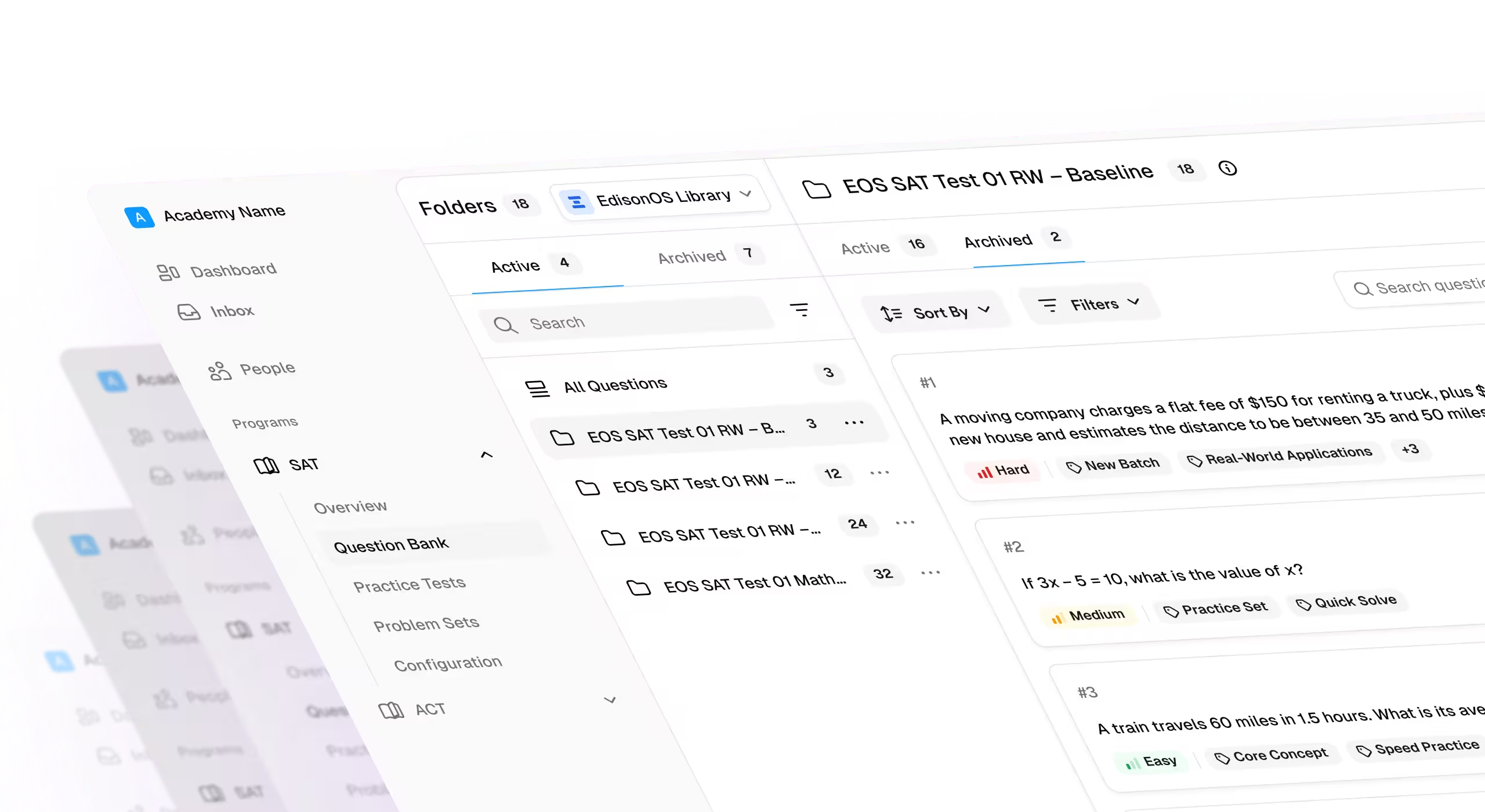
- Digital assessment platforms cut score turnaround from weeks to days, and research backs up why that matters: immediate feedback drives real learning gains, delayed feedback barely helps at all.
- A single composite score hides more than it reveals. Breaking student feedback into error type (concept, timing, carelessness), easy/medium misses, time sinks, and pacing curve turns a vague number into a specific action plan.
- The adaptive structure of the digital SAT makes early accuracy and pacing carry outsized weight — student feedback that ignores this is incomplete.
- Feedback only helps when it points to a next step, not just a missed question. Diagnosis without a plan doesn't move scores.
- Tutors and schools need the same feedback data students see, not a delayed or secondhand version of it, to actually close the loop.
We had Rhea Wanchoo on the EdisonOS podcast a while back. She's a neuroscience and psychology student at UC Berkeley and co-founder of M&W Education, a boutique education consulting and tutoring company. She's lived through both versions of the SAT, the old three-hour paper slog and the new digital one, and when we asked what she thought of the switch, her answer stuck with us: "easier mechanically, but harder strategically".
Why a Digital Assessment Platform Delivers Faster Student Feedback
Rhea explained it simply on the podcast: "the proctoring is more uniform, there's less that's kind of variable," and students get results back much faster. No more sitting in limbo for weeks.
She's right, and the primary sources back her up:
- The College Board's own announcement confirms digital SAT scores return in days instead of weeks
- College Board's higher-ed research summary found 83% of students who'd taken both formats said the digital SAT was a better experience than the paper version
- A 2025 review of feedback timing research found that immediate feedback drives real learning gains, while delayed feedback barely moves the needle
Tell a student three weeks later what went wrong on a specific Digital SAT or ACT question type, and you're talking to a version of them that's already moved on. The value of a digital assessment platform isn't just scoring fast. It's delivering student feedback while the student can still remember what they were thinking when they picked that answer.
How a Digital Assessment Platform Breaks Down Student Feedback
Two students can land on the exact same composite score for completely different reasons, and the number alone won't tell you which one you're looking at. Research on feedback design backs this up: how feedback is framed changes how much a student engages with it, separate from whether the content itself is accurate.
We built the diagnostic layer in EdisonOS around exactly this problem. A tutor shouldn't have to guess whether a plateau is a concept gap, a pacing issue, or test-day nerves. The data should say so.
How Adaptive Testing Changes What Student Feedback Needs to Cover
On the digital SAT, the adaptive structure means early accuracy and pacing carry real weight, more than the raw content knowledge sometimes does. The system, as Rhea put it, matters more now than it used to.
A score report that only shows a final number misses this completely. Show a student how the adaptive structure actually shaped their result, and they walk away with something to work on. Show them a number, and they walk away with nothing but a feeling. This applies just as much to AP exam prep and PSAT practice, where structured, section-level feedback matters as much as the final score.
What Actionable Student Feedback Looks Like in Practice
Rhea's homework philosophy makes the same point from a different angle. It's never just "redo the missed questions." As she put it, "reinforcing the content knowledge is equally as important as taking endless practice tests." If a student's weak spot is vocabulary in context, they practice the word, use it in a sentence, write a short paragraph around it. If it's grammar structure, they diagram sentences until they can actually identify a preposition, which she says trips up more students than you'd expect. She also points students toward the free Khan Academy pairing built into the SAT, since it generates practice questions based on exactly where someone underperformed.
The common thread: feedback that just restates the miss doesn't help much. Feedback that hands a student a specific next action does.
Why Tutors and Schools Need the Same Student Feedback Data Students Get
Test prep is rarely a solo act. Rhea caps her own tutoring roster at 20 to 30 students a year so she can stay close to each one, which is a trade-off most tutoring companies and schools simply can't afford to make at scale.
So we built EdisonOS to spread that same visibility around. The feedback a student sees is the same feedback their tutor sees, which means nobody's rebuilding a picture of a student's progress from memory every couple of weeks.
Try a Digital Assessment Platform Built for Better Student Feedback
None of this replaces the human part. Rhea's job, and the job of every tutor using EdisonOS, is still to sit with a student and explain why an inference question works the way it does, or why staying calm matters more than the content itself in the moment it counts.
What a platform can do is hand over the part that used to eat up weeks:
- What happened
- The pattern behind it
- Where to focus next
If your tutors are still working off gut instinct and a final score, it's worth seeing what an actual diagnostic layer looks like underneath your prep. Start your free trial or book a demo to see the reporting in action, or try a free Digital SAT mock first.
FAQs
1. What is a digital assessment platform?
A digital assessment platform is software that delivers tests online, scores them automatically, and generates detailed performance feedback, instead of relying on manual grading and paper-based scoring. For test prep, this includes tools that simulate the Digital SAT, ACT, or similar adaptive exams and return results within days rather than weeks.
2. How does a digital assessment platform improve student feedback?
It breaks a single score into specific data points, error type, question-type accuracy, time spent per section, and pacing across the test, so students and tutors know exactly what to fix instead of just knowing the final number. Research on feedback timing also shows immediate feedback drives measurably better learning outcomes than delayed feedback.
3. Why do digital SAT scores come back faster than paper SAT scores?
The digital SAT is scored automatically as soon as a student finishes, since there's no physical answer sheet to collect or grade by hand. Results typically arrive within days, compared to the multi-week wait common with the old paper-based test.
4. What should good student feedback include besides a final score?
Effective feedback separates concept errors from timing errors and carelessness, flags easy and medium misses where the fastest score gains usually come from, and tracks a student's pacing curve to catch fatigue late in a section. A number alone can't tell two students with the same score apart if they got there for completely different reasons.
5. Can a digital assessment platform reduce test anxiety?
Indirectly, yes. Platforms that let students simulate real testing conditions and adaptive formats help close the gap between practice scores and actual exam performance, a gap that's often driven by stress rather than content knowledge. Clear, specific feedback also removes the uncertainty that tends to fuel test-day anxiety in the first place.
-Picsart-AiImageEnhancer.png)

.png)