- A low SAT or ACT score is feedback, not failure—students can always recover and improve.
- Retakes, test-optional paths, and strong GPAs can all offset weak standardized test results.
- EdisonOS helps tutors turn low scores into progress through data-driven, personalized prep plans.
Standardized tests can be unpredictable — even the most dedicated students sometimes walk away from the SAT or ACT feeling disappointed.
But a low score isn’t the end of your students' college dream.
In this guide on how to recover from low ACT and SAT scores, we’ll guide you to help students regain confidence and direction. We talk about all the ways for students to bounce back — from analyzing score reports and planning retakes to exploring test-optional pathways and strengthening applications.
What Counts as a “Low” SAT or ACT Score?
A “low” SAT or ACT score is relative. A score is “low” only if it undercuts a student’s target goals. The following are the national averages for 2024:
So, if a student scores below ~1000 on the SAT or ~20 on the ACT, they would be below or near average. But is it low? That depends on their target college.
Below the 25th Percentile of Target Schools
Every college shares a “middle 50% range” for the SAT and ACT — the range where most admitted students’ scores fall. For example, let’s say a school reports that its middle 50% SAT range is 1300–1480.
That means:
- 25% of admitted students scored below 1300
- 50% scored between 1300 and 1480
- 25% scored above 1480
So, if your student scores 1100, that’s below the score achieved by 75% of accepted students. Therefore, while 1100 might be solid nationally, it’s low for that particular college.
Immediate Steps After Receiving Low Scores
Your student opens the envelope, and the numbers stare back. Will they panic?
Not if you’ve done your part in normalizing the dip.
Very few students hit their peak on the first try. But once students understand the test format, timing, and pressure, the low ACT or low SAT score recovery kicks in.
So, your first job as a tutor or counselor when students ask what to do after bad SAT/ACT score should be to remind them that the score is feedback, not a verdict. The goal now isn’t to dwell, but to pivot.
Next, analyze the score report. It’ll show exactly where the student lost points. Sit with them and break it down. Highlight the patterns rather than the mistakes. Students respond better when feedback sounds like a strategy, not criticism.
Plus, it’s also a good idea to encourage students to meet with the counsellor. A short meeting can do wonders to reset perspective, review college goals, and align them with realistic test ranges.
Once you, the student, and the counsellors have assessed the situation, they have three main routes:
- Retake the test
- Go test-optional
- Adjust the college list
Let’s discuss low SAT and low ACT score options further, so your students can make a deliberate choice between retaking and refocusing.
Should You Retake the Test?
If a student walks out of the SAT or ACT feeling deflated, one of the first questions they’ll ask is: “Should I retake it?”
You’d think the obvious answer is a yes, but in reality, it depends on goals, deadlines, and the student’s bandwidth to prep strategically.
A retake makes sense if:
- The student is still in junior year or early senior fall
- They can dedicate 6–10 focused weeks to prep
- They have already pinpointed weak areas from their score report.
In these cases, the second attempt often pays off.
About two-thirds of SAT retakers improve, gaining an average of 40–100 points, and ACT students typically see a 2–3 point increase. Even modest jumps can move a student from below the 25th percentile to comfortably within their target school’s range.
However, timing is key. Check 2025/26 for the ACT and SAT, and plan backwards from college deadlines to ensure students have enough time for review and rest before the next exam.
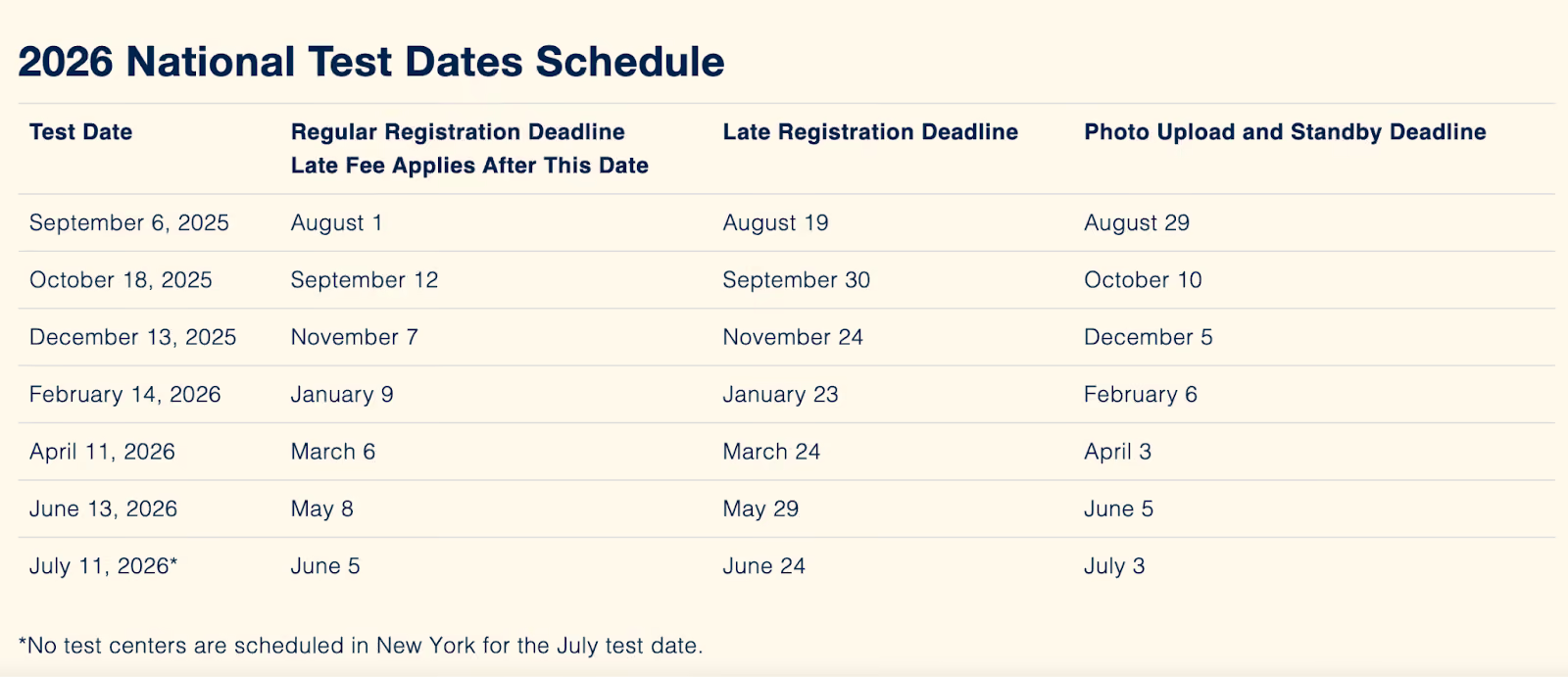
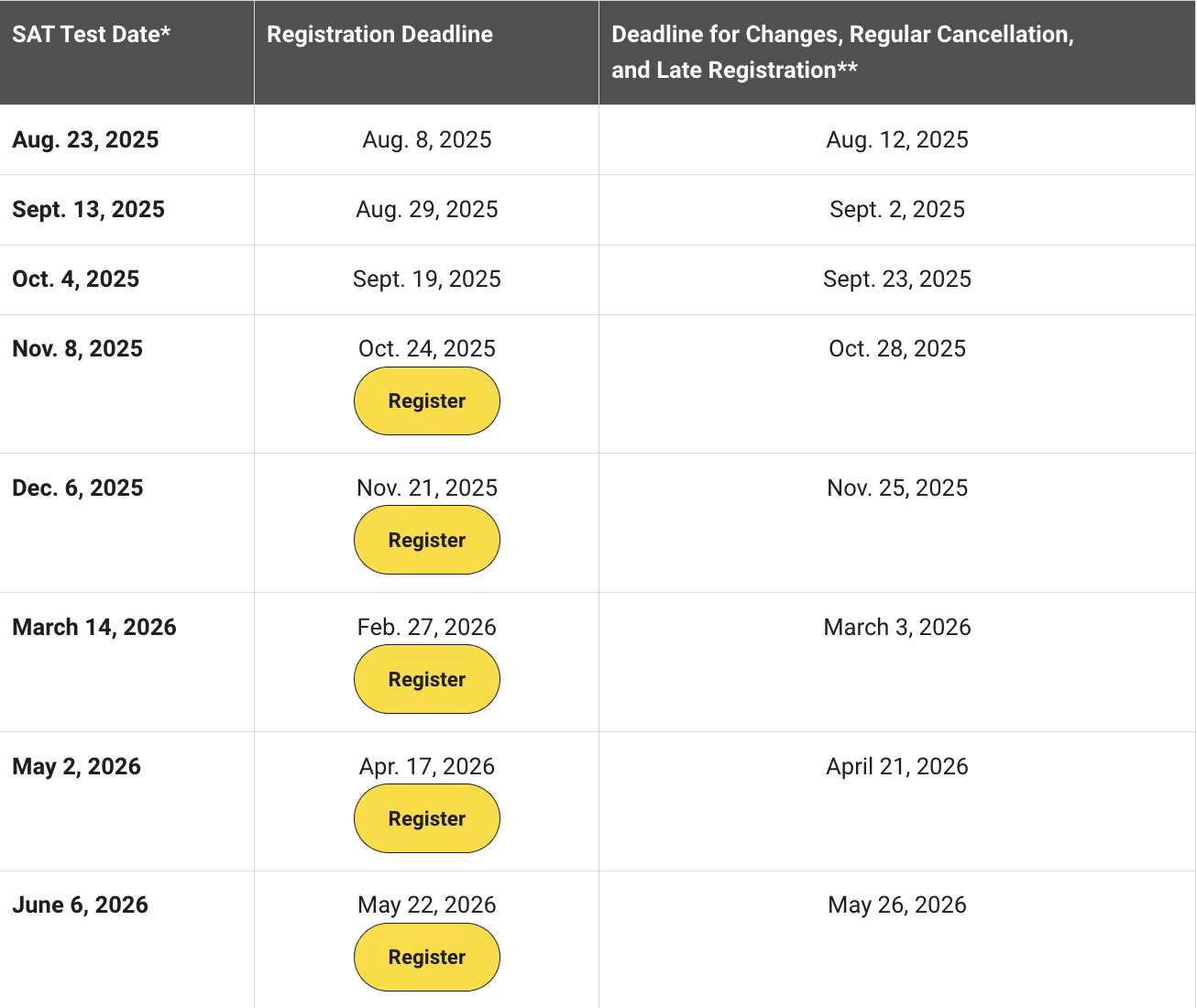
Improve test-taking strategies and be more intentional and more data-driven this time. Encourage students to:
- Review their score reports to identify section-level weaknesses
- Take full-length practice tests under timed conditions
- Use official College Board and ACT materials for realistic practice
- Use the SAT-ACT concordance to translate scores and guide realistic test goals
- Combine solo study with a tutor-led strategy session
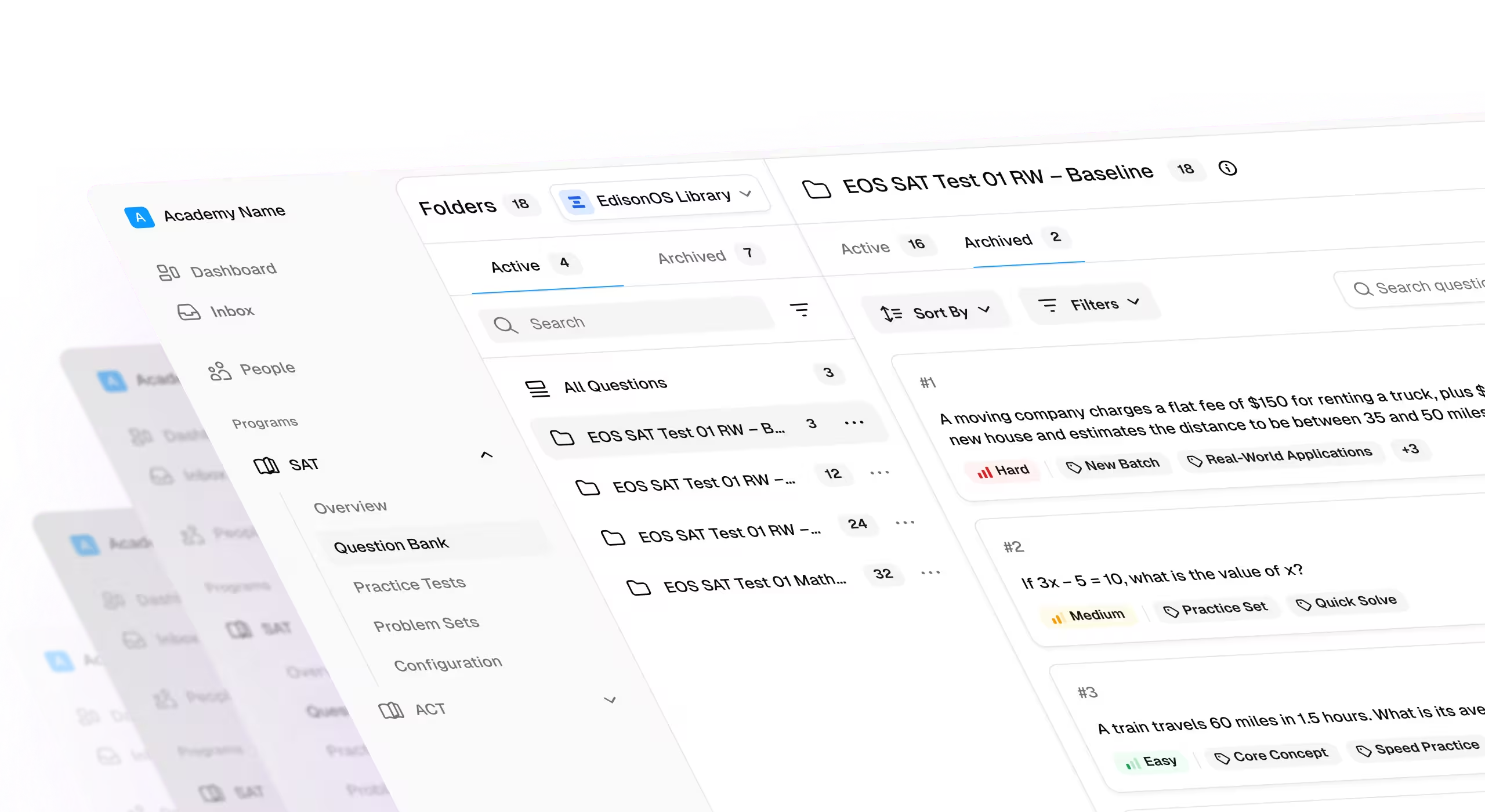
With EdisonOS, tutors can skip the spreadsheets and focus on strategy. Its built-in tools make digital SAT and ACT prep smarter, faster, and fully personalized.
90% of tutors recommend EdisonOS for its student performance analysis with the Build-Your-Own-Test (BYOT) feature: Create personalized mock exams in minutes from EdisonOS’s 5,000+ question library or your own uploads. This allows you to pinpoint weak areas with precision — whether a student struggles with evidence-based reading questions, grammar corrections, linear equations, advanced algebra, word problems, or data interpretation.
With granular reports, you don’t just see the overall score — you see exactly where the student is falling short. For example:
- Struggles with words in context questions in the Reading section
- Consistently misses punctuation and sentence structure questions in Writing and Language
- Weak in quadratic equations or rational expressions in Math
- Runs out of time on multi-step data analysis problems
From there, you can narrow down practice, assign targeted drills, and coach students toward measurable improvements. Simplify retake prep, track measurable progress, and help students rebuild confidence where it counts most.
Explore EdisonOS Digital SAT Prep or ACT prep
Consider Test-Optional or Test-Blind Colleges
Not every path to college runs through a test score anymore. In fact, thousands of schools now use test-flexible admissions, giving students far more control over how they present their strengths.
Here’s the quick breakdown:
- Test-optional: Students decide whether to submit scores. A strong score can help, but a low one won’t hurt as the application is reviewed holistically.
- Test-blind (or test-free): The college doesn’t consider test scores, even if submitted.
This shift opens real opportunities for students recovering from low SAT or ACT results. Here are a few top universities that are test-optional or test-free:
How to Strengthen a College Application With Low Test Scores
If test scores won’t be the highlight of a student’s application, that’s okay — there are plenty of other ways to shine, too.
Below are some ways you can help students build a standout profile.
Focus on GPA and Coursework
When test scores fall short, GPA becomes the hero metric. It’s the most consistent indicator of college readiness, and often outweighs standardized tests entirely.
Encourage students to finish strong, especially in junior and senior year, when upward trends really stand out. Advanced coursework, such as AP, IB, or Honors classes, also signals that the student challenges themselves academically. Even if the grades aren’t perfect, the rigor shows commitment and discipline, qualities colleges respect deeply.
Write a Compelling Personal Essay
The essay is where students get to speak directly to admissions officers beyond numbers and transcripts. A great essay can turn a low score into a minor footnote by focusing on growth, curiosity, or resilience.
Encourage students to tell a real story of:
- How they overcame a setback
- Discovered a passion
- Learned something through failure
Pro Tip: If the test score reflects a personal challenge, such as illness, stress, or limited access to prep resources, the essay can briefly provide context without sounding defensive.
Highlight Extracurricular Impact
Admissions officers love seeing impact, even if it’s just one or two activities that the student has committed to with purpose. So, help your students focus on those activities that best represent who they are, whether that's:
- A long-term volunteer commitment
- Leading a team project
- Mentoring peers
- Starting something new in their community.
If a student has a passion that doesn’t neatly fit into a club, that’s ok. Individuality can be a major plus, too, for activities like coding, dance, or running a small business.
Secure Strong Letters of Recommendation
When test scores don’t tell the full story, teachers’ voices fill the gap.
Encourage students to choose recommenders who know them beyond the classroom, like teachers who’ve seen them persevere, improve, or lead.
A heartfelt letter that speaks to work ethic, attitude, and curiosity can shift an admissions reader’s perception far more than a test score ever could. Even suggest reminding teachers of specific projects or growth moments to make the letters more personal and memorable.
Adjust Your College List Strategically
For many students, a low SAT or ACT score is simply a signal to be more strategic about where to apply. Start by adding match-and-safety schools with flexible score policies or strong test-optional options. These ensure that even without stellar scores, the student’s academic profile remains competitive.
To make decisions based on data, use tools like:
- Scattergrams: Platforms like Scoir or Naviance visualize past students’ GPAs and test scores alongside acceptance rates. It’s an instant snapshot of where a student might stand.
- Common Data Sets: Most colleges publish detailed reports listing the middle 50% range for SAT/ACT scores. If your student’s score falls below the 25th percentile, that school becomes a reach, but not necessarily off the table if other parts of their application shine.
Encourage students to explore holistic or portfolio-based programs as well. Many colleges, especially in the arts, design, and engineering fields, value portfolios, essays, or AP/IB coursework as proof of talent and rigor.
For example, Princeton’s optional Arts Supplement lets students showcase creative work alongside their academic record.
How EdisonOS Helps Tutors With Preps
When students hit a roadblock with their SAT or ACT scores, tutors need tools that help them respond quickly and strategically. That’s where EdisonOS, a data-driven tutoring platform, comes in.
Here’s how it helps:
- Create targeted mini-tests with Build Your Own Tests (BYOT): Focus only on weak sections to help students strengthen specific skills and boost their superscore.
- Tutor Mode: Provide instant feedback during practice. When a student answers incorrectly, the correct answer and explanation appear immediately, turning each test into an interactive learning session.
- Modern Question Formats: Replicate the digital SAT and ACT experience with interactive formats like drag-and-drop, fill-in-the-blank, and tables to build familiarity and test-day confidence.
- Live Tutoring Sessions: Schedule virtual or in-person reviews directly on the platform, using real-time reports to discuss mistakes and set improvement goals.
- Detailed Analytics and Scaled Scoring: View auto-graded results with performance, timing, and skill breakdowns. Share progress reports instantly — even from paper tests using Offline Mode.
EdisonOS streamlines your entire tutoring workflow, from test creation to performance tracking. Book a demo to see first-hand how EdisonOS can help you give your students more chances to improve.
Conclusion and Key Takeaways
A low SAT or ACT score is just one piece of a much larger picture. What truly matters is how students respond — whether by retaking the test, going test-optional, or doubling down on academic and personal strengths.
For tutors and counselors, the goal isn’t to erase a low score; it’s to turn it into momentum. With platforms like EdisonOS, you can help students rebuild confidence faster through customized tests, instant feedback, and data-driven progress tracking.
Try out EdisonOS’s free digital SAT practice test or ACT mock test.
Frequently Asked Questions
.svg)


.png)
.png)