- Every hagwon must register with its local Metropolitan or Provincial Office of Education under the Private Institute Act (학원법) before it can legally enroll a single student.
- Seoul, Gyeonggi, Daegu, and Gwangju enforce a uniform 10 p.m. curfew for hagwon instruction; other regions apply age-based cutoffs instead.
- A 2026 inspection round referred 58 cases for criminal complaint, canceled 24 licenses, suspended 69 academies, and issued 707 fines totaling roughly 930 million won.
- The maximum fine for false tuition disclosure has climbed from 3 million won to 10 million won under the latest enforcement revision.
- Reward payments for reporting an unregistered hagwon jumped tenfold, from 200,000 won to 2 million won, and reports of overcharging now pay out up to 1 million won.
- SAT/ACT academies carry extra exposure because they run on foreign test content and, frequently, E-2-visa foreign instructors, two layers of compliance most subject-based hagwons never touch.
Korean hagwons, or private tutoring institutes, operate inside one of the most tightly monitored education systems in the world. If that wasn’t enough, SAT/ACT academies sit at the sharper end of that scrutiny.
A math or English hagwon answers to curfew and tuition rules. An SAT/ACT academy answers to those same rules, plus more, because:
- It imports foreign test content and often hires foreign or foreign-trained instructors.
- It markets outcomes tied to a US college admissions exam, which Korean regulators didn't design and don't always weigh the same way as the Suneung (Korea’s standardized university entrance exam).
Add multiple branches, a mix of local and foreign staff, and a student roster that expects Bluebook-level polish, and the operational surface area grows fast. And getting the compliance picture wrong includes risks beyond a fine. Tutoring businesses could lose the license they run on.
To help you out, we’ve compiled this guide, which sets out the actual regulatory landscape. We translate it into what your SAT/ACT academy specifically needs to watch for and lay out where manual tracking tends to break down as a hagwon scales past one location.
Hagwon Regulations at a Glance
How Hagwon Regulation Actually Works in Korea
A hagwon, under the Private Institute Act, is legally defined as a for-profit institution offering instruction outside the formal school system to ten or more students. Hagwon oversight runs on two tracks at once.
- Local Metropolitan and Provincial Offices of Education handle registration, inspections, curfew enforcement, and license actions district by district
- National bodies like the Ministry of Education and the Korea Fair Trade Commission set the statutory floor everyone operates under.
Understanding this double layer of compliance matters more than most first-time operators would think because a hagwon registered and compliant in one district doesn't automatically carry that standing into a branch opened in a different one.
Additionally, enforcement intensity isn't uniform across Seoul, either. Districts with the highest hagwon density, like Gangnam and Seocho, likely see closer scrutiny. This is simply because there are more academies per square kilometer to check.
Key Regulations SAT/ACT Hagwons Need to Know for 2026
Business Registration and Licensing
Who it applies to: Every hagwon before it opens its doors.
What it requires: Registration with the local Office of Education and a valid hagwon registration certificate (학원등록증) per location.
Where it breaks down: Multi-branch operators that treat one branch's registration as covering another.
The Late Night Cutoff
Who it applies to: Hagwons in Seoul, Gyeonggi, Daegu, and Gwangju under the uniform rule, and hagwons elsewhere under age-tiered limits.
What it requires: Instruction, including self-study sessions run by staff, must end by the district's cutoff.
Where it breaks down: Late-night "voluntary" study halls that regulators treat as disguised instruction.
Tuition Reporting and Fee Disclosure
Who it applies to: Any hagwon charging students.
What it requires: Posting registered tuition and honoring it, with material fees like mock-exam or material costs disclosed up front.
Where it breaks down: Bundling undisclosed charges into "additional" fees not covered by the original filing.
Advertising and Score-Claim Restrictions
Who it applies to: Any hagwon marketing its facilities or results.
What it requires: Verifiable, substantiated claims under the Fair Labeling and Advertising Act.
Where it breaks down: Unverifiable superlatives like "highest admission rate" and guaranteed score jumps that regulators and the Korea Internet Advertising Foundation actively monitor.
Foreign Curriculum and International Test Content
Who it applies to: SAT, ACT, PSAT, AP, SHSAT, or any other foreign-exam-focused academies.
What it requires: Instruction that stays distinguishable from banned "pre-curriculum" acceleration and instructors credentialed for the content they teach.
Where it breaks down: Unclear instructor visa status or curriculum framed in ways that trip pre-curriculum-learning rules meant for younger students.
What Actually Puts SAT/ACT Hagwons at Compliance Risk
Hagwons prepping students for the digital SAT and ACT, compliance risk often comes from everyday operational decisions that seem minor but can trigger regulatory issues:
- Operating-hours violations: Late self-study sessions or review blocks that extend past the district curfew, even when framed as optional.
- Undocumented fee changes: Charging above the registered tuition rate, or adding mock-test, material, or intensive-course fees that were never filed.
- Unlicensed instructors: Foreign teachers working outside their visa-sponsoring entity, or instructors without the credentials their role requires.
- Multi-branch scaling gaps: Expanding to a second or third location faster than registration, licensing, and record-keeping can keep pace with the growth.
Manual Compliance Tracking vs Platform-Managed Compliance
How EdisonOS Approaches Hagwon Operations and Compliance Tracking
Once a hagwon grows beyond a single location, compliance becomes an operational challenge as much as a regulatory one. Keeping track of students, fees, instructors, schedules, and inspection records across branches can quickly become difficult when information is spread across spreadsheets and separate systems.
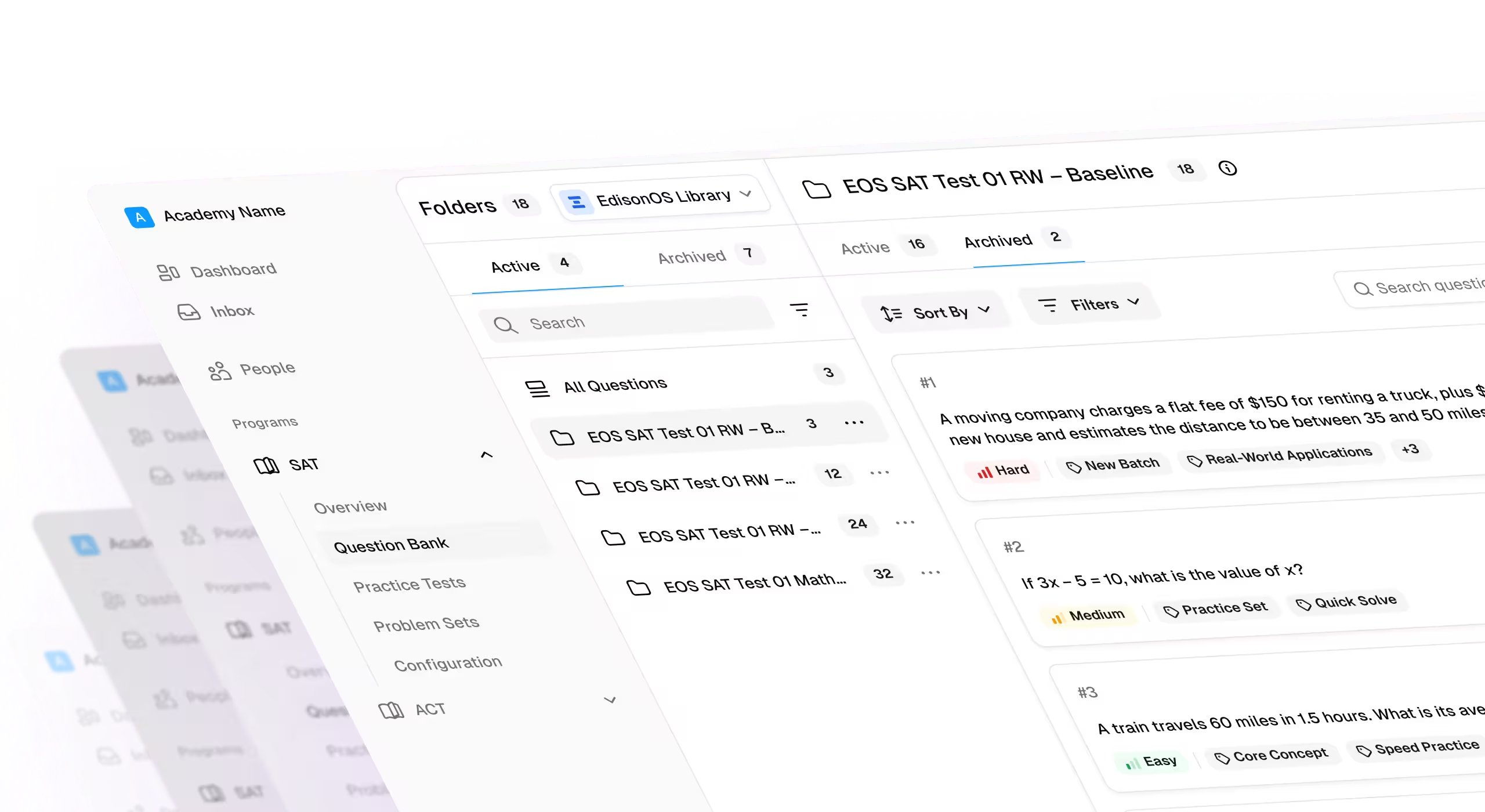
EdisonOS brings these records into a centralized workflow, helping hagwon operators maintain better visibility as they scale.
- Centralized records: Student, billing, and session data live in one system instead of scattered files.
- Tuition and billing history: Every fee and change is logged, timestamped, and traceable back to what was charged and when.
- Curfew-aware scheduling: Session scheduling that reflects the operating-hour limits a hagwon runs under.
- Multi-branch dashboard: One view across every location instead of stitching together separate records per site.
- Reporting: Pulls the data an Office of Education inspection actually asks for, without a manual scramble.
Hagwons typically start looking for a platform once they open a second branch or once a first inspection makes the gaps in manual tracking obvious. Book a demo today and see how EdisonOS fills the gap for yourself.
Manual Management vs EdisonOS: Which Is the Better Fit?
When Manual Tracking Makes Sense (And When a Platform Is a Better Choice)
The right approach depends largely on the size and complexity of the hagwon. Manual tracking can work well for a small, stable operation, but as branches, students, fees, and compliance requirements increase, a centralized platform becomes easier to manage.
Here’s when manual tracking works:
- The hagwon runs a single location with a small, stable student roster.
- The owner personally handles billing and knows every fee change firsthand.
- Inspection history has been light, and record volume stays low.
Here’s when you should consider a platform:
- The hagwon operates two or more branches that need to move in sync.
- Fee structures, instructors, and schedules change often enough that manual tracking starts missing updates.
- Leadership wants to walk into an inspection with records ready instead of assembled overnight.
Frequently Asked Questions
.svg)


.png)
.avif)