.avif)
- Calculate the weighted mean based on the difficulty of questions answered correctly.
- Route the student to the easier or harder second module based on their weighted mean.
- Calculate the second module’s weighted mean using the same difficulty-based approach.
- Combine both modules using their respective scoring limits to calculate the section score.
- Apply the low-band adjustment when performance on the easier second module falls below the first.
- Fine-tune and round the score to produce the final EdisonOS SAT section score between 200 and 800.
The Number Behind the Number: How EdisonOS Turns Your Answers Into a Score
Sam finishes a Digital SAT practice test on EdisonOS. Two numbers come back.
The first is easy: 27 out of 44 correct. The second isn't: 630 on Math. Sam does the mental math on the way to that second number, and it doesn't add up, not as a percentage, not as anything close to one. Getting three out of every four questions right shouldn't land you at 630 out of 800. So where did that number actually come from?
To answer that, we have to leave EdisonOS for a minute and go somewhere Sam has never been: the room where the real SAT gets built.
Why the Real SAT Stopped Just Counting
For most of its history, a student earned 1 point for a correct answer and lost a fraction of a point (usually 1/4) for an incorrect multiple-choice answer to penalize blind guessing. The digital SAT quietly broke that rule.
The method behind the break has a name: Item Response Theory, or IRT. Strip away the jargon and it says something simple: a score should depend not just on how many questions you got right, but on which ones.
The College Board is upfront about this. A student's score comes from which specific questions they answered correctly, how hard those questions were, and even whether their pattern of answers looks like guessing.
One blunt result follows from that: two students can answer the exact same number of questions correctly and still walk away with different scores, because they didn't get the same questions right.
That's not a flaw the College Board is quietly living with. It's the design. Every question on the real SAT has already been studied, how hard it is, how sharply it separates strong students from weaker ones, and how likely a weak student is to stumble into the right answer by luck.
So when a student finishes roughly 54 scored questions, the College Board isn't tallying checkmarks. It's asking a question: given how these exact questions are known to behave, what skill level would most plausibly produce this exact pattern of hits and misses?
That's also why the test changes shape as you take it. Each section — Reading and Writing, then Math — splits into two modules. Everyone gets the same first one. How you do on it decides whether your second module is the easier version or the harder one.
And here's the part most students never see coming: land the harder module, and your score can reach the very top of the scale. Land the easier one, and your ceiling drops, not as a penalty, but because the test needs harder proof before it hands out a very high number.
The College Board doesn’t take this on faith. Its technical documentation audits the system’s skill estimates, scoring errors, and, importantly, how often students are routed to the right module. Even its creators closely monitor whether that fork in the road works as intended.
That audit is the thread that connects the College Board's world to EdisonOS's. Because doing this the College Board's way takes something no practice platform has lying around: years of answer data from millions of real students, question by question. The College Board can build that. EdisonOS can't. So the real problem wasn't "copy this system exactly." It was: how do you make a practice test feel like the real one, without the mountain of data the real one runs on?
That's the problem Sam's 630 is the answer to, and it's worth saying plainly before we go further: EdisonOS scores both the SAT and the ACT, but only one of those two runs on the method we're about to walk through. That method is basically a six-step process, and it's the formula behind every SAT score EdisonOS produces. The ACT works differently, we'll get to that near the end, but the six steps are the main thing to understand here.
Step 1: Weighing, Not Just Counting
Before any of the scoring logic runs, two numbers get kept strictly apart. Every EdisonOS report shows a raw score — the plain, unedited record of exactly what Sam answered, question by question — and a final score, the converted number on the familiar 400–1600 scale.
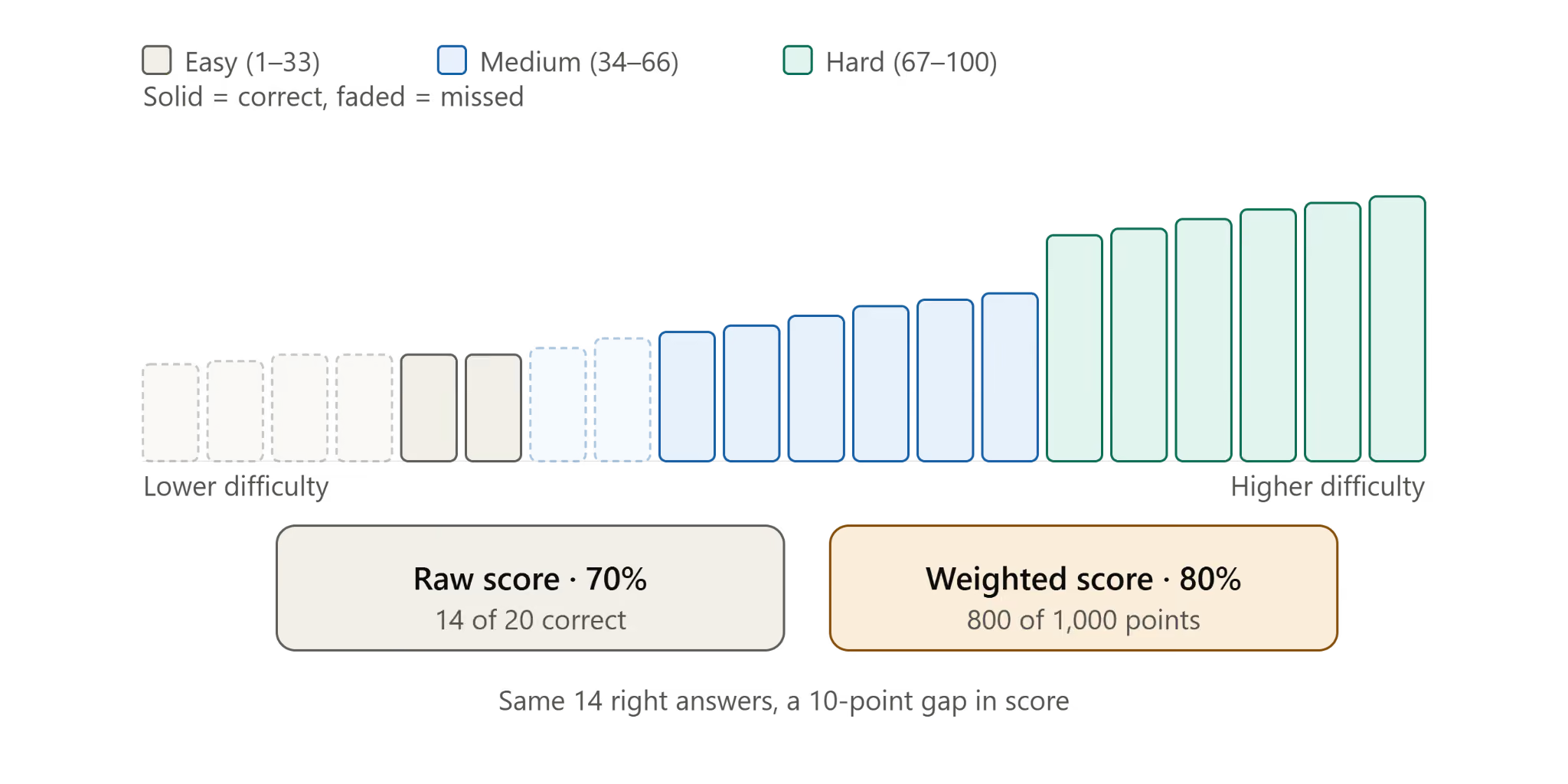
Sam's Math module has 22 questions. Two are quietly there to test future questions on real students — they don't count, the same way the real digital SAT slips a couple of ungraded questions into every module. That leaves 20 that matter, and each one carries a difficulty score from 1 to 100, set by our subject matter experts in the EdisonOS library. Score 1 to 33 and the question is Easy. 34 to 66, Medium. 67 to 100, Hard.
This is where the story stops counting and starts weighing. Every question Sam gets right adds its difficulty number to a running total. Every question Sam misses adds nothing. Divide what Sam actually earned by what Sam could have earned, and you get what we'll call the weighted mean:
Weighted mean = (difficulty points earned) ÷ (difficulty points possible)
Across the 20 questions, let us assume the total possible is 1,000 points. Sam gets 14 right, and those 14 happen to be worth 800 points between them. 800 ÷ 1,000 = (0.8) 80%.
Sit with that for a second. Sam's plain percentage — 14 out of 20 — is 70%. Sam's weighted mean is 80%. The ten-point gap exists for one reason: the 14 questions Sam got right weren't a random sample. They skewed hard. Two students can both finish 14-for-20 and come away with very different weighted means, depending entirely on which 14 they landed.
This is the exact trap the College Board built IRT to avoid: the same number correct, hiding two very different levels of skill underneath.
Step 2: The Fork in the Road
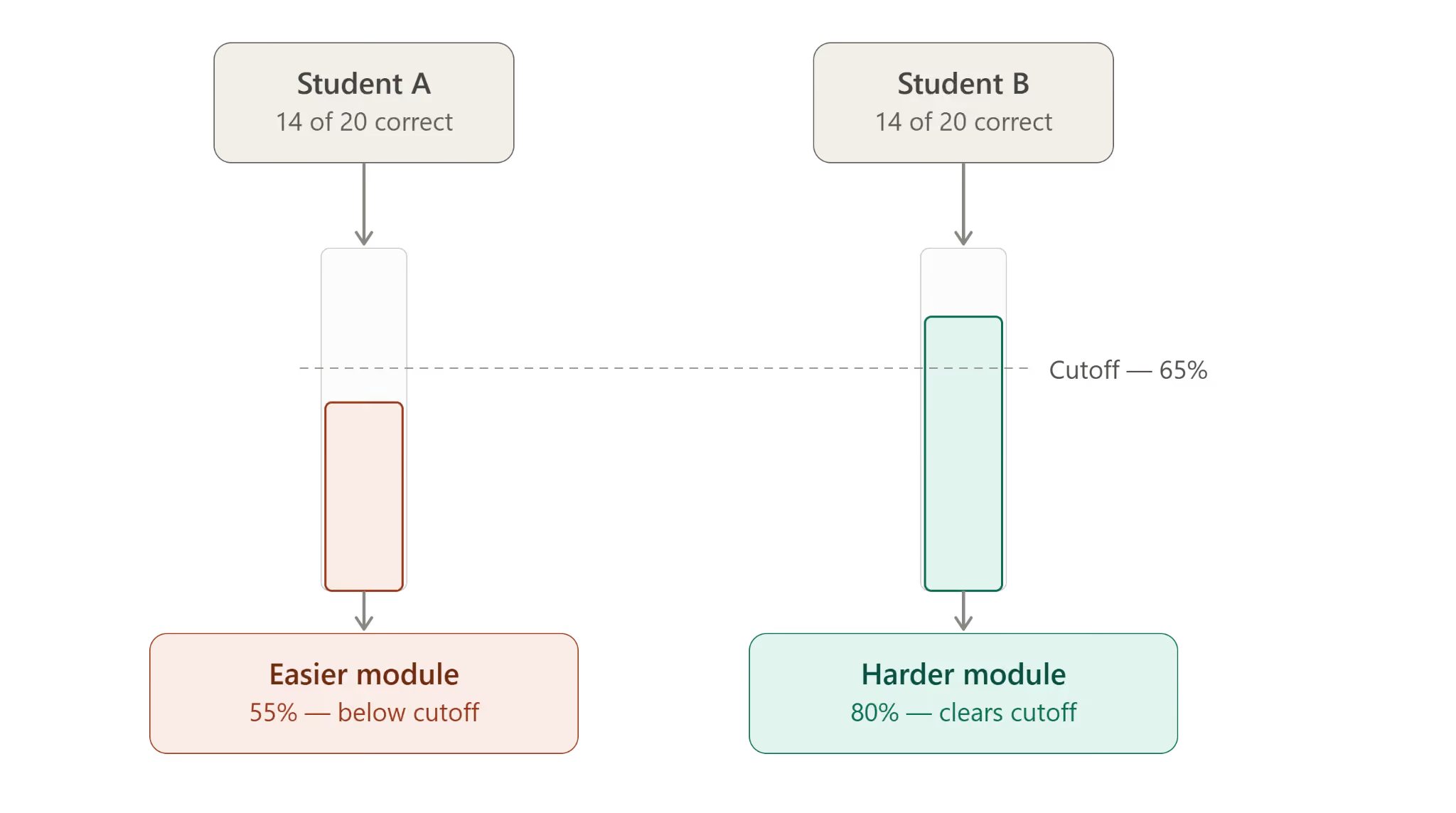
It's Sam's weighted mean — not the plain 14 out of 20 — that decides what happens next. This test's cutoff sits at 65%. Sam clears it at 80%, and gets routed to the harder second module.
Why weigh the decision instead of just counting? Picture two other students, both correct on 14 of 20. One got mostly the easy questions right, landing a 55% weighted mean. The other got mostly the hard ones, landing 80%.
Judge them by raw count and they look identical. Judge them by weighted mean and they clearly aren't. Basing the fork in the road on the weighted mean means it reflects how good the answers were, not just how many there were.
Step 3: Round Two
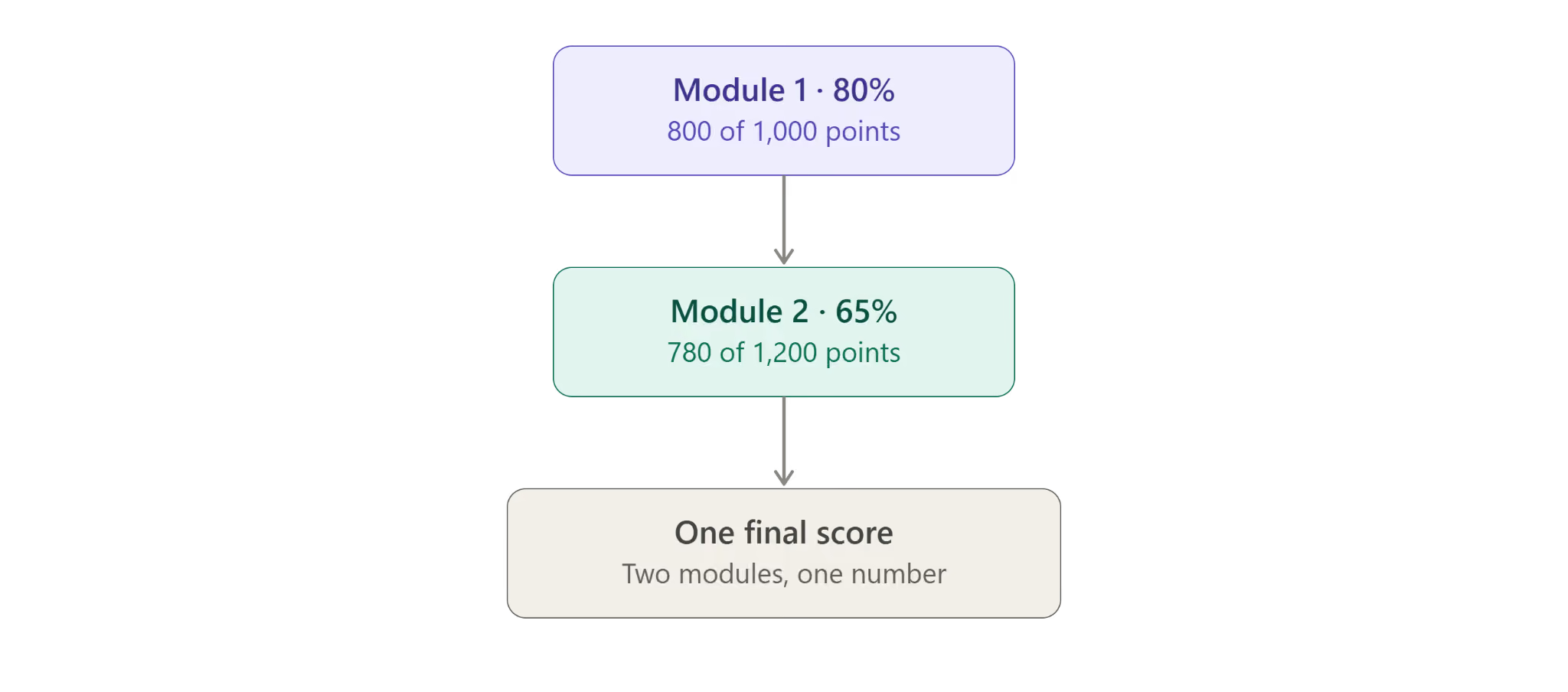
Sam doesn't get a breather. The harder path means a harder set of questions waiting on the other side — 1,200 points possible this time instead of 1,000, because the harder module leans more heavily into Medium and Hard-band items. Sam runs the exact same weighing move as before: add up what was earned, divide by what was possible. This time it's 780 out of 1,200. (0.65) 65%.
Two modules down. Two weighted means in hand —(0.8) 80% and (0.65) 65%. Now they have to become one number.
Step 4: Turning Two Modules Into One Score
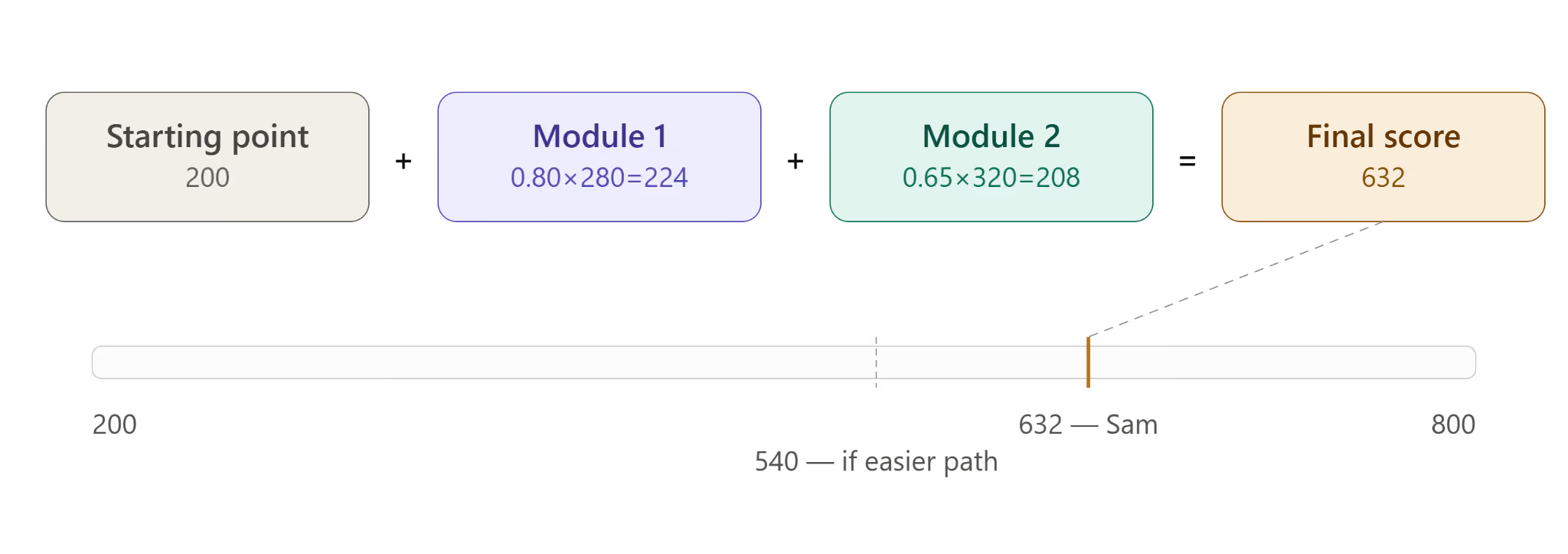
Now the two modules have to fold into a single number. Each one is only allowed to contribute up to a set limit, and those limits aren't arbitrary — they're tuned to match how the real SAT actually scores on the College Board's own testing platform. Module one caps out at 280 points. Module two tops out at either 260 (easier path) or 320 (harder path).
Add 280 and 320 to the starting 200, and you land exactly on the top of the scale: 800. Add 280 and 260 instead, and you only reach 540. That gap is the whole point. The harder road has to lead somewhere higher, or changing the difficulty would mean nothing.
Each module's contribution is just its weighted mean times its limit. For Sam:
200 (starting point) + (0.80 × 280) + (0.65 × 320) = 200 + 224 + 208 = 632
There's a fifth step that would normally slot in right here — a special correction that only matters for students routed the other way. Sam doesn't trigger it. We'll come back to it in a moment, on someone else's test.
Step 5: The Final Polish
Sam's 632 isn't quite finished, three small adjustments stand between it and the number that actually shows up on the report. A small fine-tuning nudge lines a specific practice test up with a real released exam (Sam's test didn't need one). Rounding to the nearest 10, the same increment the real SAT uses, turns 632 into 630. And a hard ceiling and floor keeps every score inside 200–800, just in case.
Sam's Math score: 630.

Reading and Writing tells the same story with 25 counted questions per module instead of 20, and runs through all six steps exactly the same way. Sam goes 19-for-25 on both (76% plain), but posts an 80% weighted mean on each — the pattern repeats exactly. Routed to the harder module both times, Sam's Reading and Writing score comes out to 200 + (0.80×280) + (0.80×320) = 680.
The two section scores are then added together to give Sam’s total SAT score of 1310.
So, Sam's full SAT: 680 + 630 = 1310.

The Exception: When the Easier Path Backfires
Sam's version is the clean one — harder path, both times, everything scaling up smoothly, sailing straight from Step 4 to Step 6 with nothing in between. But the weighted mean has a blind spot, and Step 5 exists because of it. It shows up with a different student: Alex.
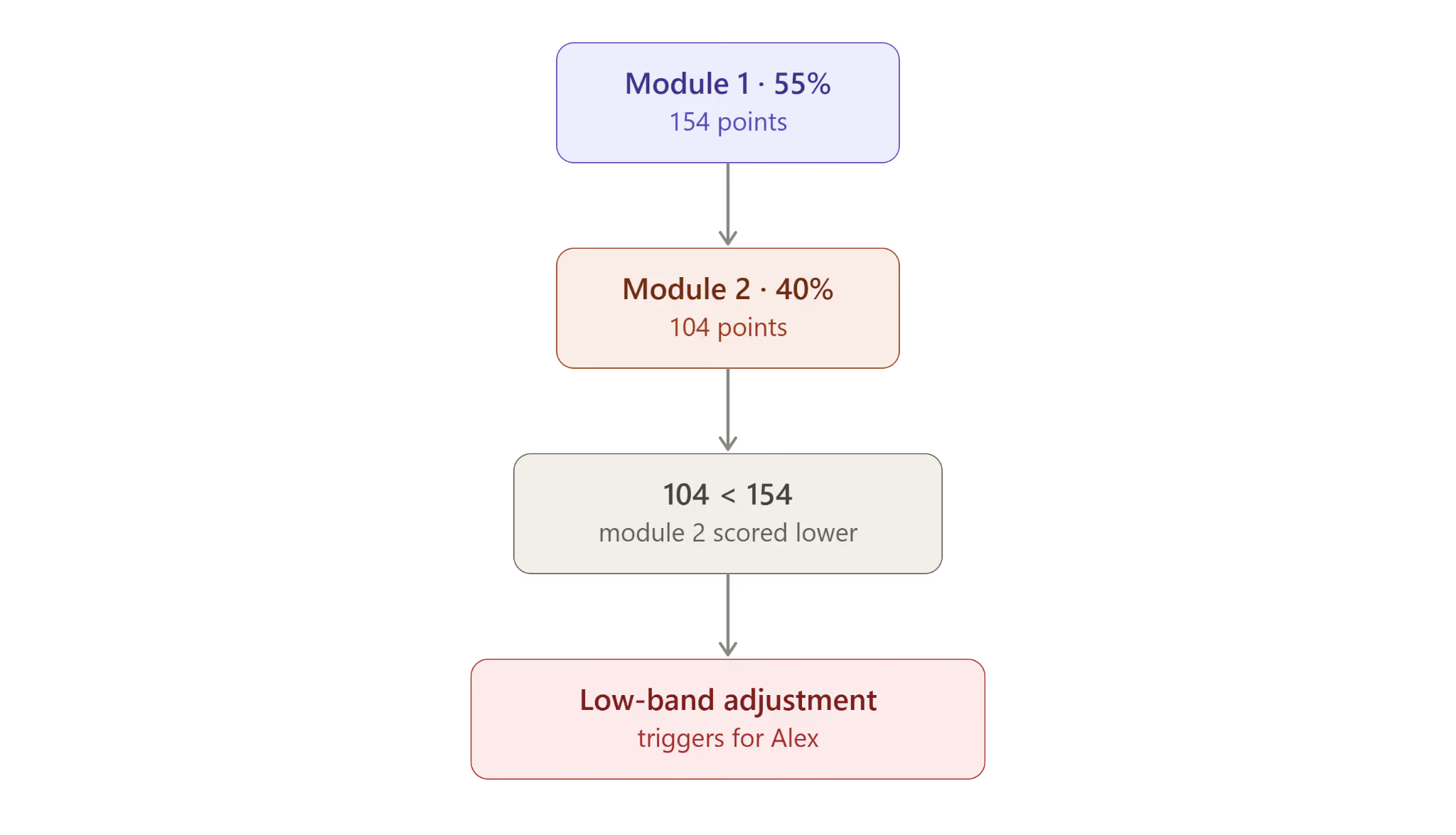
Alex's first module comes in at a 55% weighted mean — under the cutoff — so Alex gets routed to the easier second module. And then does worse there. Weighted mean: 40%, well below the 55% from before. Run the math as usual and it would still calculate a contribution and add it in, no questions asked.
But real test data tells a different story: students who land here tend to score noticeably lower on the actual exam than the plain math alone would predict. Easier questions can quietly flatter a weighted mean into looking better than the student's real performance.
So Step 5 is built to catch exactly this. It only fires when a student was routed to the Easier Module 2 and their second-module scaled contribution comes in lower than their first-module one. For Alex, that's 104 points versus 154 — both conditions true, low-band adjustment triggered.
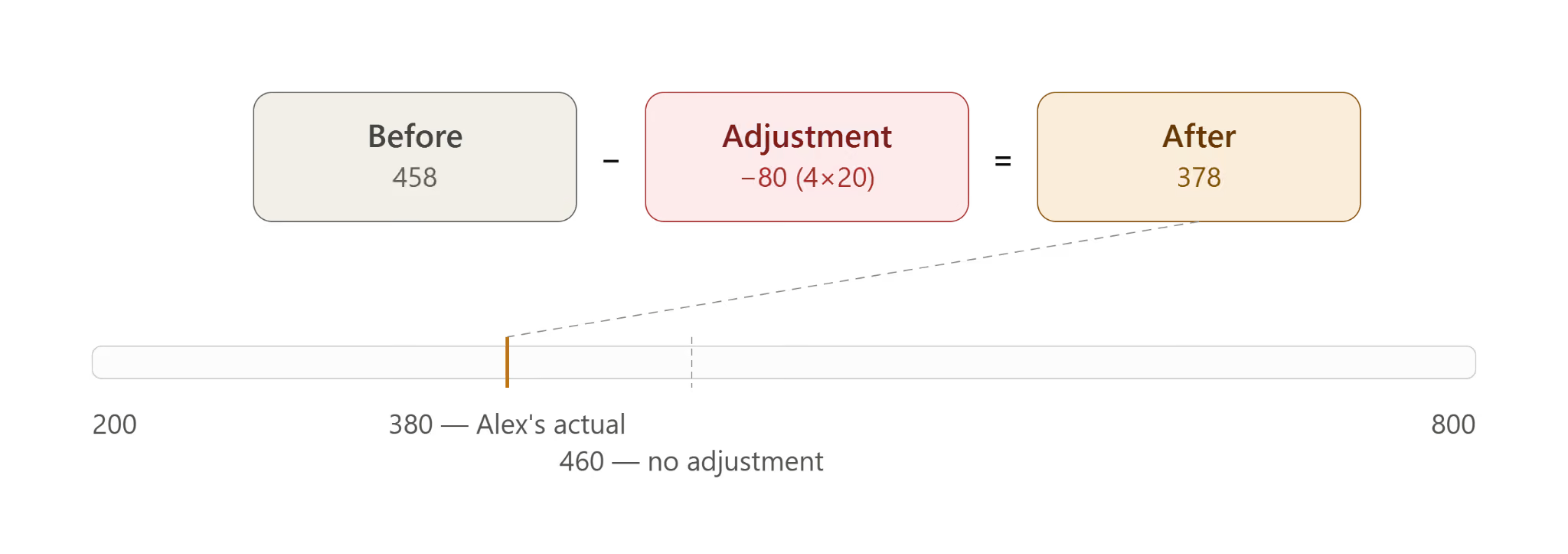
The fix: dock 20 scaled points for every extra question Alex got right in the first module compared to the second. Alex went from 14 correct down to 10 — a four-question gap, so an 80-point adjustment.
Alex's score before the adjustment, 458, drops to 378 after it — and then Step 6 takes over exactly like it did for Sam, rounding 378 to 380 instead of the 460 the raw weighted math would have handed out with no adjustment. Without this step, doing worse on the easier path would have quietly paid off. With it, it doesn't.
How the ACT Gets Scored
While Sam was working through modules and fine-tuning nudges, somewhere else a different student just finished an ACT practice test. No fork in the road for them, no weighing — the ACT doesn't work anything like the SAT does inside EdisonOS, because the real ACT doesn't either. It's not adaptive. Every student sees the same fixed set of questions, so the scoring can afford to be far more direct.
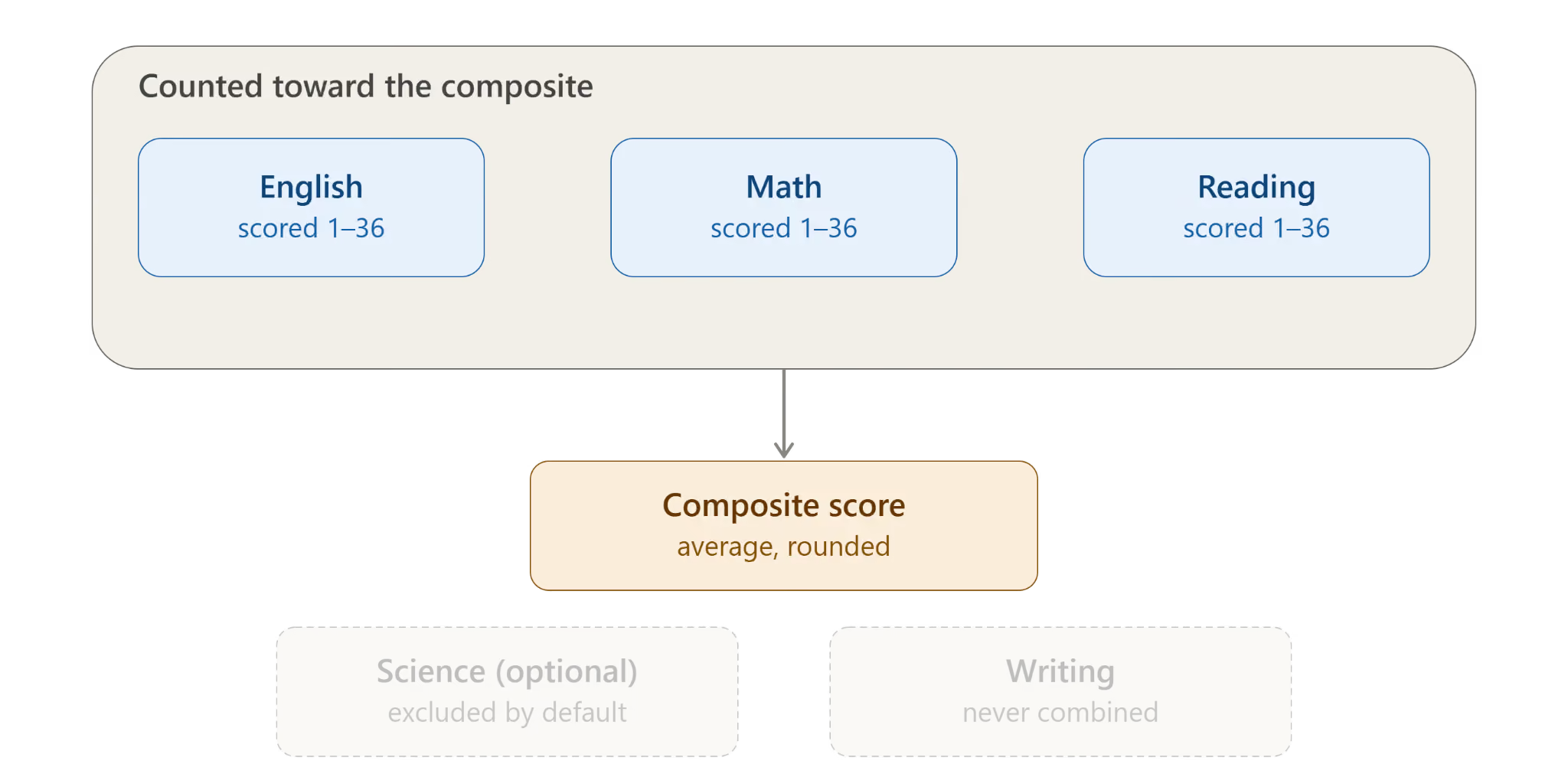
Three sections — English, Math, Reading — get scored on a 1-to-36 scale and averaged together, rounded to the nearest whole number, to make up the score that matters most: the composite. Science is optional, scored the same way but kept out of that composite by default. Writing stands off to the side entirely, never touching the other numbers.
Inside each section, the scoring itself runs on a straight lookup chart: count the correct answers that aren't test-only questions, find that number on a chart built for that exact test, and read off the score. Test-only questions get erased twice over — even a lucky correct guess on one doesn't nudge the final number, though it still shows up honestly in the raw report.
Take that student's Math section. 33 of 45 questions are correct — but one of those 33 turns out to be a test-only question, so it doesn't count. The number that actually matters drops to 32. Look 32 up on the chart built for that test, and the answer comes back: 25. No modules, no weighing, just the same direct lookup the real ACT publishes for itself.
Why You Can Trust the Number
Here's the thing that makes any of this worth believing: run Sam's exact same test again, with the exact same answers, and it will always come back 630. The score is only ever built from what actually happened — nothing gets guessed at, and nothing about the raw answers ever gets hidden or edited to make the final number look better.
Every weight, every point limit, every fine-tuning nudge behind a specific practice test lives in that test's own settings, visible and checkable, not buried somewhere invisible. And if any of those settings are ever missing or broken for a given test, EdisonOS doesn't quietly guess a number and move on — it says so, out loud, while still handing back the raw report untouched.
It's the same instinct behind the College Board's own habit of auditing its routing decisions for accuracy. Neither system just trusts its own math blindly. Both check their work.
The Point of the Story
None of this was ever meant to copy the real SAT's method — EdisonOS says so outright, and it's worth saying again here: doing this the College Board's way takes years of answer data from millions of real students, question by question, at a scale no practice platform has.
What EdisonOS built instead is a simple, repeatable method that behaves the same way without needing that mountain of data — it pays attention to difficulty, it pays attention to which questions you actually got right, it adjusts for which path you were sent down, and it's tuned to match real released tests, all using arithmetic a person could check by hand on the back of a napkin.
That's why Sam's 630 was never going to match a plain percentage. It was never built to.
Summary Table
Frequently Asked Questions
.svg)


.png)