The digital SAT tests vocabulary through Words in Context questions. So to help students master SAT vocab, tutors need to prioritize contextual reasoning, targeted vocabulary building, and consistent progress tracking over rote memorization.
Here's what tutors can do to help their students master SAT vocabulary:
- Teach contextual reasoning before vocabulary memorization: Help students identify clues in the passage and predict a word's meaning before looking at the answer choices.
- Diagnose the root cause of every mistake: Determine whether a student has a word-bank gap or a reasoning gap, then tailor your instruction accordingly.
- Build vocabulary through meaningful exposure: Encourage students to read high-quality nonfiction, learn synonyms, and reinforce new words using spaced repetition.
- Track performance by question type: Monitor Words in Context performance over time to identify patterns, personalize instruction, and measure improvement.
- Use every missed question as a teaching opportunity: A structured debrief helps students develop stronger reasoning skills, not just a larger vocabulary.
For years, SAT vocabulary prep revolved around one idea: memorize more words. But the new digital SAT has changed that.
Instead of testing vocabulary in isolation, the SAT now assesses whether students can interpret a word's meaning from context rather than recalling its dictionary definition. So, students who know the words still miss the questions.
In this guide, you'll learn how to help your students master SAT vocab using a tutor-first framework. It will help you diagnose why students struggle, teach vocabulary the way the digital SAT actually tests it, and track progress more effectively over time.
Why the Old SAT Vocab Playbook Fails?
If you’re still assigning word lists, drilling flashcards, and focusing on roots and prefixes, you’re making your students believe that a larger word bank would naturally translate into higher Reading & Writing scores.
While these methods can expand a student's vocabulary, they no longer match how the digital SAT assesses it.
What the Digital SAT Actually Tests
Instead of testing whether a student knows a word's definition, the digital SAT tests whether they can determine its meaning from context. These are Words in Context questions where students use clues within a short passage, recognize secondary meanings of familiar words, and identify the choice that best fits the author's intent.
Words in Context questions are part of the Craft and Structure domain, which accounts for approximately 28% of all Reading and Writing questions on the digital SAT. Therefore, vocabulary is now as much about reasoning as it is about word knowledge, reading comprehension, and analytical reasoning.
Your students will typically encounter two question formats in the digital SAT:
- Most nearly means: Students determine the meaning of a highlighted word or phrase based on the surrounding sentences. The challenge is that familiar words often have multiple meanings, and only one fits the author's intended message.
- Completes the text: Students choose the word or phrase that best completes a sentence or short passage. Success depends on understanding the passage's logic before evaluating the answer choices.
Both formats test how well your student can use the evidence from the passage to arrive at the most appropriate meaning. If they rely on the first definition that comes to mind, they often choose plausible but incorrect answers.
The Real Problem: Word-Bank Gap vs. Reasoning Gap
Effective SAT vocabulary instruction starts with diagnosis, and the first step is to recognize whether it’s a word-bank gap or reasoning gap.
Imagine two students miss the same Words in Context question. Student A has never seen the tested word before, while Student B knows the word but doesn't use the passage to infer its meaning.
They both choose the wrong answer but for completely different reasons. You can’t prescribe the same solution to both students.
Once you know which gap you're dealing with, you can teach vocabulary more intentionally. That's where a structured framework makes all the difference.
The Tutor's Framework: How to Teach SAT Vocab for the Digital Test
Once you've identified whether a student's mistakes stem from a word-bank gap or a reasoning gap, the next step is choosing the right teaching approach.
Rather than relying on vocabulary lists alone, effective SAT instruction combines contextual reasoning, purposeful vocabulary building, and consistent progress tracking.
You can use the following three-part framework to do so.
Step 1: Teach Context Reasoning Before Vocabulary
The biggest shift tutors can make is teaching students to find the meaning before they find the answer. Instead of asking, "Do you know this word?" teach them to ask, "What does the passage tell me this word must mean?"
A simple way to do this is with the Predict & Match strategy:
- Read the entire passage instead of focusing only on the highlighted word.
- Look for contextual clues such as contrast words (however, although, instead), cause-and-effect relationships (because, therefore, as a result), repetition, or examples.
- Predict the meaning or type of word that fits the passage before looking at the answer choices.
- Match your prediction to the closest option.
You also need to teach students that common words often have uncommon meanings. The correct answer isn't always the definition students know best. They need to find the one that fits the author's intended meaning.
For example, imagine a passage stating:
“Although many researchers disagreed, the scientist continued to maintain that the results were reliable.”
The student is asked to choose the word that most nearly means ‘maintain,’ and they select "keep" as the answer because it's the most familiar definition. However, the passage makes it clear the scientist is asserting or claiming something.
Here, it’s the context, not the dictionary meaning, that determines the correct answer.
Once students understand the strategy, they need repeated practice. Instead of generic vocabulary exercises, have them solve Words in Context practice tests that mirror the digital SAT test interface and review their reasoning after each attempt.
During review sessions, don't stop at the correct answer. Ask students:
- Which words or phrases in the passage pointed you to the answer?
- What meaning did you predict before looking at the choices?
- Why doesn't the second-best option fit the context?
These questions help students build the reasoning habits they'll use on every Words in Context question.
Step 2: Structure Vocabulary Exposure the Right Way
Once your students know how to use context to interpret unfamiliar words, the next step is expanding their vocabulary through consistent, meaningful exposure. Here’s how you do that:
1. Don’t push your students to memorize more words
Instead, expose them to those words often enough that they become familiar in different contexts. One of the most effective ways to do this is through regular reading. Publications like The Atlantic, Scientific American, and The Economist expose students to the kind of academic language, tone, and sentence structures they'll encounter on the digital SAT.
Instead of asking students to simply note unfamiliar words, encourage them to first figure out each word's meaning from the passage. Only then should they verify their understanding using a dictionary.
2. If you are introducing new vocabulary, teach synonyms and usage rather than a single dictionary definition.
For example, instead of encouraging memorizing “mitigate” = “make less severe”, encourage your students to associate it with words like reduce, ease, and alleviate.
This helps them recognize meaning even when the SAT phrases it differently.
To make new vocabulary stick, combine contextual learning with spaced repetition.
Tools like Anki automatically resurface words just before students are likely to forget them, reinforcing long-term retention without relying on last-minute cramming.
3. Create a simple weekly prep routine
It may look like this:
- Assign one short article from a high-quality publication.
- Ask students to identify 5–10 unfamiliar words.
- Have them predict each word's meaning using context before checking the definition.
- Add the most useful academic words to a spaced repetition deck for regular review.
Word lists still have a place in SAT prep, especially for high-frequency academic vocabulary. But they should support a broader learning system and not replace it. Students remember words best when they repeatedly see, interpret, and use them in context.
Step 3: Track Progress at the Question-Type Level
Teaching better strategies is only half the equation. The other half is knowing whether those strategies are actually working.
Instead of focusing only on a student's overall Reading & Writing score, track their performance by question type. Repeated mistakes on vocabulary questions can reveal whether the issue is a limited word bank, weak contextual reasoning, or a recurring pattern with secondary meanings.
This is where data will become a valuable teaching tool. Rather than relying on memory or manually reviewing every practice test, tutors can use question-level trends to identify patterns, personalize homework, and measure improvement over time.
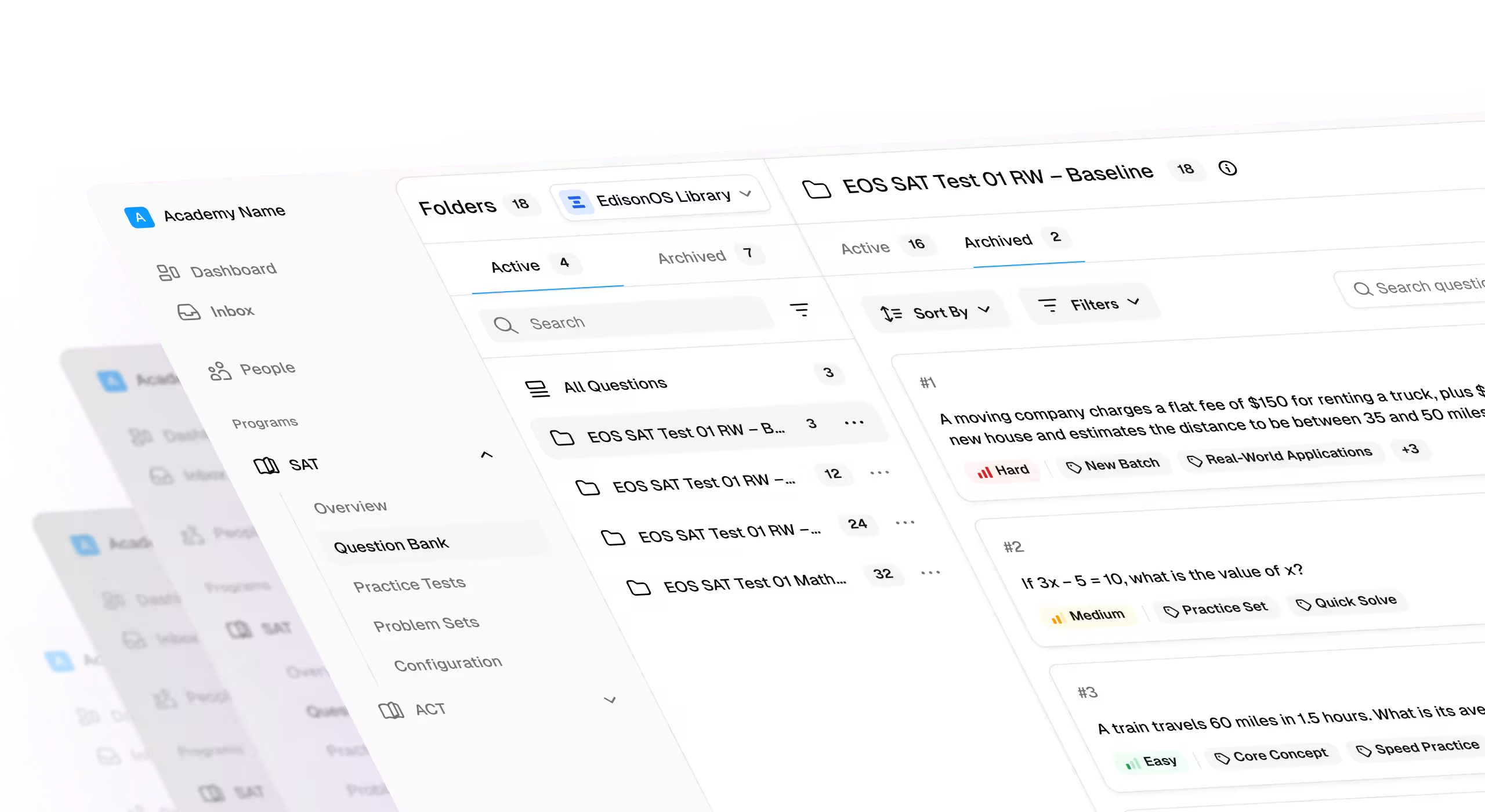
Platforms like EdisonOS make this process much easier by combining full-length digital SAT practice test with detailed performance analytics. Tutors can review question-level performance, skill mastery, and progress over time, which makes it easier to identify recurring Words in Context mistakes and adjust instruction accordingly.
The best tutoring decisions aren't based on a student's latest score but rather on consistent patterns. When you know exactly where students are struggling and how they're improving, every tutoring session becomes more focused and effective.
Session-Ready: The Vocabulary Debrief Checklist
After every missed Words in Context question, resist the urge to explain the answer immediately. Instead, ask your students these to diagnose the root cause of the mistake and decide what the student needs next.
Using this checklist consistently shifts the conversation from "What's the right answer?" to "Why did I get it wrong?" And that small change will help you identify patterns, personalize instruction, and build stronger reasoning habits over time.
Recommended SAT Vocabulary Resources for Tutors
The right resources can reinforce your teaching framework and help students build vocabulary more effectively. Here's a shortlist worth incorporating into your SAT prep workflow.
No single resource is enough on its own. The most effective tutors combine official practice, purposeful vocabulary building, consistent review, and performance tracking to help students improve both their vocabulary and their contextual reasoning skills.
Conclusion
Mastering SAT vocabulary is about teaching students how to think through words in context. When a student misses a Words in Context question, the first step isn't assigning another vocabulary list. By teaching contextual reasoning first, reinforcing vocabulary through meaningful exposure, and tracking performance over time, you can help students develop the skills the digital SAT actually measures.
Diagnose whether the mistake your student makes stems from a word-bank gap or a reasoning gap. Even small changes like using a structured debrief after every missed vocabulary question can lead to more focused tutoring sessions and better long-term results.
If you're looking for a simpler way to put this framework into practice, EdisonOS gives tutors the tools to deliver full-length SAT-style practice tests while tracking question-level performance, skill mastery, and student progress in one place.
Instead of guessing where students struggle, EdisonOS provides you with the data to personalize instruction and measure improvement over time. Start your free EdisonOS trial and see how smarter insights can help your students master the digital SAT.
Frequently Asked Questions
.svg)


.png)

.png)