- Small-group SAT classes work best when tutors act as session architects, prioritizing student attempts, structured discussion, and individual takeaways over extended explanation.
- A simple three-block structure for every small-group SAT session: opening diagnostic, intensive practice, and focused debrief with individual takeaways.
- Specific engagement tactics for small SAT groups, including structured cold-calling, think-pair-share, rotating explainers, and session-level micro-goals.
- Practical ways to differentiate inside one group using tiered practice sets, intentional circulation, and per-student written feedback.
- How EdisonOS supports small-group SAT teaching with digital SAT mocks, automated performance data, and progress visibility for tutors, students, and parents.
Most small-group SAT classes default to lecture format. Instructors talk, students listen, and engagement drops before the session ends. This is a fixable structural problem, not a teaching talent issue.
Small groups give instructors a real advantage over large classroom settings. Peer interaction, targeted feedback, and active practice are all possible. Most sessions don't use any of it.
This guide covers:
- How to structure small-group SAT sessions for active participation
- Techniques that keep students engaged without losing instructional control
- How to track individual progress without disrupting group flow
This guide is written for SAT tutors and independent instructors running groups of 3–10 students.
Why small-group SAT classes default to lecture (and why that's a problem)
Tutors trained in one-on-one instruction often scale up by talking more. The group size changes. The method doesn't. Instruction replaces interaction, and the session becomes a lecture.
Students follow along in the moment but cannot replicate the work independently. Skill transfer doesn't happen through observation alone.
When students don't improve, retention drops. Referrals stop. The format takes the blame, but the problem is the method.
Signs your small-group class has defaulted to lecture mode:
- Students rarely answer questions unless called on directly
- Most session time is spent explaining, not practicing
- Students finish sessions but cannot solve similar problems without instructor support
What does an effective small-group SAT class actually look like?
An effective small-group SAT session balances direct instruction, guided practice, and peer interaction. The ratio favors doing over listening, with practice occupying the majority of session time.
The instructor's role shifts from content deliverer to session architect. Students attempt problems, discuss reasoning, and explain answers. The tutor guides, prompts, and corrects rather than presenting.
Core characteristics of a well-run small-group SAT session:
- Students attempt problems before explanations are given
- Discussion is structured, not open-ended or freeform
- Each student leaves with an individual takeaway, not just shared group notes
How to structure a small-group SAT session
Session structure is the single biggest lever an instructor controls. Without it, even strong content gets lost in a format that doesn't support retention or skill transfer.
1. The opening block (first 10–15 minutes)
The opening block activates prior knowledge and sets session intent. Use a short diagnostic prompt or warm-up problem to surface individual gaps before instruction begins. A five-minute review of the previous session's errors works well here. Avoid recap monologues.
2. The practice block (middle 25–30 minutes)
This block is where most session time should go. Students work problems independently or in pairs first. The instructor circulates, observes error patterns, and decides what to address collectively versus individually. Good tutors ask questions and let students practice while they move through the group.
3. The debrief block (final 10–15 minutes)
Focus on two or three high-error questions from the practice block. Ask students to explain their reasoning before correcting. Assign one specific takeaway per student based on what surfaced during practice.
A consistent three-block structure makes sessions repeatable and scalable across different cohorts. It also creates a clear basis for improvement each week.
Student engagement techniques that work in small SAT groups
Engagement in small-group SAT prep is not about energy or motivation tactics. It is about designing conditions where students cannot passively opt out of thinking.
1. Cold-call with structure, not surprise
Assign specific questions to specific students before the session starts. Students prepare differently when they know they will be asked to explain their reasoning aloud to the group.
2. Use think-pair-share on hard problems
Have students attempt a question alone, discuss their approach with one other student, then share with the group. This surfaces reasoning gaps before the instructor explains the solution.
3. Make wrong answers useful
When a student answers incorrectly, do not redirect immediately. Ask the group what is right or wrong about that reasoning. This keeps all students mentally active, not just the one who answered.
4. Rotate the explainer role
Periodically ask a student to walk the group through a solution instead of the instructor. Students who can explain a concept have internalized it. Those who cannot reveal exactly where the gap is.
5. Set micro-goals per session
At the start, give each student one specific thing to improve — a question type, a timing habit, or a trap to avoid. Check it during the debrief. This creates individual accountability inside a group setting.
How to differentiate instruction inside a small group?
Small groups are not homogeneous. Students in the same cohort often have different baseline scores, different weak sections, and different error patterns. Treating them identically limits every student.
Differentiation does not mean running separate lessons. It means designing sessions where students work on shared content but receive targeted feedback based on individual performance data.
- Tier your practice sets by difficulty. Give all students the same question type, but offer two difficulty levels. Students are assigned based on their most recent diagnostic result, not assumptions about ability.
- Use circulate time intentionally. During the practice block, do not move through the group at random. Prioritize students whose recent work shows recurring errors. Spend more time where the gap is largest.
- Give individual written feedback, not just group corrections. After each session, note one specific observation per student. Over time, this creates a record of individual progress that group discussion alone cannot produce.
Tracking individual progress without disrupting group flow
Progress tracking in small-group settings fails for one reason: instructors rely on memory or general impressions instead of a consistent system. Memory is unreliable across multiple students and sessions.
A lightweight tracking system does not need to be complex. It needs to be consistent, tied to session output, and reviewed before the next class begins.
What to track after every session
- Question-level errors: Track which specific question types each student missed, by category — Reading comprehension, Writing conventions, Math: algebra, Math: advanced
- Timing patterns: Note which students ran out of time and on which section; timing issues compound if not caught and addressed early
- Explanation quality: Record whether the student understood why the answer was wrong, or simply accepted the correction; students who cannot explain the error will repeat it
- Session-to-session movement: Flag students making the same errors across two or more sessions; repetition signals a method problem, not an effort problem
Simple tracking formats that work
A per-student session log — a spreadsheet with question categories, error counts, and session notes — gives instructors data to act on. It also gives students and parents a visible record of progress.
According to our research, students in structured study groups score up to 30% higher than those studying alone. Consistent tracking is part of what makes that structure work.
Common mistakes SAT tutors make in small-group settings
Most small-group SAT instruction problems do not come from weak content knowledge. They come from format decisions that worked in one-on-one settings but do not scale to groups.
1. Explaining before students attempt
When instructors front-load explanations, students listen instead of think. Attempt first, explain after. This single switch changes the cognitive load of the entire session.
2. Letting vocal students dominate
In small groups, one or two students often answer most questions. Without deliberate structure, quieter students disengage. Assign participation by design, not by whoever raises a hand first.
3. Skipping the debrief to cover more content
Rushing through more questions without reviewing errors creates volume without retention. Fewer questions reviewed thoroughly produce better outcomes than full practice sets left unanalyzed.
4. Using the same session plan for every group
Cohorts differ. A session plan built for one group's error profile will not serve another. Review tracking data before each session and adjust focus accordingly.
How EdisonOS supports small-group SAT instruction
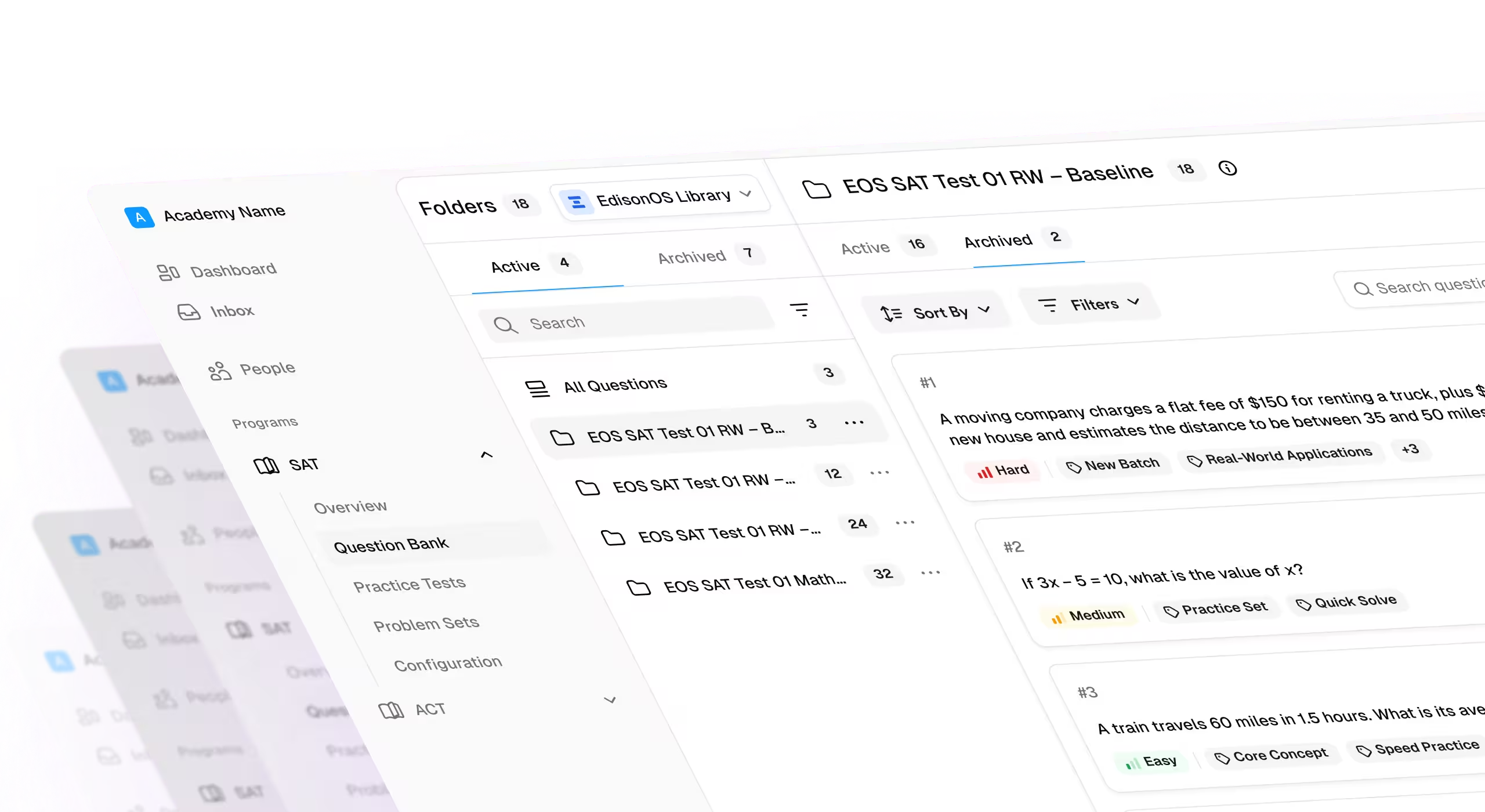
Running small-group SAT sessions well requires consistent structure, reliable practice material, and a tracking system that does not depend on memory. EdisonOS provides the testing infrastructure layer that supports all three.
- Administer standardized digital SAT mocks to your group with official-style score scaling and automated section-level reporting after every session
- Access question-level performance data per student automatically, removing manual tracking from the instructor's workload entirely
- Run Free Digital SAT Practice Tests and structured Practice Tests for SAT aligned to the current Digital SAT format and Digital SAT Curve scoring
Tutors using EdisonOS replace manual observation and session notes with structured data. That data informs the next session's focus, makes differentiation easier, and gives students and parents a clear, consistent picture of progress across the program.
Frequently Asked Questions
.svg)





.png)