- Focus on a profitable niche, build strong systems, and scale with the right technology.
- Win more students through proven results, referrals, school partnerships, and consistent marketing.
- Streamline operations with software to improve teaching, save time, and grow faster.
Knowing how to start a test prep business is - to use a cliche - half the battle won before it starts. To paraphrase Bob Ferguson (Leonardo DiCaprio) from the multiple Oscar-winning movie One Battle After Another, “From here on out, it's one opportunity after another.”
Helping students achieve their dream scores and seeing them succeed is perhaps one of the test prep businesses’ most visible rewards. It is also a sound business idea - the US test-prep market is $19.79Bn (Technavio). And it’s relatively easy to scale, what with technology tools now available.
Every great SAT or ACT score starts with a clear plan - and so does a great test prep business. Let’s walk you through 9 clear, actionable steps you need to pass in order to set up a test prep business.
Step 1:Define Your Niche and Choose Your Tests
Firstly, you want to know what you’ll be prepping students for. Although there are many tests you can help students with, it’s a good idea to pick one or two tests instead of trying to cover everything initially.
While making this choice, you want to prioritize market demand over your expertise or interest. If you’ve chosen something exotic, even breaking even can be a challenge. Here are the first three things you want to do:
- Define your target audience - high school students, graduate applicants, and so on
- Design your curriculum and marketing activities around that segment
- Aim to be known for one exam before entering other test areas
Why SAT and ACT are the best starting niche
What is the best niche for a test prep business? The SAT and the ACT appear to be the general answer. Over 2 million students wrote the SAT in 2025, according to the official College Board reports. Add the 1.38 million students who took the ACT, and you get a sizable market. You will also realize they exceed the number of students taking the LSAT, the GRE, or the GMAT.
Another factor in favor of SAT/ACT test prep is that parents are willing to spend more towards the SAT and ACT test. That’s because the scores in these tests directly affect college admissions.
Finally, because students of the same students often prepare together, you have a much better chance to expand your clientele, including those coming through referrals.
Step 2: Write a Business Plan Without Overcomplicating It
Starting a test prep business is like any other business: you’ll need to plan for things beforehand.
As the second step, you will need to write a business plan. Make sure it’s clear, uncomplicated, and comprehensive. Here are the key items to include:
- Define the target market: Who all you want to attract?
- List out your services: Will it be only ACT? Only SAT?
- Analyze local competition: Who all are your competitors? What resources do they deploy to promote their business?
- Decide pricing model: Are you going to be mid-market or premium? Will you offer installments? Are there going to be add-ons?
- Project revenue and expenses: How much will you likely spend? What revenue do you expect to generate? How big is the gap between the two?
- Define immediate business goals: What do you wish to achieve in the first-year of setting up the business?
- Clarify your delivery model: Will you go for 1:1 sessions? Or will you tutor to a small group?
- Establish your ground: Will you opt for an online-only model or a hybrid one? (Hint: Online offers a wider reach, while in-person carries more weight locally.)
- Address the cyclical nature: The SAT and ACT tutoring business sees high enrolments during the months leading to the actual tests. Have some plan to manage your income during the lean months. Also plan some branding activities during the times when you aren’t super-busy.
Startup costs to account for
It’s not that you simply pick up a white-board marker, start tutoring, and collect fees. Even as a startup, you’ll need to account for certain business expenses right at the outset.
We classify these costs under three areas, so that you can easily see the context:
Client-facing expenses
- Curriculum/material
- Tutoring software
- Computer, webcam, microphone and internet
- Optional office/classroom costs
Growth-facing expenses
- Marketing and promotional expenses
- Website and domain
Legal expenses
- Business registration
- Insurance
- Basic attorney fees to list out terms, refund policies, and more
If you want a clear answer to ‘How much does it cost to start a test prep business’, here’s the breakup
Step 3: Handle the Legal Setup
‘We’ve barely started out; we’ll tackle the legal aspect when we come to that!’ Don’t wait till things get complicated at a later stage - get it done while things are smaller and easier.
First, choose a business name and domain (you might have to work backwards: check out which all website domain names are available and then choose accordingly).
Once you freeze that, the next step is to register the business domain. Once that’s done, open a separate business bank account. Having a separate business account will simplify things and practically eliminate undue tax complications at a later stage.
Finally, understand the local compliance requirements. Pay particular attention to fire and safety requirements. Some zones may offer a new business some tax relief for property tax - see if that’s the case for your location. Because you’re a test-prep business, and not offering any certification or diplomas, you won’t need any clearances from the respective Department of Education.
Deciding the business structure: Sole proprietorship vs LLC
A sole proprietorship gives you complete ownership of the business. It's the simplest and least expensive structure in terms of setup and compliance, but it isn't the right choice for everyone.
The main alternative is an LLC (Limited Liability Company), which combines the simplicity of a sole proprietorship with the liability protection of a corporation. An LLC protects your personal assets and offers tax flexibility through pass-through taxation, so you avoid the double taxation associated with corporations. It also adds credibility and makes hiring and expansion easier.
If you're unsure which structure suits your business, consult an expert. Choosing wisely at the outset lets you focus on growing your tutoring business instead of restructuring it later.
Do you need a license or insurance?
If you’re wondering ‘Do I need a license to start a test prep business?’ the answer is: American states do not require you to have a license to run a test-prep business. However, you may still need to meet various business requirements - local business license or and zoning compliance. A few states like Alaska and Washington have a state-wide business license while most others require you to apply to the local body.
In addition to that, it makes sense to explore business insurance and even cyber insurance.
If you will be selling tangible assets (e.g. printed material or even USB drives), you’ll also need to check the Sales Tax rules applicable.
Finally, worker’s compensation insurance is mandatory in some jurisdictions when you hire people. That covers the medical expenses and lost wages if an employee is injured or falls ill because of their work. This assumes importance when you hire instructors or other employees. At that point, it might be important to differentiate between an employee and an independent contractor.
Step 4: Build Your Curriculum and Teaching Method
Your teaching philosophy pretty much shapes how you set up your test prep business and how you operate it. The more you leverage technology to personalize your tutoring, the easier it will be to scale and deliver results.
While building your curriculum it is highly recommended that you always begin your classes with a diagnostic test. That will help you start off the right way and build individualized study plans later on, based on score gaps and target colleges.
In your curriculum, keep room to teach both concepts and test-taking strategies. Keep the system repeatable, rather than teaching differently every time. While you build your curriculum and your system, remember you’re teaching for a test, not an academic year.
Buying vs. building your own materials
Getting readymade, proven material beats building your own material for several reasons.
For one, you draw on resources built by people who specialize in preparing material - you don’t have to hone your own skills towards that. Secondly, the time you would need to spend on preparing the material can be put to better use, namely marketing and growing your test-prep business.
And finally, technology today allows you to customize tests that directly address every single student’s skill gaps. EdisonOS’s BYOT (Built Your Own Test) features lets you do just that, which means you can always super-personalize your test-prep material.
How the Digital SAT changes what you need
To build a certain comfort with the digital medium of tests, it helps when your students study using digital material. And updated curriculum in the digital format is available easily.
EdisonOS provides you with 22 practice SATs. That means your students can continue practicing till they’ve addressed every single weak spot.
Against that, you’ll need to make sure you teach digital testing strategies and pacing to students. Show how the in-app tools can be used to do virtually everything they could have done in a paper-based test, but only better.
Most importantly, perhaps, is that you familiarize your students with the digital interface of the test.. EdisonOS has replicated the exact test interface, just to make sure students are fully comfortable with the navigation and the overall testing experience before they enter the exam hall.
Step 5: Set Your Pricing and Packages
Ok, so now you’re dealing with an important facet of your test-prep business: pricing. Here are the five most important things to keep in mind while you set up the fee structure:
- Price contextually: Set your fees based in the context of expertise, market demand, and location:
- Keep it simple: And transparent. Students should be clear what they’ll get against they’ll be paying.
- Offer options: Give students the choice of packages that they can bundle and save money. It’s a great idea to keep some installment options.
- Define all the policies: Sometimes students need to postpone their test-prep plans, switch timings, or even withdraw their admission. Be sure to document your policies to avoid any confusion.
Hourly vs. package pricing: what works better
Hourly pricing gives you good flexibility. However, you want your business to have predictable revenue - something that only packages can give. Besides, packages improve commitment too.
In addition to that, you can also experiment with group classes. Welcome friends who wish to study together - you can give them group discounts. That’s because group classes increase your revenue per hour, even when compared to what premium you might charge for one-to-one sessions.
And finally, it’s important to remember that full-course packages (e.g. a full SAT program or a full ACT package) works well for students as well as for you.
What the market will actually pay
The reality is that market forces have a considerable say in what you might be paid. Some of the key factors that decide what the market will permit your students (read parents) will pay include:
- How much competition is there, and what force they exert
- What kind of reputation your tutors and you enjoy
- Whether you start with a blank slate or you come with some strong proven credentials in test-prep (a stint with a test-prep company, for instance)
- Whether you will tutor online, in-person, or a mix of the two
- What kind of support your students can expect
- What test-relevant resources you bring to the table (digital SAT aspirants, for instance, require multiple digital practice SATs, and that too in the adaptive version)
- What score improvement you can assure (parents generally focus on score improvement than on tutoring hours)
Test-prep business economics:
- Estimated student packages: $300 to $3,500+
- How much can I charge: Hourly fees range from $40 to $200, depending upon skill, experience, location, and score improvement you offer
- Is a test prep business profitable: Yes, profit margins are 20 - 50%
- Total cost of setting up: $5,000 or higher (see the total cost breakdown discussed earlier)
- Time to breakeven: Typically 4-6 months; 12 months is rare
- Franchisee model: Available
- Scalability: Highly scalable
- Role of technology: Medium to High
- Growth: Estimated to grow at 8-11% CAGR till 2030 (GrandViewResearch)
- How much can a test prep business make: The market size is $18BN. It is served by about 11,400 locations/centres (data drawn from various sources). That gives an average of US$ 1,578,947 per location/centre.
The moment of reckoning
If you find the picture a little too rosy, here are two plain facts:
- Teaching isn’t the issue, scaling is: If you know someone whose growth flattened out at 10-11 students, it likely wasn’t because of teaching. It was because they hadn’t chosen the right tech or tools to track students, connect with parents, share reports, and assign personalized tests.
- Don’t wait to grow to a certain size: Without systems, your growth will be stifled. Today, you have technology solutions that meet every number, no matter how modest. Invest, trust, and use technology and systems early on.
Step 6: Choose Your Tech Stack
It’s important that you choose the right combination of technology from the word go. Even if it saves you a few dollars, do not try to mix and match too many tools - it only creates a messy hodgepodge soon. Instead, opt for tools that are streamlined and offer you nearly everything you need.
Even if it saves you a little money, don’t use spreadsheets; use specialized software instead. A centralized scheduling, payments and student records is highly recommended. You should invest early in systems that reduce your administrative work and free up your time to support students, get better results, and drive growth. Remember, you’re in the test-prep business; don’t let backoffice work engulf you.
And as tests go digital (the SAT, followed by the ACT, for instance) require your tech solution to be agile. EdisonOS, for instance, mimics the exact test interface so that students experience the test before they enter the actual test center. Emphasize on opting for such platforms.
Why software is non-negotiable for scale
There are several things a software can do a lot better - and easier and faster - than any spreadsheet patch you’ve tried to put together. Here are a few
- Calendar integration: So that you know what you’re supposed to do on a given day.
- Online booking: So that students or parents can book sessions for tutoring or discussing things.
- Progress reports: So that you know where the student is doing well and where they’re faltering
- Attendance: So that you know if anyone is falling behind in attendance
- Automatic reminders: So that students know about the classes or tests - or fees due
- Student profiles: So that you know more about students in order to help them better
- Payment tracking: So that you can collect installments and fees more efficiently.
- Growth: So that you know if you’re meeting your growth targets.
What to look for in a test prep platform
Once you know what your software can do for you, looking for the key features becomes easier.
We’ve categorized the features in three areas:
Student-facing activities:
- Scheduling
- Student management
- Progress tracking
- Online classroom
- Practice test management
Revenue:
- Billing
- Fees reminders
- Basic accounting
Support:
- Parent communication, including student growth
- Group class support
How EdisonOS fits in
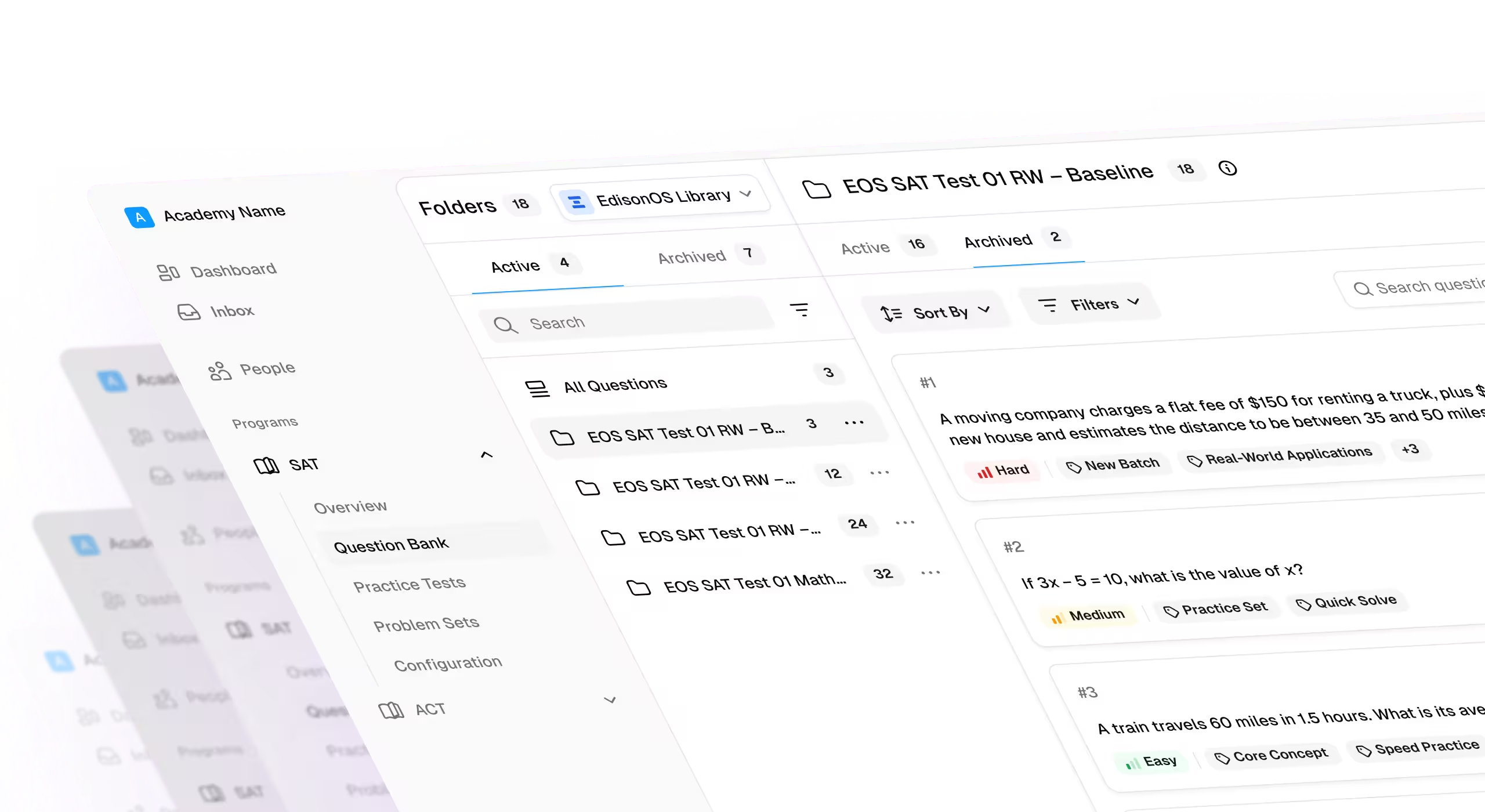
EdisonOS is designed to help effortlessly grow your test-prep business. Its solution lets you
- View and manage all your academies
- Manage billing & subscription
- Add or remove admins and tutors across academies
- Manage billing and oversee all academies from one point
Testing: You get the unique flexibility of letting students take unlimited tests under the license arrangement with EdisonOS. Alternatively, you can let students take fewer tests and allow them to pay per test.
White-labeling: EdisonOS can remain in the background while you grow your brand. You have your own domain and your own look and feel.
Diagnosing: The first test attempt of a student is free with EdisonOS. You can leverage this for marketing as well as diagnosing where students stand.
Step 7: Get Your First Students
And now you’re on a really exciting stage - getting your first students!
Although it may sound a little counter-intuitive, we recommend you limit your advertising spend. Instead, focus on building trust and gaining the confidence of your target audience.
Rely on networking to spread the word around. Online channels - social media in particular - can be leveraged for nearly free if you use it tactfully.
- Build trust before spending heavily on advertising.
- Combine local networking with online marketing.
- Collect testimonials from the beginning.
Local marketing that actually works
When you plan to set up your test-prep business, it’s obvious that you have a rather tiny promotional budget. Here’s how you can make the best of your promotional budget:
- Improve your Google Business Profile
- Distribute flyers in community locations
- Get in touch with libraries and see if you can speak to the students there
- Use community centres to engage a larger audience, if possible
- Connect with parent groups and explain what you offer
- Be a part of local events - they’re offer low-cost exposure
- Conduct educational workshops with your target audience
School partnerships and referral programs
One of the most effective ways to generate low-cost mileage for your test-prep business is through schools. You can build a valuable relationship with guidance counselors, explaining how you can add value.
As the next step, you can get in touch with schools - especially those that don’t have any tie-ups for tests - and explore a formal partnership for the school’s students. You can consider offering a substantial discount, because you might get a sizable number of students without spending a bundle on promotions.
Beyond that, you can:
- Run workshops
- Create referral incentives
- Connect with after-school programs
Building your online presence
Investing in a professional website is almost non-negotiable. At the same, you will likely get good returns from that, so don’t sacrifice quality.
Other things you can do to build an online presence is
- Leverage SEO to gain more traction.
- Use social media - mainly Facebook and Instagram- to build a presence
- Publish educational blogs
- Explore email marketing
Step 8: Deliver Results That Become Your Marketing
Your students' success should become your strongest marketing asset. Standardize how you report progress by sending regular score updates to parents and sharing performance after every mock test.
Set realistic expectations from the start, and communicate improvements clearly and consistently. For SAT and ACT test-prep businesses, parents are usually the buyers, so earning their trust is essential. When they see measurable progress and transparent communication, they're far more likely to renew enrollments and recommend your institute to others.
Building a system for score tracking
An organized score-tracking system helps you measure progress, personalize instruction, and keep parents informed.
- Begin with a diagnostic test to establish each student's baseline, then maintain a history of practice test scores to identify trends over time.
- Create regular progress reports that compare current performance against the student's target score, making improvements and gaps easy to understand.
- Share these updates with parents at consistent intervals to build confidence and transparency.
- Most importantly, use the data to adjust study plans, focusing extra time on weaker areas while reinforcing strengths.
A structured tracking system ensures every student receives targeted support instead of a one-size-fits-all approach.
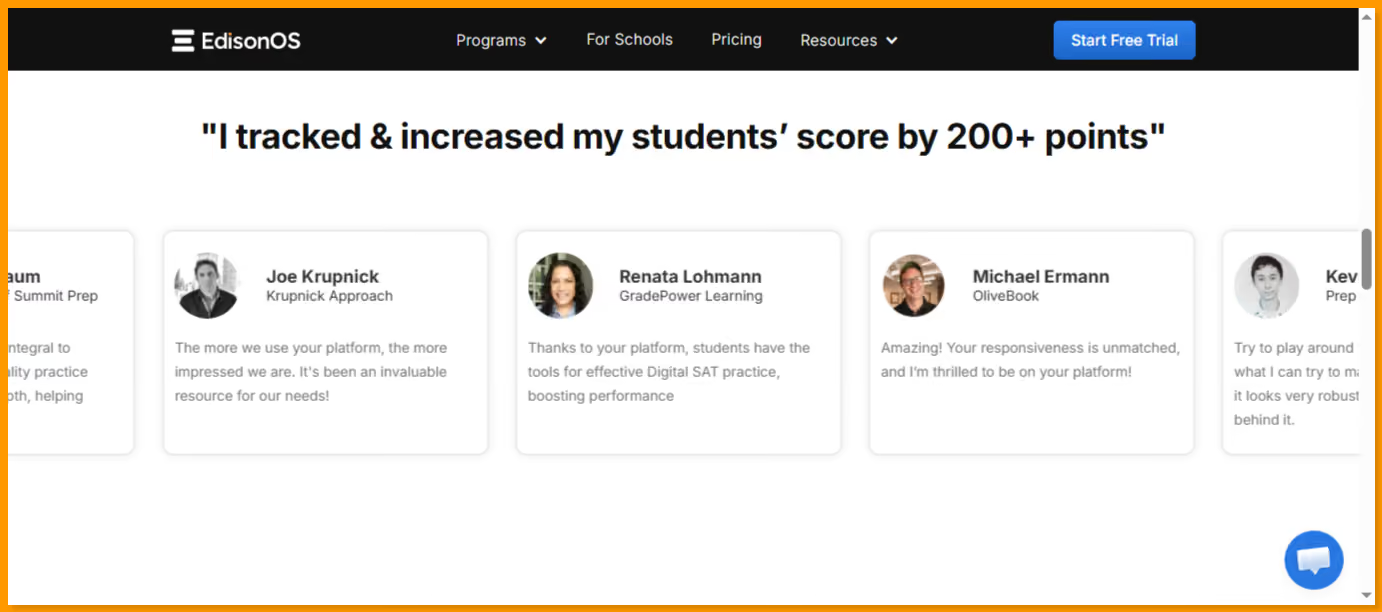
Check for case studies - find real-life examples where a test platform has helped test-prep businesses grow.
Turning outcomes into referrals
Every score improvement is an opportunity to generate referrals.
- Ask students and parents for testimonials after meaningful milestones, when their positive experience is fresh.
- If a student achieves a significant score increase or reaches their target, request referrals at that moment rather than waiting until the course ends.
- Showcase genuine success stories on your website and social media to build credibility with prospective families.
- Consider offering simple referral rewards, such as discounts or gift vouchers, to encourage participation.
A small thing that startups often forget is attribution. Find where your referrals come from so you can identify your most effective advocates and refine your referral strategy over time.
Step 9: Scale from Solo Tutor to Test Prep Business
Growth becomes much easier when your business relies on systems rather than just your personal effort. Before expanding:
- Standardize your operations
- Document your teaching methods and lesson plans, and
- Establish student onboarding, and administrative workflows
Well-defined processes ensure a consistent learning experience. Subsequently, it will make it easier to train new staff, and reduce day-to-day dependence on you. Building repeatable systems creates a strong foundation for sustainable growth.
Part-time tutors rarely have a work inbox they check between sessions, so an employee texting app is often the quickest way to confirm cover when someone calls in sick at short notice.
When to hire additional instructors
The decision to hire additional instructors is not that simple. Too early or too late can mean unnecessary costs or lost revenue.
Here are the three important things you want to keep in mind while hiring additional instructors:
- Allocate time to drive growth. A new instructor should free you up to devote time to grow your business, not just teach other students.
- Have systems in place. Even a basic train-the-trainer and teacher evaluation/feedback will do.
- Begin with paperwork. Whether you’re hiring purely on salary basis or some revenue-sharing, be sure to keep everything on paper. That will prevent unpleasant situations later on.
Managing 25-100 students without spreadsheets
Growing from 0 to 10 students is one thing; managing 25 students and touching 100 is quite another. Once your student base grows beyond a couple dozen, spreadsheets quickly become difficult to manage. Scheduling sessions, tracking attendance, recording practice test scores, sending parent updates, and managing payments across 100 students can easily lead to errors and wasted time.
A dedicated test prep management platform centralizes these tasks, automates routine administrative work, and gives you instant access to every student's progress. Saved time lets you focus on teaching and marketing, instead of paperwork.
The systems that make scaling possible
Great tutoring can give you an amazing start, but only strong systems will enable you to grow. In particular, you need to standardize and document processes centered around curriculum and student management.
Almost right off the bat, keep looking around for some sort of CRM and reporting dashboards. Investing in a tutoring software or a student management tool will help you
- Track referrals
- Send automated reminders
- Collect data from reporting dashboards
Here is an actual test-prep business owner explaining what things really matter
Conclusion
Like all other businesses, success in test-prep business is a combination of a few key factors. That includes passion for teaching, subject-matter expertise, customer outcomes, effectiveness of promotional activities, and academic/technology partner platforms you choose.That also means having the willingness to work on some weekends and embracing the seasonal nature of the profession.
As a growing market, test-prep offers considerable opportunities for anyone willing to learn and put in place systems that will drive growth.
In most cases, the secret sauce is quite simple: start small, refine your process, and then expand. Systems will matter as much as teaching ability, so lean on technology from your early days. By constantly developing your subject matter expertise and working on sharpening your systems will easily ensure success for your test-prep business.
Speak to an expert to learn how to realize your dream of starting a successful test-prep business.
Frequently Asked Questions
.svg)



.png)

.png)