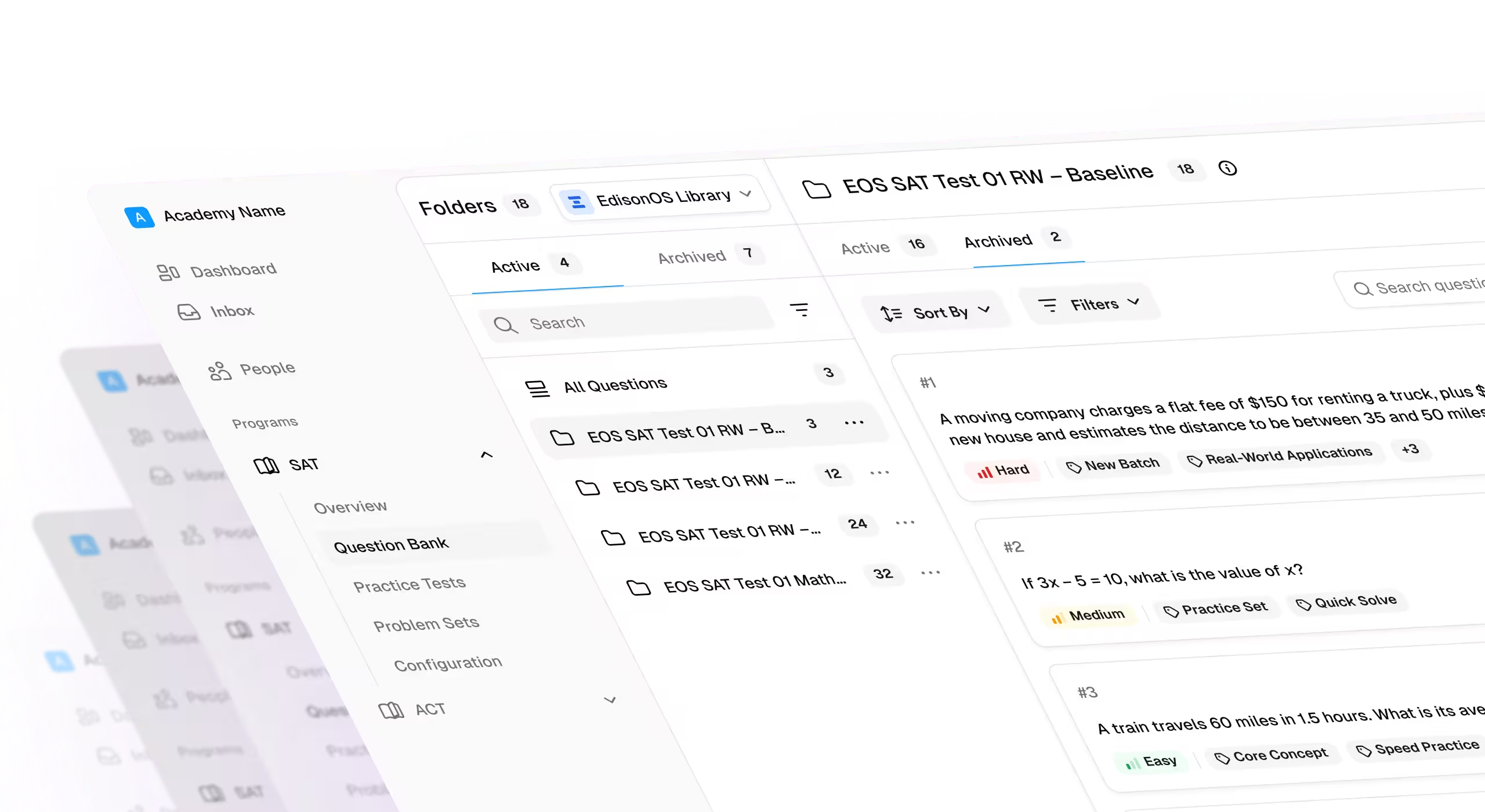
To attract more SAT students in 2026, tutoring businesses need to combine Digital SAT readiness with personalized learning, data-driven instruction, and targeted marketing. Using AI-powered tools, performance analytics, and free diagnostic tests can help improve student outcomes, generate qualified leads, and increase enrollments.
Here's how you can upgrade your student acquisition strategy:
- Deliver Bluebook-style Digital SAT practice tests to prepare students for the official exam experience.
- Use AI-powered learning tools to personalize practice and provide faster feedback.
- Track student performance with detailed analytics to identify skill gaps and improve results.
- Offer free Digital SAT diagnostic tests to generate qualified leads and convert prospects into enrollments.
- Build a strong online presence with SEO, content marketing, and local search optimization to reach more students.
SAT testing is back to pre-pandemic levels, with the class of 2025 representing the fourth-largest group of SAT test-takers in the assessment's 100-year history. To grab this market, tutors are headfirst figuring out how to attract more SAT students.
The first answer that often pops up in anyone’s head would be running ads or posting on social media. But without the right positioning, ads can only be so effective.
The message your leads should get when they see your ad — a modern, results-driven tutoring program, aligned with the digital format students now face.
We’ll break down how you can do that. This is a guide with practical, proven strategies you can use to grow your SAT tutoring business in 2026 and stand out in a crowded market.
How to Attract More SAT Students to Your Organization
The SAT tutoring market continues to grow as more students seek structured support to improve their college admission prospects. For tutoring businesses, attracting more SAT students requires more than offering quality instruction—it demands a clear understanding of the market, strong positioning, and effective student acquisition strategies.
To attract more SAT students, focus on these key areas:
- Understand your target market: Identify the needs, goals, and preferences of SAT students and their parents to tailor your programs and messaging.
- Differentiate your tutoring business: Highlight what sets your programs apart, whether it's Digital SAT readiness, personalized instruction, proven score improvements, or experienced tutors.
- Use data to improve outcomes: Leverage student performance data and market insights to refine your programs and demonstrate measurable results.
- Invest in student acquisition: Combine SEO, content marketing, referrals, partnerships, and free diagnostic tests to consistently attract qualified leads.
- Build long-term trust: Deliver a great learning experience that improves student outcomes and generates positive reviews and referrals.
Let us discuss each key area in detail.
Understanding the SAT Student Market
Analyze your market so your marketing efforts won’t feel like you’re shooting in the dark. Here’s how to go about it.
1. Define who is taking the SAT in 2026
The SAT market comprises multiple student segments — each with different motivations, budgets, and expectations. Today’s SAT students include:
- High school juniors preparing early
- Seniors aiming for score improvement
- Students targeting Ivy League or top 50 schools
- Scholarship-focused families
- International applicants
- Non-traditional learners seeking academic advancement
Look at age groups, geographic locations, and backgrounds to segment the audience.
When you identify patterns, you can customize your approach and categorize services accordingly.
2. Track emerging SAT prep trends
Yes, you are getting compared to your local tutors, but also with online-first platforms. Students now expect:
- Tech-enabled prep
- Adaptive practice tests
- Faster score feedback
- Personalized study plans
- Flexible scheduling
Before refining your offer, conduct quick market research. Run a short survey with existing students, or post a structured question in communities like the r/SAT subreddit, to understand what students actually value in 2026.
Recognizing these changes helps test prep organizations create programs that feel relevant, practical, and aligned with what students actually need today.
With EdisonOS, you can offer digital testing tools, analytics, and adaptive mock tests in an all-in-one Digital SAT platform. Sign up for a demo and see how you can attract more SAT students and modernize your SAT prep strategy.
3. Define your ideal student profile
Keep your positioning sharp, so students know your program was built specifically for them. Define your strategy by asking yourself these questions:
- Are you targeting high scorers (1400+)?
- Do you specialize in scholarship-driven students?
- Are you focused on local high schools?
- Do you attract ambitious international applicants?
Once you have the answers, you’ll also have more clarity on: framing messaging, building a pricing strategy, picking marketing channels, communicating with parents, and driving enrollment conversions.
Analyze Your Competition to Differentiate Your SAT Tutoring Business
The global test prep and tutoring market was valued at $70.71 billion in 2025 and is expected to reach $91.26 billion by 2030 at 5.3% CAGR. While this signifies the market for test prep is constantly growing, it also means competition is on the rise.
So, in 2026, if you’re planning to attract more SAT students, it’s important to understand who you’re competing with and why they’re winning.
1. Know the major players
First thing you must do is figure out who leads the test prep industry and study their offerings. Analyze their market positioning, pricing models, online presence, service offerings, and geographic reach
Each player positions itself uniquely to promise better preparation for students in the college admissions process. Some household names are Kaplan, Princeton Review, PrepScholar, Magoosh, and UWorld.
2. Learn from them
When you study the big players, you’ll see each brand owns a lane. None of them markets themselves as “for everyone.”
For example, Kaplan wins on curriculum quality, while Princeton Review is well known for aggressive score guarantees. Some other things they’re competing with are:
- Volume of practice questions (PrepScholar offers 4,000+ questions, 7 full tests)
- Live class hours (Kaplan and Princeton Review provide ~18 hours of structured live sessions)
- Adaptive study planners (AI-driven personalization)
- High production video lessons (short, engaging, conversational)
- Full-length adaptive mock exams mirroring the digital SAT
- Mobile accessibility and student dashboards
You don’t need to copy all their strategies. Simply study what’s working, because parents these days rarely choose the cheapest option. They care for structure, proof, and outcomes.
3. Identify gaps and opportunities
Even top-ranked providers have visible gaps:
- Some lack long content access periods
- Some have limited live instruction
- Some are expensive
Think about whether you can offer more personalization than national brands, combine digital tools with high-touch mentoring, or provide measurable analytics that parents understand.
Remember: The tutoring centers that grow fastest focus on clarity, positioning, and proof, not competing on price.
Use Data to Improve Student Outcomes and Grow Your SAT Tutoring Business
You can’t attract more SAT students with guesswork. Anticipate problems and act on them early. That’s why you’ll need data.
1. What data to track (and why it matters)
Focus on information that tells you something actionable, like:
- Performance data: Practice test scores, section strengths/weaknesses
- Engagement metrics: Login frequency, time on task, practice volume
- Behavioral signals: Where students pause, retry, or drop off
- Marketing insights: Which campaigns drive sign-ups and conversions
- Feedback trends: What students and parents report about your training
2. How to use data
There are many ways you can use analytics to help prepare your students for the digital SAT exam, like:
- Personalize learning paths by pinpointing exactly where a student needs support
- Group students strategically for targeted small-group work
- Adjust lesson pacing based on engagement and performance trends
- Communicate progress clearly with students and parents using dashboard insights
- Identify course gaps and refine content offerings over time
For example, performance trends can show whether students consistently struggle with algebra, helping you dedicate more focused sessions to that area and accelerate improvement.
3. Case studies illustrating successful data-driven approaches
My2tor used EdisonOS, and here’s how they improved student outcomes:
- Increased students' SAT scores by an average of 200 points through data-driven instruction.
- Used section-level analytics to identify strengths and weaknesses after every mock test.
- Adjusted lesson plans based on student performance to deliver more personalized instruction.
- Provided students with instant performance feedback, helping them identify areas for improvement and stay motivated.
What Our Customers Say
"With EdisonOS, it's easy to track where students are struggling and improving. The platform helps me create a better test prep experience."
— Tina Wilds, Owner, My2tor
This success story shows how performance data can improve student outcomes while building trust with students and parents. Platforms like EdisonOS combine Digital SAT practice, detailed analytics, and personalized learning to help tutoring businesses deliver better results and grow enrollments. Our experts can provide you with more insights on a data-backed approach.
Building a Strong Online Presence
Your online presence will often be the first impression students and parents get of your SAT prep services. Use it wisely to convert interest into enrollments.
1. Have a professional, user-friendly website
Your website is your digital storefront and a primary place prospects judge your credibility. Make it:
- Easy to navigate with clear information about your services, pricing, and contact details
- Optimized for mobile devices, as most users browse on phones
- Rich with testimonials, success stories, and clear calls to action
- Improve page speed and Core Web Vitals to provide a better user experience and improve search rankings.
A well-designed site boosts visibility and gives students and parents confidence in your expertise.
2. Use social media to connect and engage
Teens spend about 4.8 hours on average on social platforms daily, which makes social media marketing a powerful tool for building awareness and trust:
- Share short tips, success stories, or study hacks on Instagram, TikTok, or YouTube
- Use Facebook and LinkedIn to connect with parents and local communities
- Offer free live mini-sessions, Q&A events, or study challenges to spark interaction
- Repurpose student success stories, short tutoring tips, and mock test walkthroughs into short-form videos for platforms like Instagram Reels, TikTok, and YouTube Shorts.
This kind of content builds your brand and drives attention back to your site or booking page.
3. Incorporating SEO strategies to increase online visibility
SEO helps students and parents find you organically when they search online for help. Key steps to optimize for search engines include:
- Using relevant keywords like “Digital SAT prep,” “SAT tutor near me,” or “Free Digital SAT practice test”
- Creating helpful content like blogs, guides, or resources that answer common SAT questions
- Optimizing meta titles, descriptions, and headers to make your pages rank higher
- Setting up local listings (e.g., Google Business Profile) so you appear in local search results
- Create high-quality, experience-driven content that demonstrates expertise and answers common student and parent questions. This aligns with Google's emphasis on helpful, people-first content.
Good SEO means your business shows up when students are actively searching, without paying for ads.

Offer Personalized SAT Tutoring Services That Improve Student Outcomes
All students don’t struggle with the same topics, learn the same way, or aim for the same score. The tutoring centers that grow fastest design services around that reality.
1. Customize your SAT prep programs
A one-size-fits-all SAT course limits results. Offer structured flexibility with customizable programs that offer:
- Adaptive learning modules based on diagnostic results
- Targeted practice questions by skill or difficulty
- Full-length Digital SAT simulations
- Flexible batch timings or hybrid formats
- 1:1 mentoring for high-impact support
- Separate tracks for 1200+, 1400+, or scholarship-focused students
This personalization will improve student engagement, parent satisfaction, and, in turn, retention rates.
2. Integrate technology intentionally
Studies show that combining structure and technology creates stronger outcomes than traditional lecture-only formats. Modern SAT prep programs now incorporate features like:
- AI-driven adaptive practice
- Performance dashboards
- Virtual classrooms
- Gamified learning experiences
- Recorded video lessons
- Online mock tests replicating the real exam interface
- Writing and language feedback tools
Tutors consistently report that practicing in a Bluebook-style Digital SAT interface helps students feel more confident and better prepared on test day.
3. Showcase proof, not promises
When students see someone like them improve from 1180 to 1450, your program becomes tangible. Plus, parents trust results they can see. So make sure to feature the following in your online presence:
- Before-and-after score improvements
- Short student testimonials
- Acceptance outcomes
- Screenshots of performance analytics
- Diverse success stories (high scorers, retake students, scholarship earners)
Specific proof builds credibility faster than broad claims.
Build a Pricing Strategy That Attracts and Retains SAT Students
While determining pricing, don’t stop at numbers; look under the hood.
1. Analyzing current pricing models in the industry
Before setting your pricing, understand what other SAT tutors in your region (or niche) are charging. Are they pricing per hour, per package, or per score band improvement? Are they offering 1:1 only, or hybrid group + self-paced models?
Understand what the market expects and where you can differentiate.
For example, if most SAT tutors in your area charge $50–$100 per hour for one-on-one instruction, but none offer structured analytics or weekly parent progress updates, you can confidently position your services at the higher end of the market. All you need to do is emphasize measurable outcomes and a premium learning experience.
2. Experimenting with flexible pricing options
Hourly pricing alone can feel uncertain for families. Instead, design outcome-based or milestone-based packages.
For example:
- 8-week Digital SAT foundation program
- 12-week 200+ score improvement plan
- Intensive 4-week retake accelerator
This could include installment plans, scholarship programs, or modular pricing, where students can choose specific services based on their needs and budget constraints.
3. Balancing affordability and perceived value
Setting the right price is a delicate balance between affordability and perceived value. While offering competitive pricing is essential, it's equally important to communicate the value that comes with the investment.
Instead of saying:
I charge $60/hour.
Say: This is a 12-week Digital SAT preparation program designed to help students improve from 1200 to 1400+, featuring personalized study plans, weekly performance analytics, and parent progress reports.
Create Marketing Campaigns That Attract More SAT Students
When marketing campaigns are done right, they position you as the go-to expert before families even think about enrolling. Check how.
1. Leveraging both online and offline marketing channels
Offering free introductory sessions is a strategic way to take your expertise to potential students and parents to build trust.
- You can host a workshop such as “How to Self-Study SAT” at a local library, school, community center, or even online. These won’t sound salesy, yet also position you as the right coach.
- Promote your sessions through school newsletters, Google Business Profile, parent Facebook and WhatsApp groups, local community events, email campaigns, and targeted social media ads.
- Promote flexible scheduling on online and offline channels aligned with the seven annual SAT test dates (March, May, June, August, October, November, December)
2. Creating compelling content to attract SAT students
Host live webinars or Q&A sessions using platforms like Zoom or Google Meet to answer common SAT questions and demonstrate your teaching approach. The content should focus on helping students identify 'wrong answers' and review 'correct answers' to improve their test-taking strategies.
Ask participants to register with their email addresses so you can stay connected, share follow-up resources, and nurture future enrollments.
In addition to webinars, publish blog posts, short-form videos, student success stories, score-improvement case studies, and free Digital SAT resources to attract prospective students and improve organic search visibility.
3. Incorporating promotional offers and discounts
Incentivizing enrollment through promotional offers and discounts can be a potent strategy. This could involve:
- Limited-time enrollment discounts
- Free Digital SAT diagnostic tests
- Bundle packages for long-term programs
- Referral rewards for current students
- Early-bird pricing for upcoming SAT test dates
Such promotions create a sense of urgency and provide tangible benefits for potential SAT students. However, it's crucial to balance promotional activities and maintain the perceived value of the test prep services to ensure a sustainable and positive brand image.
Build Strategic Partnerships to Attract More SAT Students
Becoming part of respected professional associations and showcasing those affiliations on your website can strengthen your credibility. Here are a few ways to do it.
1. How to increase admissions by collaborating with schools and educational institutions
Forming strategic alliances with schools and educational institutions could involve
- Offering live classes, prep materials that professors can distribute to students, seminars, video lessons, or free resources within schools to support SAT tutoring.
- Presenting as a guest speaker at school-hosted career days or college prep events to increase your visibility and connect directly with students and parents.
Additionally, partnerships with schools can lead to referrals and endorsements, enhancing the credibility of the test-prep services.
2. How to attract SAT students by partnering with professional associations
- Join recognized professional organizations, such as the National Test Prep Association, and display their affiliation on your website to win industry credibility
- Earn relevant certifications and showcase them clearly on your website to signal expertise and commitment to high standards.
- Take part in networking events, training sessions, or educator gatherings to stay up to date on industry trends and learn new best practices.
These could strengthen your professional circle opening wide opportunities.
3. Tips to attract students for SAT admission by building strategic alliances for mutual benefit
Cross-promoting services can create a synergy that benefits all parties involved. Partner with education-focused businesses, school counselors, or college advisors to
- Co-host sessions,
- Share insights on YouTube Live
- Create joint content across socials that exposes your services
These alliances present opportunities for shared marketing initiatives, cost-sharing, and collaborative projects that support the overall value proposition for SAT students.
Turn Strategy Into Enrollment Growth with EdisonOS
Growing your SAT tutoring organization requires alignment across positioning, personalization, analytics, and delivery. When these elements work together, enrollment becomes more predictable, and student outcomes become measurable.
EdisonOS provides the digital infrastructure that supports that growth. With adaptive Digital SAT mock tests, detailed performance analytics, customizable assessments, and a Bluebook-style testing experience, tutors can now deliver structured preparation while clearly demonstrating progress to students and parents.
The results quoted by the tutor are stronger outcomes, clearer reporting, and greater trust.
Frequently Asked Questions
.svg)



.png)

.png)