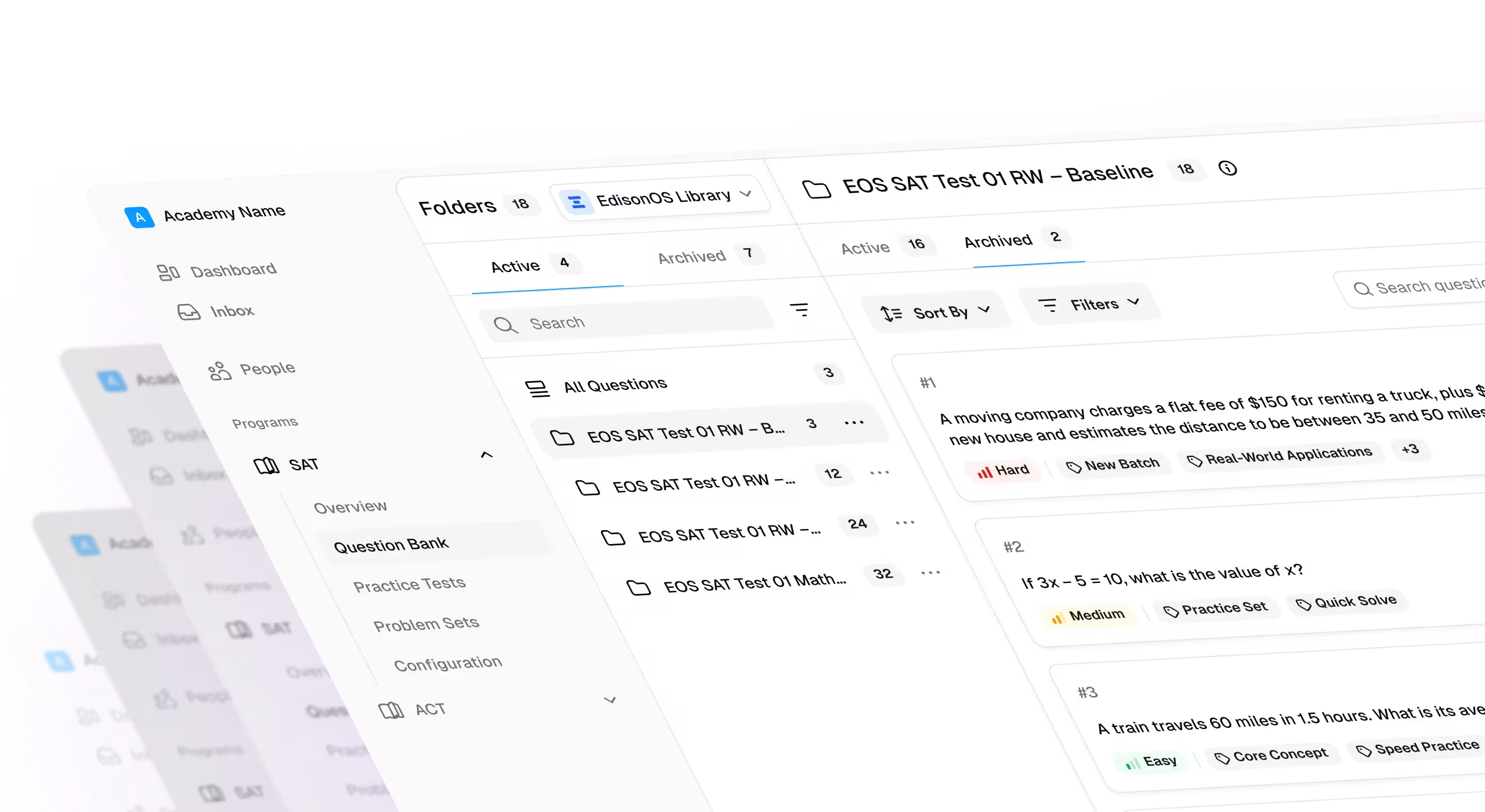
- Readiness checks measure content mastery, pacing, digital skills, and adaptive test confidence.
- Timed Bluebook-style practice helps students build accuracy and stamina for test day.
- Tutors can use analytics to spot weak areas and personalize SAT prep faster.
What Is a SAT Readiness Check?
A SAT readiness check is a structured way to evaluate whether a student is prepared for the academic, technical, and strategic demands of the Digital SAT.
A good readiness check answers the following four important questions:
All these areas together provide a complete picture of a student's current standing. They help tutors build a focused preparation plan.
How the Digital SAT Changed Student Readiness
The move from paper-based testing to a fully digital, adaptive exam has changed how students need to prepare. While a strong vocabulary or solid algebra skills are still important, students now need to understand adaptive testing, navigate a digital interface confidently, and make strategic decisions under time pressure.
Let us elaborate a bit so you understand it better.
The adaptive module structure
The new digital SAT is adaptive. Both the Reading & Writing and Math sections are divided into two modules. Performance in Module 1 influences the difficulty level of Module 2. And a difficult module comes with greater scoring potential.
This means content knowledge alone isn’t enough in digital SAT readiness.
Students must learn to stay accurate in the first module and avoid careless mistakes early. Once they get difficult questions, they can’t be fazed by them. They still need to maintain focus and adjust pacing.
Bluebook app familiarity
In the paper SAT era, students only needed to manage a test booklet, an answer sheet, and a calculator.
The Digital SAT introduces an entirely new layer of test-taking skills. Since it's administered through Bluebook, the Collegeboard’s official testing application, students need to familiarize themselves with its interface beforehand.
Students should feel comfortable using:
- The Desmos calculator
- Question flagging tools
- Highlighting and annotation features
- The question navigation menu
- The on-screen timer
If your students are new to these tools, they don’t want to encounter them for the first time on test day. They’ll waste valuable time on learning the interface.
Shorter exam format
The older paper SAT used to have 154 questions across Reading, Writing, and Math sections and lasted approximately 3 hours. The Digital SAT contains 98 questions and takes 2 hours and 14 minutes to complete. This includes 54 Reading & Writing questions in 64 minutes and 44 Math questions in 70 minutes.
This means the Digital SAT is significantly shorter by 46 minutes, or roughly 25% shorter than the old exam. While this reduces overall fatigue for readiness and gives students slightly more time per question, it also changes expectations for pacing.
A slow start or difficult question can have a larger impact because students have fewer opportunities to recover later in the test.
As a result, preparing for the shorter format should focus on:
- Sustaining concentration for two hours
- Making quick decisions when stuck
- Managing transitions between modules
- Maintaining consistency from start to finish
Digital Test-Taking Strategies
The best SAT strategies have evolved alongside the format. While some traditional techniques still apply, digital testing introduces new habits students should develop before exam day.
Some high-impact digital strategies include:
Note: Readiness checks should evaluate whether students are actually using these strategies during practice tests.
What Is a Good SAT College Readiness Score?
Many students ask the same question before beginning SAT preparation: What score should I aim for?
The answer depends on your goals.
A score that meets the College Board's college readiness benchmark is different from a score that makes you competitive at highly selective universities.
SAT college readiness benchmarks
The College Board established SAT College and Career Readiness Benchmarks using data from students who successfully completed first-year college courses. Students who meet these benchmarks have approximately a 75% chance of earning at least a C grade in corresponding college-level classes.
The current SAT benchmarks are:
Note: These scores are not admissions targets. They serve as a baseline indicator that a student has developed the core skills needed for college-level academics.
However, if a student scores below these baseline indicators, it indicates they need additional support in one or more areas within a specific section. So, in Reading & Writing, a student may perform well on grammar questions but lose score on information and ideas passages. In Math, they may be good with Algebra questions, but may struggle with Trigonometry.
Breaking scores down by skill category will help identify exactly where improvement is needed, enabling a more targeted study plan.
How Tutors Should Interpret Benchmark Scores
Benchmarks are valuable, but they shouldn't be treated as the final destination. Think of them as a checkpoint rather than the finish line.
A student College Board benchmark may be considered ready for college-level academics, but many colleges, particularly competitive institutions, expect significantly higher SAT scores. For example, the average Reading & Writing scores and Math for students admitted to Princeton are 760 and 785, respectively.
So, instead of focusing solely on meeting the benchmark, evaluate:
- Score trends across multiple tests
- Performance by skill area
- Accuracy under timed conditions
- Adaptive module performance
- Consistency from test to test
Additionally, a student who improves from 430 to 470 is making meaningful progress, even if they haven't yet reached the benchmark. Similarly, a student scoring 550 may still have weaknesses that need attention in specific areas before test day.
How Students Can Track SAT Readiness: Checklist for Students
Think of SAT readiness as a process, not a score. Use this checklist to prepare for the Digital SAT, measure progress, and identify areas that need more attention before test day.
- Complete a Diagnostic Test: Take a full-length SAT practice test before creating a study plan. Your diagnostic score establishes a baseline. It will highlight strengths, weaknesses, and pacing issues that need attention.
- Install and practice with Bluebook: Download the official Bluebook app and get comfortable using its tools and navigating it. You can also use SAT testing software that delivers ready-to-assign Bluebook-style mocks and practice sets with actionable student analytics. Practicing in the same environment used on test day reduces uncertainty and builds confidence.
- Create a weekly study plan: Set clear weekly goals based on your diagnostic results. Track study hours, completed practice questions, and skill improvements to ensure consistent progress throughout your preparation.
- Take timed adaptive practice tests: Untimed practice can improve concepts, but it doesn't measure readiness. Take a timed adaptive practice test to evaluate pacing, accuracy, and performance under realistic testing conditions.
- Track weak areas and error patterns: Review every incorrect answer and identify why you missed it. Categorizing mistakes into content gaps, careless errors, or timing issues makes it easier to target future practice sessions.
- Build digital test stamina: Although the Digital SAT is shorter than the paper version, maintaining focus for more than two hours still requires practice. Gradually increase the length of study sessions. Take regular full-length tests to improve endurance and consistency.
How Tutors Can Track Digital SAT Readiness
A student may know they're struggling, but a tutor needs to know why.
Digital SAT readiness isn't just about tracking scores. You need to identify the skills, habits, and testing patterns that influence those scores over time.
Here’s how you can do it:
- Monitor student progress: Track key metrics such as practice test scores, section scores, accuracy rates, and pacing. Review performance trends over multiple tests. It’ll provide a clearer picture than a single score.
- Identify weak skill areas: Look beyond overall performance and analyze results by topic. Identifying recurring weaknesses in areas such as algebra, grammar, or inference questions helps prioritize instruction.
- Use analytics and readiness reports: Evaluate timing patterns, question-level performance, and skill mastery. These insights help determine whether a student is progressing or needs additional support.
- Personalize study plans: Readiness data can help assign targeted practice and set measurable goals. Avoid generic SAT preparation. Students improve faster when study plans focus on their specific weaknesses.
- Conduct regular readiness reviews: Periodic review sessions lets you evaluate progress, discuss mistakes, and refine preparation strategies. You should have regular checkpoints to ensure students stay on track toward their target scores.
Tutor tip: Tracking scores, skills, pacing, and study progress becomes much easier when the right tools are in place.
Digital SAT Readiness Tools for Tutors & Schools
Managing Digital SAT readiness manually can become overwhelming, especially when working with multiple students.
The right tools help tutors.
You can administer diagnostics, track performance trends, assign practice, and monitor progress, all without relying on spreadsheets alone.
Here are five types of tools to look into:
Diagnostic testing platforms
What they do: Help establish a student's starting point before preparation begins and measure content knowledge, pacing, and performance across SAT skill domains.
Popular options include:
- Bluebook for official SAT practice tests
- EdisonOS for tutor-created assessments
- Test Innovators for score prediction and diagnostic analytics
- Khan Academy for free SAT skill assessments
Adaptive practice test systems
What they do: Practice tests that replicate the actual testing experience.
Popular options include:
- Bluebook
- EdisonOS for free adaptive practice tests
- Princeton Review Digital SAT programs
- Kaplan Digital SAT
Student analytics dashboards
What they do: Provide actionable insights on test results, like:
- Skill-level accuracy
- Question difficulty performance
- Time spent per question
- Score trends across multiple tests
Popular options include:
- EdisonOS gives a detailed breakdown of student performance + where every second spent
- LearnQ.AI gives a real-time score trajectory, identifies persistent weak spots, and monitors the time spent on specific question types
- TutorWand offers detailed reporting dashboards that mirror the official adaptive DSAT structure
Assignment and homework automation
What it does: Allows tutors to schedule assignments, deliver targeted practice sets, monitor completion rates, and automate assessment grading.
Popular options include: Learning management systems, which can help streamline this process.
Online tutoring platforms
What they do: Combine instruction, practice testing, and progress reviews under a single roof. They come with features such as:
- Live classes
- Virtual whiteboards
- Practice assignments
- Assessment delivery
- Student performance tracking
Popular options include:
Common Mistakes During SAT Readiness Checks
Even the best study plans can fall short if students make avoidable preparation mistakes, like:
- Ignoring adaptive practice: The Digital SAT is adaptive. Practicing only static question sets doesn't prepare students for changing difficulty levels across modules.
- Skipping timed tests: Untimed practice builds knowledge, but it doesn't measure readiness. Students need regular timed tests to evaluate pacing and decision-making under pressure.
- Not reviewing mistakes: Taking practice tests without analyzing errors limits improvement. Every incorrect answer should become a learning opportunity.
- Practicing only on paper: The SAT is delivered digitally through Bluebook. Students who have never practiced in a digital environment may struggle with navigation, timing, and using built-in tools on test day.
- Lack of consistent study scheduling: Cramming rarely produces lasting improvement. Consistent weekly practice helps students build skills, confidence, and test-day readiness over time.
How Long Does Digital SAT Readiness Take?
There isn't a one-size-fits-all timeline for SAT readiness. The time required to prepare for the SAT depends on a student's starting score, target score, and study consistency.
As a general rule, most students need 3 to 6 months of structured preparation. It helps them with:
- Building content knowledge
- Improving test-taking skills
- Becoming comfortable with the Digital SAT format
Students starting with lower baseline scores may need more time. Similarly, a beginner aiming for a significant increase in score may also need more time to build foundational skills before seeing consistent improvement.
For most students, an average of 5 to 8 hours of study per week is sufficient when preparation is spread over several months.
Those already close to their target score can often focus on refinement and strategy.
Note: Shorter timelines usually require a greater weekly commitment, often 10 or more hours.
When Students Should Start Preparing
The best time to start preparing for the SAT is during the spring or summer of junior year. This provides enough time for:
- Taking diagnostic tests
- Addressing weak areas
- Completing multiple practice exams
- Retaking the SAT if needed
Small improvements accumulated over time often lead to the biggest gains in score.
How EdisonOS Supports Digital SAT Readiness
Preparing students for the Digital SAT requires more than practice tests. Tutors need a system to manage assessments, monitor progress, assign targeted practice, and track readiness across the entire preparation journey.
EdisonOS brings these workflows together in a single platform built specifically for test preparation.
- SAT course management: Create full-length diagnostics, section tests, and custom assessments using pre-built question banks or your own content. Organize lessons, assignments, and practice tests within a structured SAT curriculum.
- Student performance tracking: Monitor scaled scores, section performance, skill mastery, accuracy trends, and pacing data from every assessment. Detailed reports help tutors quickly identify where students are improving and where intervention is needed.
- Adaptive assignments and mock tests: Deliver Digital SAT practice through adaptive mock tests that mirror the official exam structure, timing, navigation, and question formats. Students gain experience in conditions that closely resemble test day.
- Live classes and homework automation: Run live tutoring sessions, assign targeted homework, automate grading, and track completion from a single dashboard. This keeps practice aligned with each student's learning needs.
- Scalable tutoring workflows: Manage individual students or large cohorts without increasing administrative workload. Automated reporting, centralized analytics, and streamlined assessment management allow tutors to spend more time teaching and less time on manual tracking.
From the first diagnostic test to the final readiness review, EdisonOS helps tutors create a structured, data-backed preparation process grounded in realistic practice and actionable student insights.
Conclusion
Digital SAT readiness isn't defined by a single score. It combines content mastery, confidence in digital testing, time management, and familiarity with the adaptive exam format.
The earlier students identify their strengths and weaknesses, the more effectively they can prepare for test day. For tutors and schools, consistent readiness tracking helps turn practice data into meaningful score improvements.
Want to streamline Digital SAT preparation with adaptive mock tests, detailed analytics, and student progress tracking? Book a demo with EdisonOS and see how you can deliver a more structured, data-driven SAT prep experience.
Frequently Asked Questions
.svg)


.png)

.png)